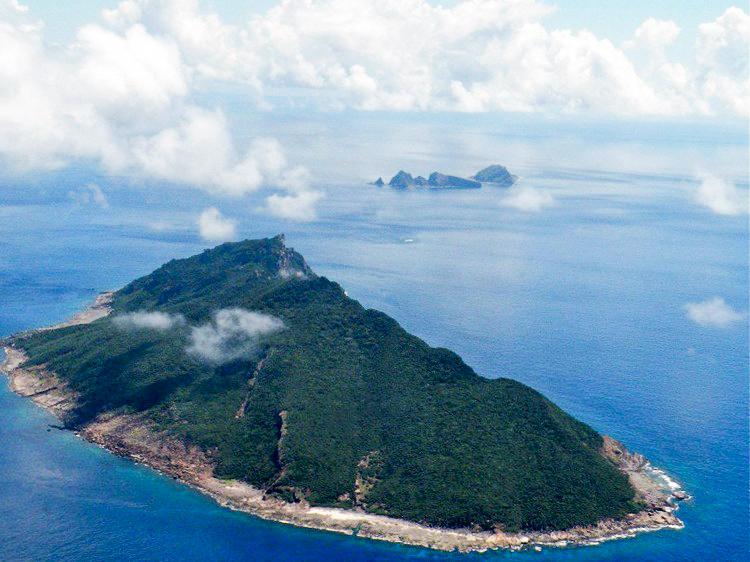
Japanese Prime Minister Shinzo Abe said that Japan will not tolerate any challenges to its sovereignty of the Senkaku Islands, a tiny group of islands that China has claimed.

A Chinese ship trained its missile-guiding radar at a Japanese vessel recently, prompting the Japanese government to lodge a protest with Beijing.

The Japanese government is aiming to boost its military spending by $2 billion in response to its diplomatic row with China over the disputed Senkaku islands.

Chinese warships were spotted heading toward Japanese islands recently, before they changed course, raising concerns about precisely what China’s military intentions are.

China may not be able to use an embargo of rare earths to punish Japan in the context of a recent territorial dispute, unlike a few years ago.

China’s stricter customs checks of Japanese goods and a growing call to boycott Japanese-made products is causing a boomerang effect as some Japanese companies seriously consider pulling out of China altogether.

Subtle shifts have taken place between China and Japan in the dispute over rocky islands in the sea recently, though disputes continue to rage.
Chinese official media denied that the government had a hand in the unrest, while some said the protesters and the fishermen were encouraged or compensated by the regime.

Violent anti-Japan riots in China have led to several Japanese companies deciding to shut down factories in China, at least temporarily.

The recent anti-Japan protests in China may have been organized or helped along by a political faction in the Communist Party that wishes to gain a stronger hand at the Party’s negotiating table.

Some Chinese have began harassing Japanese people in China, or sabotaging and even destroying Japanese-made automobiles, as a way of protesting against the country’s actions surrounding the Senkaku Islands in the East China Sea.

The replacement of the United Front Work Department’s chief is a decisive blow to the Jiang Zemin faction.

The Chinese regime has recently upped its rhetoric about territorial claims over the Senkaku Islands.
Chinese leader Hu Jintao’s stern warning to Japanese prime minister was removed by the state mouthpiece soon after it was published.
A team from the Tokyo metropolitan government surveyed the Senkaku Islands in southern Japan for 10 hours amid persistent diplomatic tension with China over the disputed islands.