


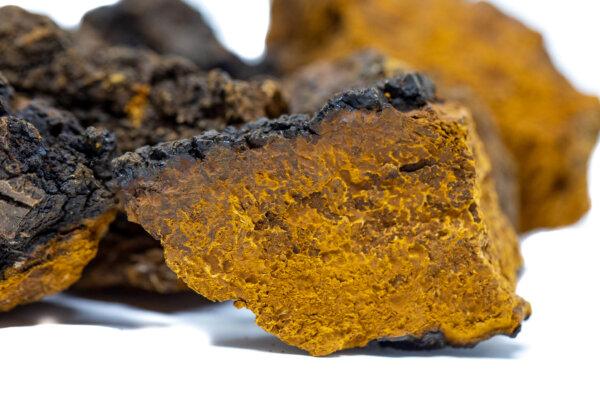
Chaga mushroom grows mainly on birch trees, concentrating the natural medicinal components of the birch bark itself. The part of chaga used medicinally does not look like what we commonly think of as a mushroom, with a stem and a cap (a fruiting body), but shows up as a rough-looking brown/black mycelial mass called a sclerotium, or a conk, that grows out of the side of the tree. Mycelial refers to the mycelium, which is the root-like, vegetative part of a fungus, differentiated from the fruiting body. Chaga’s dark brown color is due to its melanin content, which is an antioxidant color pigment that’s responsible for a large portion of its beneficial free radical scavenging effects.
- Polyphenols are plant-based compounds that have antioxidant and anti-inflammatory properties.
- Polysaccharides are long-chain sugars/carbohydrates that support the immune system and gut health.
- Terpenes are aromatic compounds found in plants that have potential therapeutic benefits.
- Sterols are lipid/alcohol compounds found in most living organisms that influence hormones, heart health, growth, and cell membrane integrity.
An Antioxidant, Adaptogenic, Anti-inflammatory Powerhouse
There is already a volume of research demonstrating the protective effects of chaga mushroom against UV and ionizing radiation, and the restorative effects it can have on previous radiation damage. Ionizing radiation is categorized in the higher portion of the electromagnetic spectrum compared to non-ionizing microwave radiation (from cell phones, Wifi, and other sources). Long-term non-ionizing EMF exposure has many similar effects on the body as exposure to UV and ionizing radiation, including oxidative stress, chronic inflammation, premature aging, DNA damage, and increased incidence of various cancers.Ionizing and non-ionizing radiation are two major sources of oxidative stress that most of us are exposed to regularly, but there are many other oxidative stress sources that we also need protection from, including environmental pollution, exposure to chemicals, pesticides, and herbicides, cigarette smoke, excessive UV radiation, processed foods, and more.
- Antioxidant: prevents oxidative stress and damage from any source, and repairs existing damage.
- Anti-mutagenic: improves cell integrity and resistance to mutation, and increases apoptosis (cell death) of misformed cells.
- Anti-inflammatory: protects the body from the root causes of chronic inflammation.
- Adaptogenic: helps the body adapt to the needs and stresses of the moment, either stimulating or calming our bodily systems as needed.
Adaptogens improve the body’s innate intelligence so that it will respond appropriately to any given situation. They can help increase energy levels and mental focus during the day when cortisol should be higher, and then help you calm down and rest in the evening as cortisol naturally lowers and melatonin increases.
How to Source the Most Medicinally Potent and Effective Chaga
Thousands of studies have been done on the medicinal benefits of chaga mushroom, and its potential for future treatment in the immunotherapy realm—activating the patient’s own immune system to recognize and destroy cancer cells—of modern medicine looks promising. Therefore, there are experiments being done to figure out how to grow chaga in a lab environment. Unfortunately, lab-grown chaga at this time is considerably inferior in medicinal power compared to wild chaga.If you want the strongest and most medicinal chaga, make sure the chaga you source comes from a wild place. You’ll also want to make sure it’s sustainably harvested, with respect to the natural populations of chaga in the environment it’s sourced from.
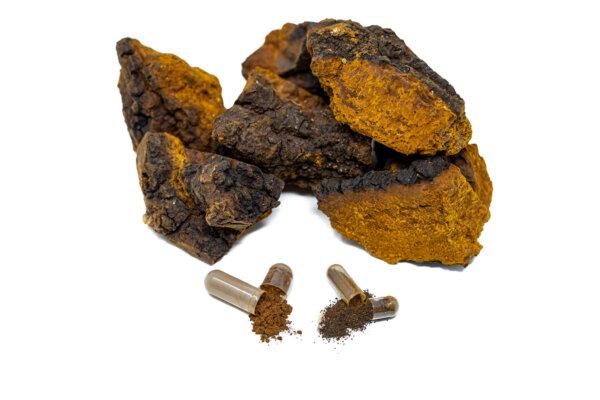
Lastly, the highest quality and most medicinal chaga on the market will utilize not just the inner part of the mushroom, which is an orange-brown color, but also the extremely potent outer crust, which is black and rough looking. Some of the vital compounds (like betulin) only exist in this crust, and most sources that sell chaga leave this part out entirely.