The United States and the Russian Federation have agreed to resume high-level communication between their respective militaries, the U.S. European Command (EUCOM) announced on Feb. 5.
“Maintaining dialogue between militaries is an important factor in global stability and peace, which can only be achieved through strength, and provides a means for increased transparency and de-escalation,” EUCOM said in a Thursday press statement.
“This channel will provide a consistent military-to-military contact as the parties continue to work towards a lasting peace.”
Russian and U.S. forces had maintained this high-level communications channel until the fall of 2021, just months before Russian forces marched on Ukraine in February of 2022.
The decision to reestablish military-to-military communications follows a series of diplomatic engagements between the United States, Russia, and Ukraine in the United Arab Emirates this week.
U.S. special envoy Steve Witkoff and Jared Kushner, adviser and son-in-law to President Donald Trump, have led the main efforts in the UAE capital of Abu Dhabi, as the parties work to settle the ongoing Ukraine conflict.

Air Force Gen. Alexus G. Grynkewich, who leads EUCOM and serves as the supreme allied commander of the North Atlantic Treaty Organization (NATO), has also taken part in talks in Abu Dhabi with senior Russian and Ukrainian military leaders.
While EUCOM announced the official resumption of military-to-military communications with Russia on Thursday, it said the EUCOM commander has had additional authorities to maintain communication with the chief of the Russian military’s general staff. EUCOM said such communications channels were useful to avoid miscalculations and unintended escalatory actions between the United States and Russia.
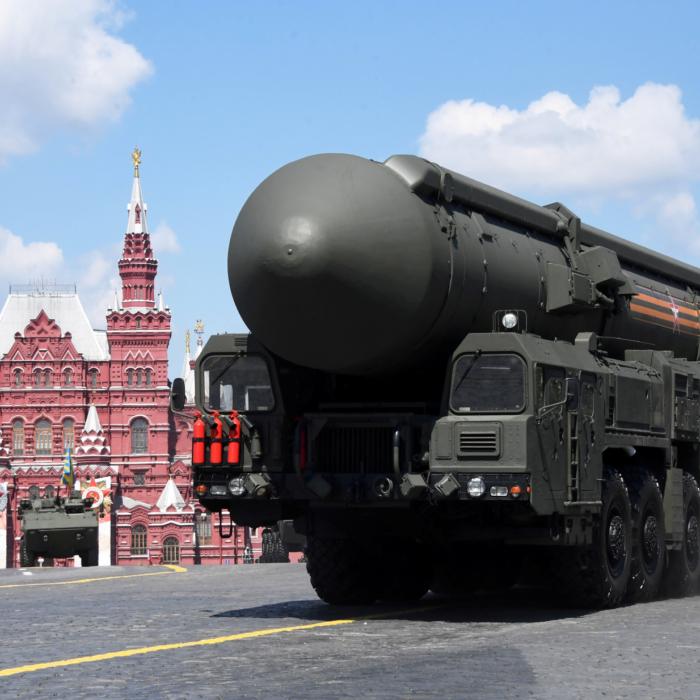
New START was the last legally binding nuclear arms control treaty in force between Russia and the United States. It required both countries to cap their number of deployed nuclear warheads at 1,550.
Under New START, both parties also agreed to limit their deployed nuclear-armed missiles and bombers to 700. Both countries had also agreed to keep no more than 800 nuclear-capable missile launchers or bombers.
“While significant work remains, steps like this demonstrate that sustained diplomatic engagement is delivering tangible results and advancing efforts to end the war in Ukraine,” Witkoff wrote in a post on X.
“Discussions will continue, with additional progress anticipated in the coming weeks.”