U.S. Treasury Secretary Scott Bessent says he encourages Prime Minister Mark Carney not to “pick a fight” with the United States for political advantage ahead of the upcoming review of the two countries’ free trade agreement.
“I would not pick a fight going into USMCA to score some cheap political points. Either you are working for your own political career, or you’re working for the Canadian people,” Bessent told CNBC on Jan. 28.
The United States-Mexico-Canada Agreement (USMCA) is due for review later this year. Carney has called it the “best deal” available to Canada, after failing to obtain relief from U.S. sectoral tariffs, noting that the agreement allows roughly 85 percent of goods to move tariff-free between Canada and the United States.
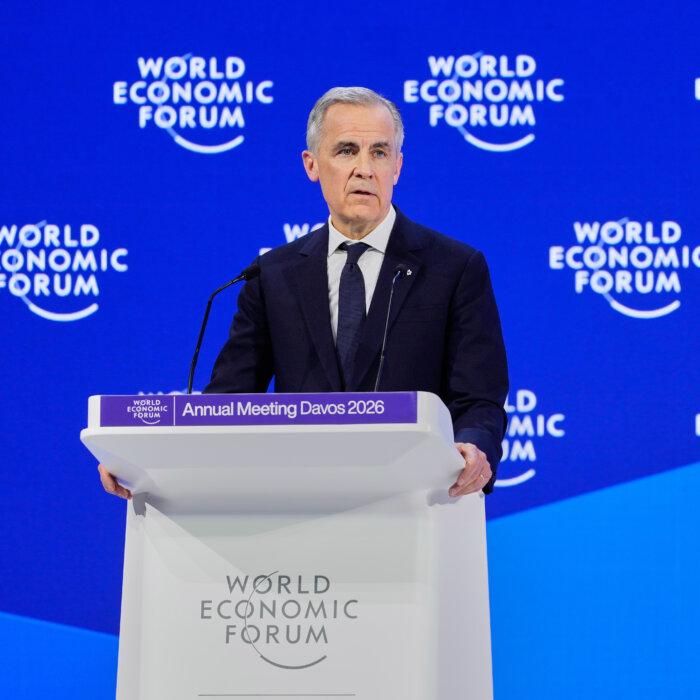
Bessent’s comments on Carney were in response to a reporter’s question on whether Canada will face consequences in the upcoming USMCA negotiations following the prime minister’s speech at the World Economic Forum meeting in Davos, Switzerland, on Jan. 20.
Trump and Carney addressed the Davos speech in a Jan. 26 call, but Carney and Bessent later gave conflicting accounts of what was said during the exchange. Neither Ottawa nor Washington released a readout.
Bessent, who was on the call, said earlier this week that Carney had “very aggressively” walked back some of the “unfortunate remarks” he made in Davos.Meanwhile, Carney told reporters on Jan. 27 he had not backtracked his comments during what he said was a “very good conversation” with Trump.
This issue of conflicting accounts was raised by CNBC during the interview, but Bessent did not address the question directly.
“In my investment career, I’ve seen what happens when a technocrat tries to pivot and become a politician; never really works out well,” he first responded.
Bessent, a key figure in the Trump administration, remarked that Carney “rose to power on an anti-American, anti-Trump message,” adding that this is “not a great place to be when you’re negotiating with an economy that is multiples larger than you are and your biggest trading partner.”
Another top White House official had suggested last week that Carney’s speech was potentially geared towards improving his domestic standing.
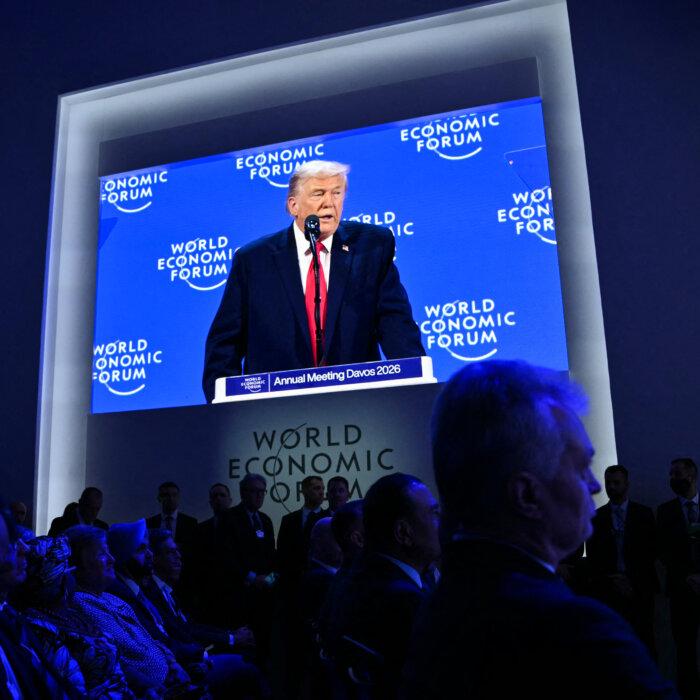
Trump also reacted negatively to the speech, saying during his own address in Davos on Jan. 21 that Canada should be “grateful” for its relationship with the United States, while saying Carney “wasn’t so grateful.”
The president shortly after rescinded his invitation for Carney to join his newly formed “Board of Peace.”
‘Relations are Good’
Though each side has heavily criticized each other in recent days, both countries expressed optimism for the upcoming USMCA negotiations.“In the end, I think we will end up in a good place,” Bessent said on Jan. 28, while adding it “may not be a straight line.”
Carney told reporters the same day that “relations are good” with the United States when asked by reporters what hope he has for the renewal of USMCA. “We have good conversations, good back and forth,” he said, while adding that Canada’s own internal review of the USMCA has been completed.
Carney, in speaking with reporters on Jan. 27 about his call with Trump, said he had told the president Canada is prepared to build a “new relationship” with the United States through the USMCA.
The previous day on Jan. 26, the prime minister said he expects a “robust” review of the trade deal and called Trump a “strong” negotiator. “I think some of these comments and positioning should be viewed in the broader context of that,” he said.
“What was reassuring is his clear desire to work with us and Mexico in terms of a review of [USMCA],” he said. LeBlanc added he explained to Greer the nature of the deals Ottawa made with Beijing.
“I was reassured that Ambassador Greer understood very clearly what the agreement is and what it’s not,” LeBlanc said.