Prime Minister Mark Carney is pushing back on a suggestion by a top U.S. official that he backtracked on some aspects of his speech in Davos during a phone call with U.S. President Donald Trump.
Carney said he received a call from Trump on Jan. 26 and the two discussed a “wide range of subjects,” including the speech Carney delivered at the annual meeting of the World Economic Forum in Davos, Switzerland, on Jan. 20.
“To be absolutely clear, and I said this to the president, I meant what I said in Davos,” Carney told reporters on Jan. 27 before a cabinet meeting in Ottawa when asked about the conversation between the leaders.
The prime minister said he conveyed to Trump that Canada had been the first country to “understand the change in U.S. trade policy that he had initiated, and we’re responding to that.”
Carney said he told Trump Canada is responding by building partnerships abroad and building the economy domestically. “And we’re prepared to respond positively by building that new relationship through CUSMA. He understood that, and it was good conversation,” he said.
CUSMA, or the United States-Mexico-Canada Agreement (USMCA) on free trade, will be reviewed later this year.
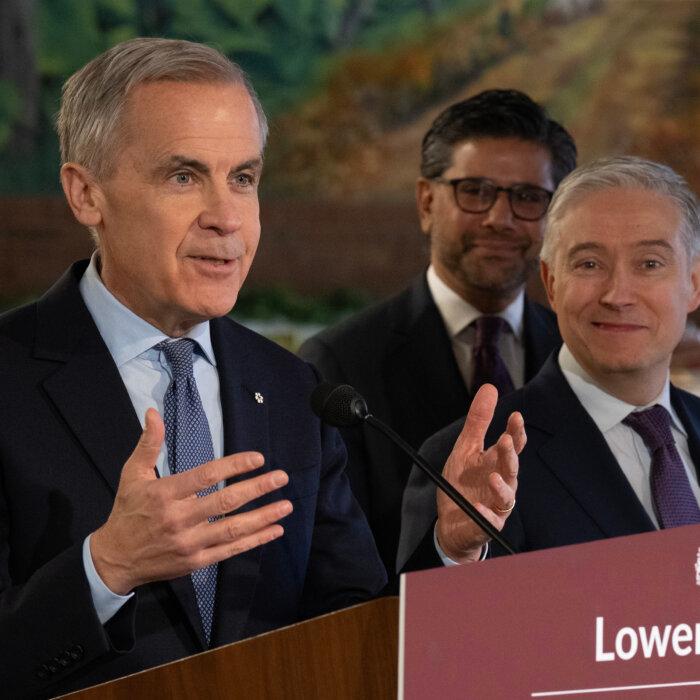
The prime minister’s comments on his Davos speech came after U.S. Treasury Secretary Scott Bessent told Fox News on Jan. 26 that Carney had backtracked on some aspects of his address during his call with Trump.
“I was in the Oval [Office] with the president today, he spoke to Prime Minister Carney, who was very aggressively walking back some of the unfortunate remarks he made at Davos,” Bessent told host Sean Hannity. “I’m not sure what the prime minister was thinking,” Bessent added, noting that Canada “depends” on the United States for trade.
“The prime minister should do what’s best for the Canadian people, rather than trying to push his own globalist agenda,” Bessent said.
In his speech at Davos, Carney criticized unspecified “great powers” for using “coercion” and tariffs as leverage. While he did not name the United States explicitly, his remarks were widely interpreted as targeting Washington. The comments appeared not to be directed at China, as Carney highlighted the “new strategic partnership” with Beijing as part of efforts to diversify trade away from reliance on the United States.
“Canada is systematically destroying itself. The China deal is a disaster for them,” Trump said on social media.
Carney and cabinet ministers in recent days have been messaging that Canada does not intend to pursue a free trade deal with China, noting that the USMCA restricts the conclusion of trade deals with non-market economies.
Carney described his call with Trump on Jan. 26 as a “very good conversation” and said he explained the arrangement reached between Ottawa and Beijing. In exchange for allowing Chinese EVs into Canada, Ottawa said Beijing has agreed to reduce or drop some tariffs on Canadian agricultural and seafood products.
“I explained to him what we’re doing; 12 new deals on four continents in six months. He was impressed,” said Carney.
Trump had initially not expressed any concerns when he was first asked about Canada and China striking a deal on Jan. 16. “If he can get a deal with China, he should do that,” Trump said of Carney.
Trump’s tone changed after Carney made his Davos speech critical of U.S. policies. The president reacted the following day during his own Davos address on Jan. 21, saying that Carney “wasn’t so grateful” to the United States and that “Canada lives because of the United States.”
Amid the competing claims about what Carney told Trump in their Jan. 26 call, Conservatives are calling for the Prime Minister’s Office to issue a readout, which is typically customary after a meeting between leaders.