Washington’s top trade official says his Canadian counterpart has not told him that Canada may retaliate after U.S. President Donald Trump launched a new round of tariffs.
United States Trade Representative Jamieson Greer also said he hopes to present Trump with options by the end of the year for “interim arrangements” with Canada and Mexico in relation to the Canada-United States-Mexico Agreement (CUSMA).
Greer made the comments in testimony before the U.S. Senate finance committee on July 22, answering questions on the administration’s tariff agenda and continental trade negotiations.
Asked whether U.S. farmers will be able to maintain access to the Canadian market amid the current trade tensions, Greer said they will.
“I talked with my Canadian counterpart yesterday. They did not say they’re going to retaliate,” Greer said, without elaborating.
Greer’s mention of his counterpart could be a reference to Canada-U.S. Trade Minister Dominic LeBlanc. For CUSMA negotiations specifically, Janice Charette serves as Canada’s chief negotiator and Greer’s counterpart.
The Epoch Times reached out to LeBlanc’s office to confirm the matter but didn’t immediately hear back.
Trump signed three proclamations on July 20 to impose 50 percent tariffs on a variety of Canadian goods, in response to measures taken by Ottawa and Canadian provinces to counter U.S. duties. The U.S. measures specifically go after the provincial U.S. alcohol bans, the federal tariffs on U.S. autos, and Canada’s supply management system on dairy products, a longstanding trade irritant for Washington.
Greer defended the trade action, telling the U.S. senators that the United States has never instituted a full ban of Canadian goods.
“We’re fighting against a ban on American liquor on shelves. We’re fighting against hard caps on export of American cars,” he said. “So we’ve never banned Canadian products. We’ve never done that kind of thing, but we’re fighting against caps on American cheese.”
The Trump administration has imposed a range of tariffs on Canadian goods, including sector-specific tariffs on steel, aluminum, and automobiles.
Greer said that the U.S. administration’s objective with tariffs is to reshore manufacturing to create an economy resilient to shocks and independent of foreign goods in critical sectors.
Senator Ron Wyden, the ranking Democrat on the finance committee, suggested to Greer that with the new proposed tariffs on Canada, some goods produced by China will now face lower duties.
“Our staff believes that there are instances where the Canadians are going to pay higher tariffs than the Chinese are, and that’s not right,” he said.
CUSMA Update
Senators also asked Greer to indicate when he expects there could be progress on CUSMA negotiations.The United States rejected renewing the agreement for another 16 years during the July 1 review, citing the need for improvements. The deal remains in force for another 10 years with annual reviews, unless there’s a renewal or a party withdraws.
Greer noted he was leaving for Mexico City after the hearing to meet with Mexican President Claudia Sheinbaum. This is the third round of bilateral talks on CUSMA between Mexico and the United States this week. No similar talks have been scheduled with Canada.
Greer said he’s moving with “all due speed” in the negotiations, adding that some issues will take time to iron out, including how to reinforce the rules of origin in CUSMA and incentivize production within the trading bloc, as well as on environmental enforcement in Mexico.
“I’m hopeful that before the end of the year, we can have at least options for President Trump and the leaders of Canada and/or Mexico to consider potential interim arrangements, or things that Canada can do on the one hand and Mexico can do on the other hand to strengthen enforcement, to improve their commitments toward us, and to make sure that we’re managing all of the trade issues,” he said.
Meanwhile, the Canadian government’s main effort is to have the U.S. sectoral tariffs removed. The Canadian side previously said trade talks have been positive and that work has been done in the absence of formal talks.
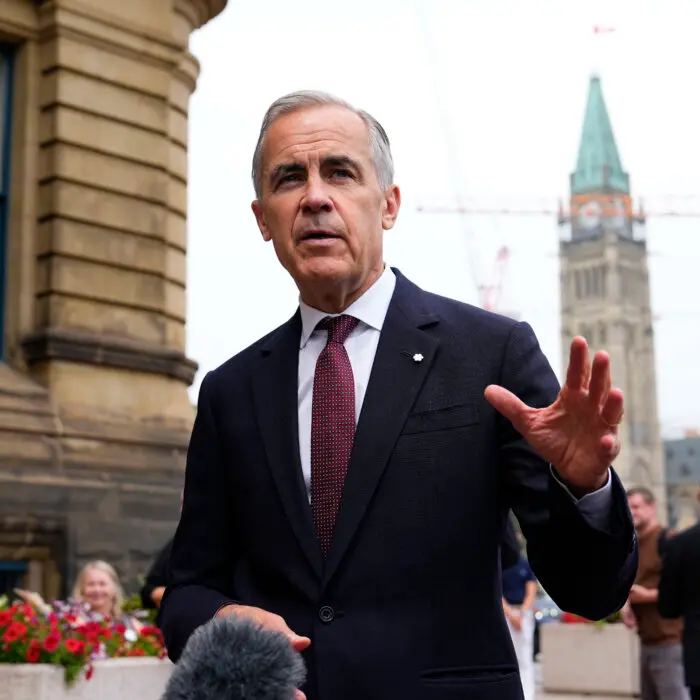
After the new tariff threat, Carney said on July 21 he spoke with Trump and that the two agreed to “intensify” trade negotiations.
“We understand the U.S. approach to strategic sectors,” he said, in reference to tariffs on steel, aluminum, autos, and lumber, which he called the “most important” for the Canadian economy. “We don’t want a partial agreement. We want something that addresses those sectors as well.”
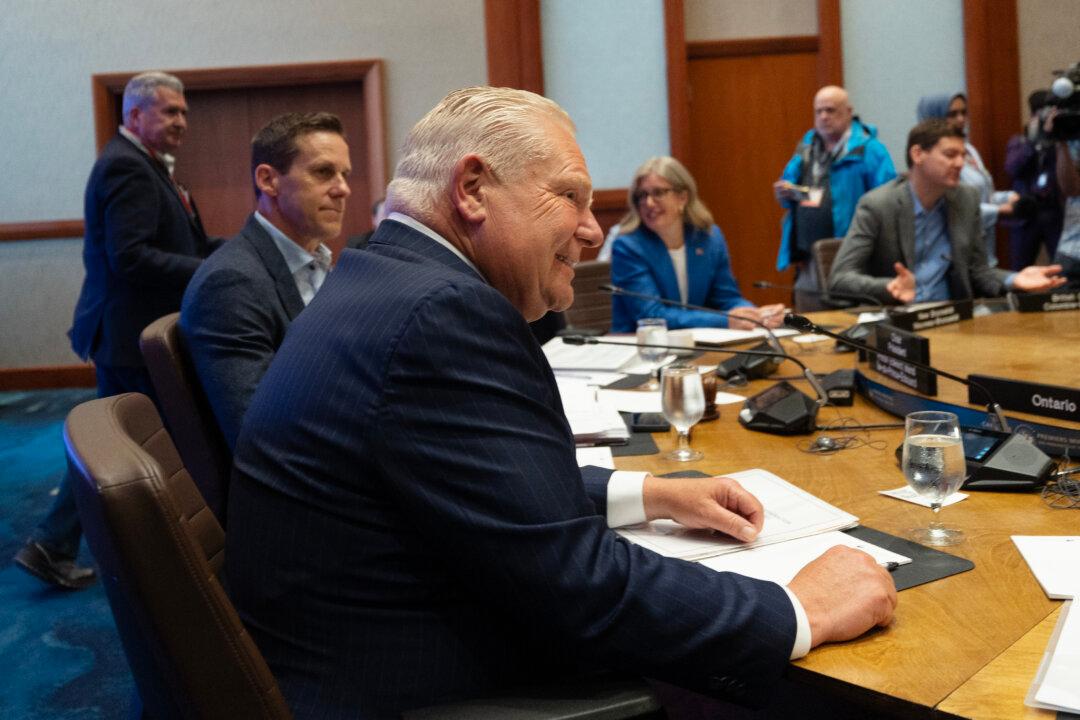
Carney met virtually on July 21 with provincial and territorial premiers who are holding meetings on Prince Edward Island.
Quebec Premier Christine Fréchette told reporters after the meeting there was a shared goal of intensifying discussions with the United States and avoiding an escalation that she said would be “very harmful” to businesses and workers.
Carney meets again with the premiers on July 23.