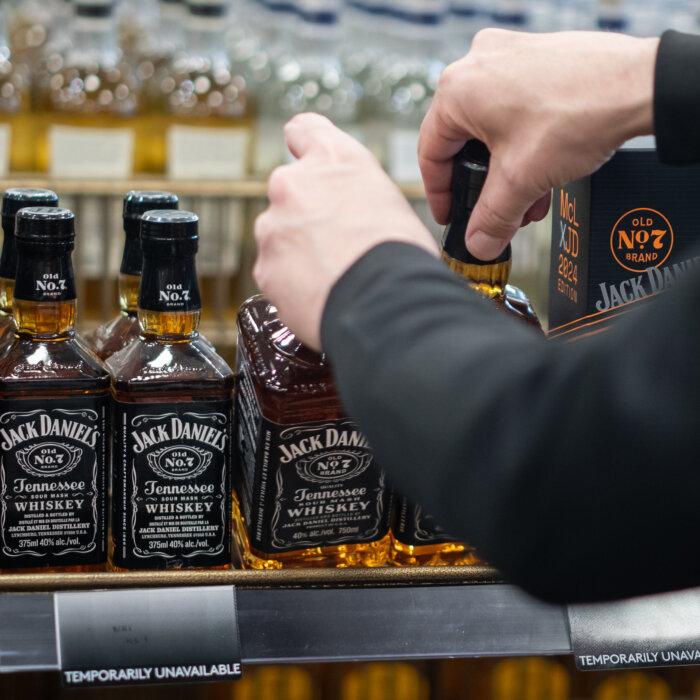
Saskatchewan Premier Scott Moe says he believes the federal government will likely ask provinces to lift their liquor board bans on the sale of U.S. alcohol following Washington’s latest tariff threat.
“I expect that ask to be coming,” Moe said on July 21 before a meeting of Canadian provincial and territorial premiers in Charlottetown, P.E.I.
The day before, U.S. President Donald Trump had issued proclamations retaliating against measures imposed by Ottawa and the provinces in response to U.S. tariffs, including bans on the sale of U.S. alcohol. The United States is set to impose 50 percent tariffs on a range of Canadian goods in one month, without free-trade exemptions.
Saskatchewan initially joined other provinces in pulling U.S. alcohol from store shelves in March 2025 but reversed the decision in June last year, alongside Alberta. Since then, the two conservative-led provinces have taken a different approach from most others in responding to the Trump administration.
Moe said he will not advise his counterparts to remove their liquor bans, adding that it’s the federal government’s responsibility to do so because Ottawa sits at the negotiating table with the U.S. administration.
“They‘ll know the sensitivities that it may present in those negotiations, and they’ll also know what counteraction would happen should that occur by the American administration,” he said.
Moe said he believes Ottawa has already asked unspecified provinces to remove their U.S. alcohol bans.
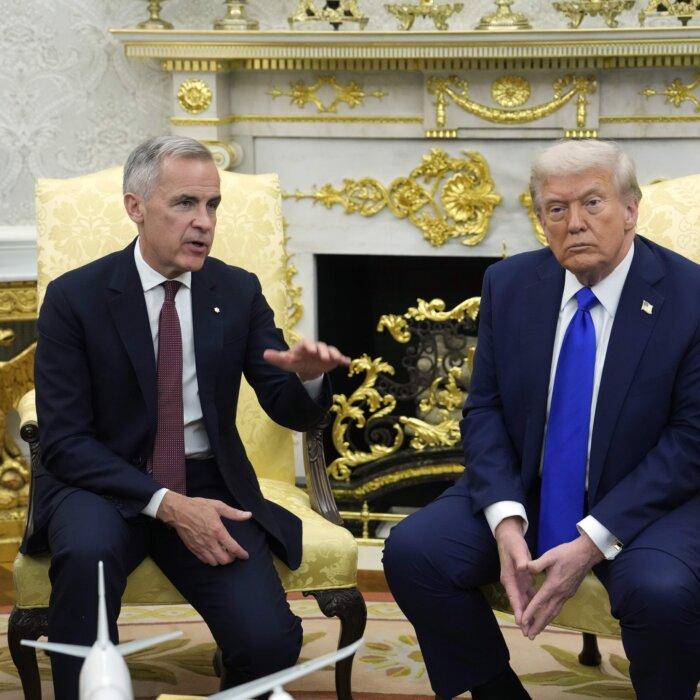
Prime Minister Mark Carney was asked about the issue when speaking to reporters on the morning of July 21 and said the decision on U.S. alcohol “first and foremost will be taken by the provinces themselves.” He added that the decision should only be taken “in my judgment, as part of an overall agreement.”
The prime minister also said he spoke with Trump earlier that morning and that the two leaders agreed to intensify negotiations in the coming weeks.
Premier Moe said the focus should not only be on intensifying negotiations with the United States to avoid the latest tariff threat, but also to renew the Canada-United States-Mexico Agreement (CUSMA). The U.S. declined to renew the free-trade pact on July 1, saying several issues must first be resolved.
Moe suggested key players for Ottawa in the trade negotiations should “camp out” in Washington, D.C., to solve the issues.
Asked by reporters whether he’s taking an “elbows down” approach by not calling for retaliation, Moe said it’s not wise to fight with your largest trading partner, adding that the trade relationship with the United States is “much larger than any president or prime minister.”
“I want a trade agreement with the United States of America. They’re our largest trading partner, have been for all of our life, ... and likely will be into the future,” he said.
Other Provinces Respond
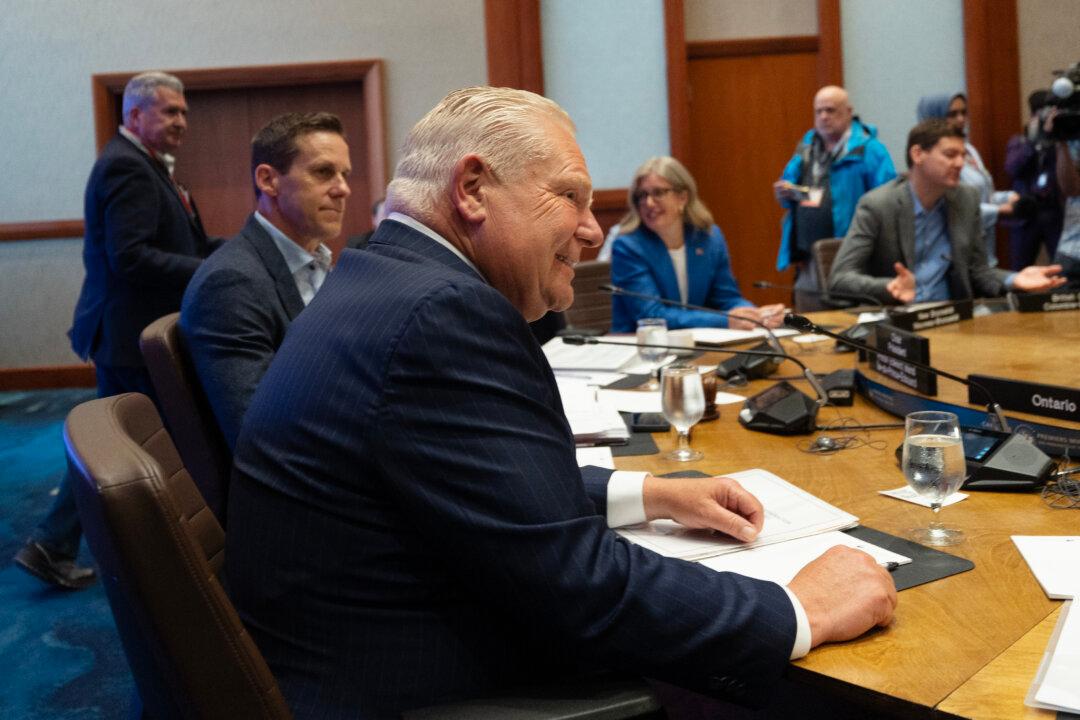
Ontario Premier Doug Ford took a different approach from that of Moe, calling on Canada to go “full tilt” in its response against the United States. He said his province would not lift its alcohol ban if the United States keeps its tariffs on Canada.“We have to negotiate through strength, not weakness, and we need to throw everything on the table,” he said on July 21.
Prince Edward Island Premier Rob Lantz told reporters that Ottawa has not asked his government to restore U.S. alcohol to store shelves. He said, however, that the federal government sent a letter asking what the province would need in return for doing so.
Lantz said his province is a “drop in the bucket” in the equation and won’t solve U.S. concerns over market access. “But it’s a conversation we have to have as premiers and how it fits into this 30-day discussion about hammering out a deal over these irritants,” he said.
B.C. Premier David Eby said he hasn’t been asked by Ottawa to lift the province’s ban on U.S. alcohol and insisted there is no chance the products will return to store shelves. He said he is “proud” of the policy and believes British Columbians support it.
Eby said he supports retaliating against the United States with tariffs, adding that it should be an integrated response nationally. “If any retaliatory response is undertaken, we need to make sure that it has a proportionate impact across the country,” he said.
The B.C. premier expressed doubts regarding Ottawa’s ability to reach an agreement with Washington in the next 30 days, given the state of negotiations. “I don’t see that the Americans have been engaging with Canada in trade conversations in any meaningful way,” he said.
The United States and Mexico are holding their third round of bilateral CUSMA talks this week, whereas no such talks have been scheduled with Canada.
Carney said his government has made a series of “comprehensive and detailed proposals” to modernize the trade pact, which he said recognizes how the United States is reshaping all of its trading relationships. Trump has imposed tariffs in an effort to shift manufacturing in strategic industries, including metals and automobiles, back to the United States.
U.S. Trade Representative Jamieson Greer said on July 21 that Canada’s proposals have not been substantial.
“The types of things that have been in these proposals have always been: Let’s talk, let’s keep trading in energy, things we already do, things that do not fundamentally commit to resolve these issues,” Greer told CNBC.