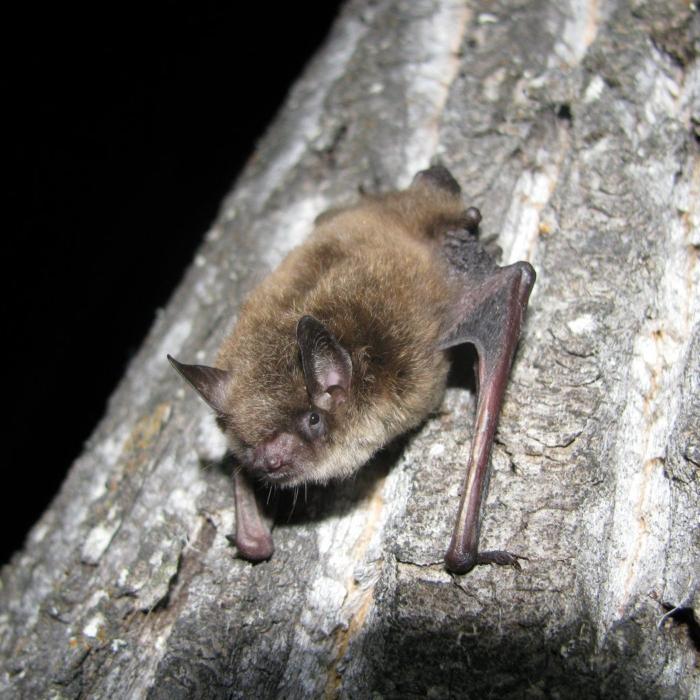
Toronto’s health authority is looking for a person who came into contact with an injured bat suspected of having rabies. Meanwhile a county in Ontario has confirmed a separate case of exposure to the virus.
TPH described the person as being approximately five feet eight inches tall, with a beard, and wearing eyeglasses, a black T-shirt, black pants, and white sneakers, and noted that the person was holding a black water bottle at the time.
The agency urged the person who had handled with the bat—or anyone who knows an individual fitting the description—to immediately contact TPH during regular business hours Monday to Friday or call 311 after hours and ask to speak to the Healthy Environments manager.
Rabies is a viral infection that affects the nervous system of mammals, including humans, the release said, noting that if left untreated before symptoms appear, the infection can be fatal.
“The rabies virus is spread through the saliva of an infected animal, usually entering through a bite or more rarely a scratch.”

Residents are advised to take preventive measures to reduce their risk of rabies exposure. TPH recommends staying away from all wild animals even if they appear tame, injured, or sick. For pet owners, the agency urged them to ensure their pets are up to date with rabies vaccinations, kept away from wild animals, and not allowed to roam unsupervised.
Confirmed Exposure
A public health unit in Ontario on June 27 confirmed a human case of rabies after a person was exposed to a bat that tested positive for the rabies virus.Grand Erie Public Health (GEPH), which serves Brant County, the City of Brantford, Haldimand County, and Norfolk Country in southern Ontario, said the bat was found in Brantford-Brant.
“The individual exposed to the bat is receiving post exposure rabies prophylaxis which includes rabies immune globulin and a series of rabies vaccine,” the health unit said in a news release.
The national health agency said the last human case of rabies contracted from a non-flying animal in Canada was in 1967. “Since then, all human cases of rabies in Canada have been from exposure to bats or due to exposures while in another country.”
Domestic human rabies cases through contact with rabid bats have also been reported in three other provinces: two cases in British Columbia in 2019 and 2003. one in Alberta, in 2007, and one in Quebec, in 2000, the agency said on its webpage.