Poland heads to the polls on Sunday for a presidential election that will act as a bellwether on the country’s political direction.
The pro-European Union government in Warsaw says this vote has the potential to reinvigorate its position, while the nationalist opposition sees it as a chance to “Make Poland Great Again” in the vein of U.S. President Donald Trump’s “Make America Great Again” (MAGA) promise.
Poland’s presidency is limited in scope compared to the equivalent posts in Paris or Washington, with the holder being head of state and commander in chief but holding only limited executive powers, beyond the ability to veto legislation.
The president also must renounce any party allegiance upon taking the post.
Polling second to replace incumbent Andrzej Duda after his two terms in the post is amateur boxer and conservative historian Karol Nawrocki, 42, who is backed by the nationalist opposition Law and Justice (PiS) party.
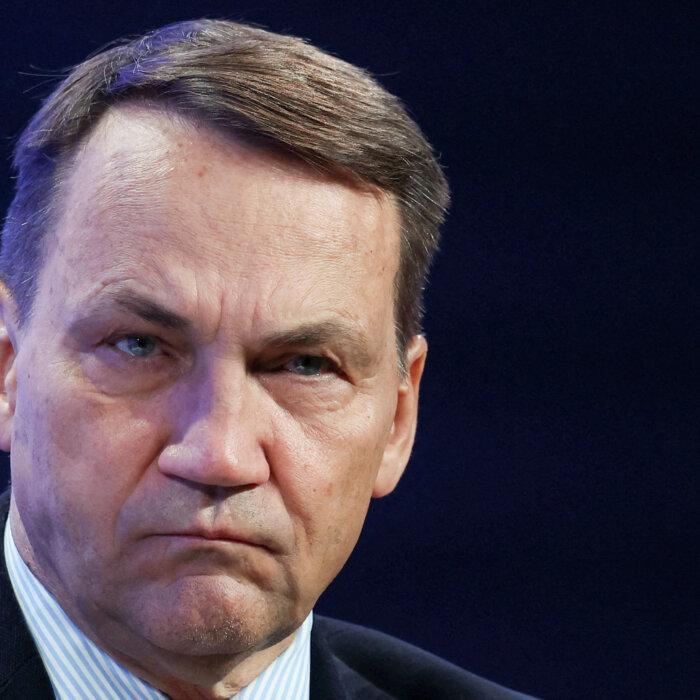
Multi-millionaire entrepreneur and conservative Slawomir Mentzen, 38, is third.
Both Nawrocki and Mentzen are supporters of Trump, being critical of illegal immigration and progressive agendas and approving of the U.S. president’s MAGA message.
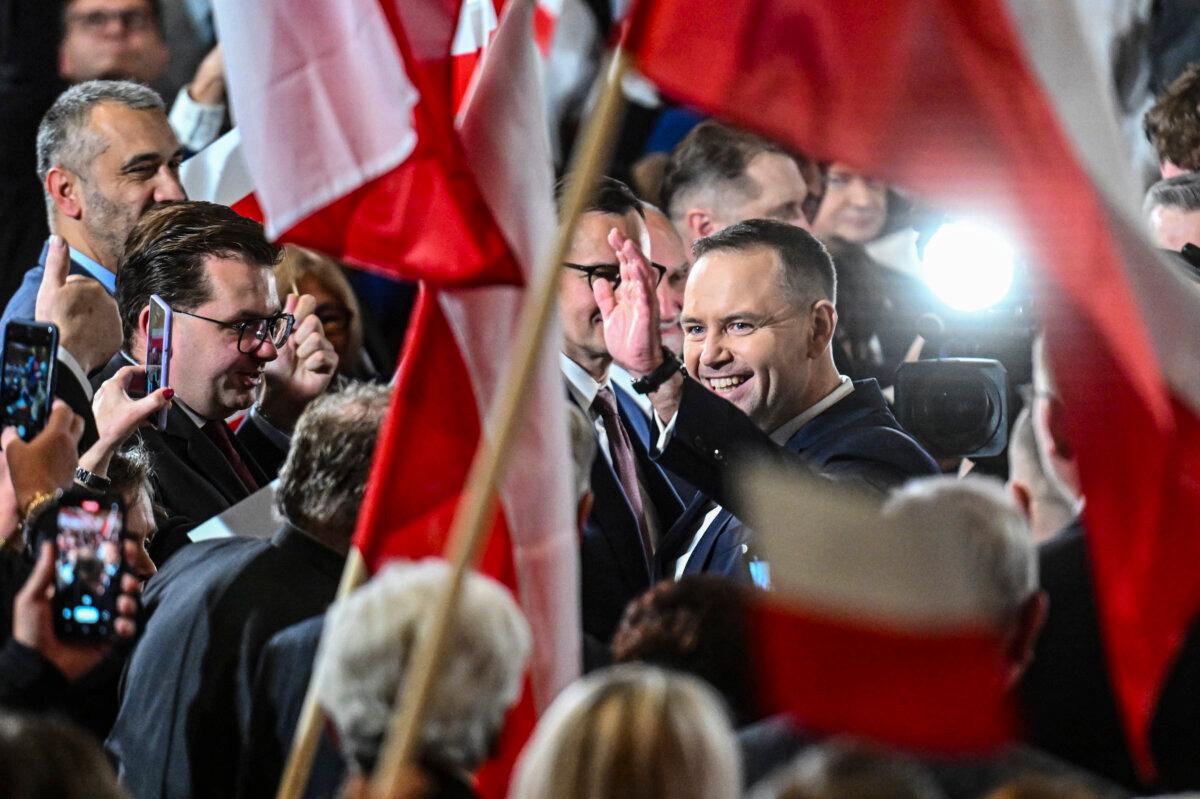
The election coincides with a presidential runoff in Romania, where nationalist George Simion is the current favorite.
However, in Poland, Trzaskowski looks likely to beat his nationalist rivals.
If he does, he has pledged to work with Prime Minister Donald Tusk to undo changes to Poland’s judiciary made under the previous PiS government, which critics say have eroded democratic checks and balances.
The PiS lost its majority to Tusk’s coalition in an October 2023 election after nearly a decade in power, amid a wave of anger over its record on women’s and minority rights.
However, Duda’s term as president has seen him use veto powers to block many of Tusk’s policies.
“The stakes in this election are as high as they were on Oct. 15,” Tusk said in parliament in April.
“So I am hoping for mobilization. ... It’s hard to govern alongside a hostile president, with all those vetoes.”
All three candidates have promised to continue supporting Ukraine with arms, but have disagreed on how much help should be given to refugees fleeing the country.
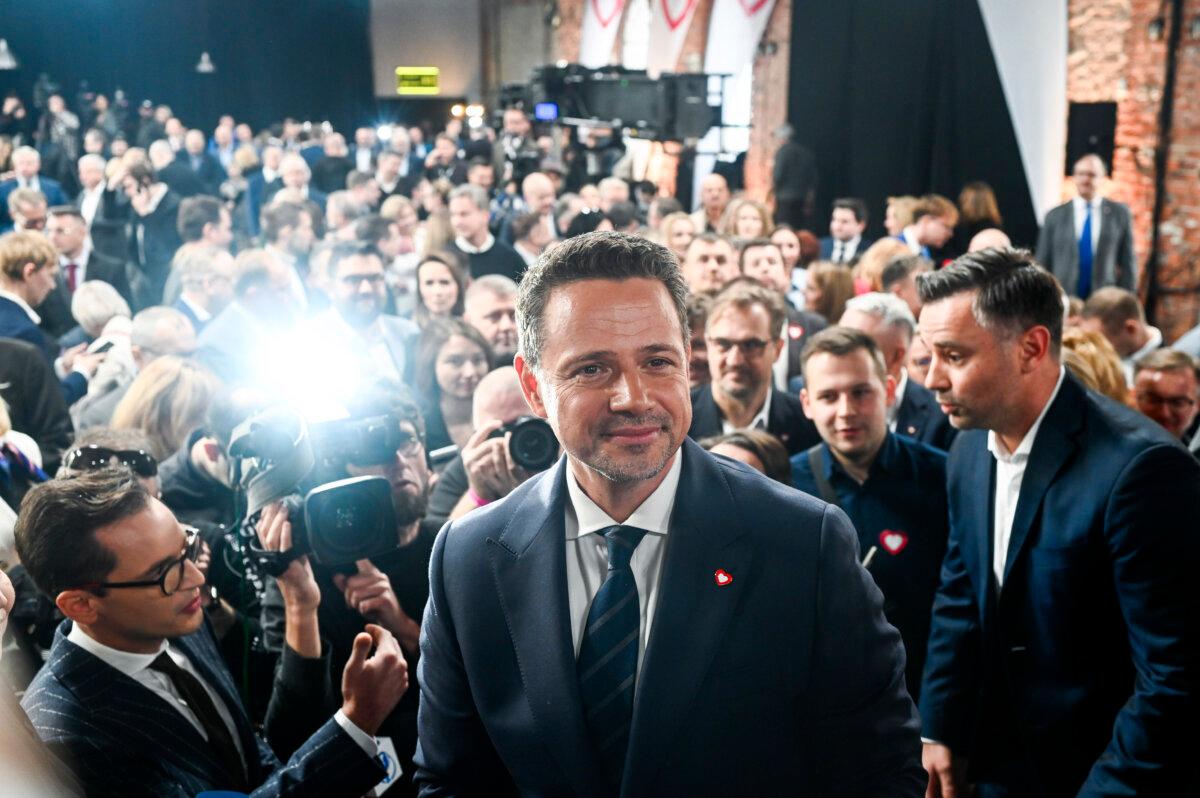
Nawrocki and Mentzen also oppose NATO membership for the government in Kyiv, and emphasize that Warsaw’s interests lie with America, while Trzaskowski seeks a bigger role for Europe in handling the war in Ukraine.
“We support Ukraine ... in its efforts to defeat post-Soviet Russia. That’s obvious,” Nawrocki said during a televised debate on Monday.
“It is in the strategic interest of Poland to repel the neo-imperialist threat from Russia.
“As president ... I will build the Polish–American alliance, and I will not agree for the EU to become a NATO substitute.”
Nawrocki and Mentzen also say that the interests of ethnic Poles should take precedence over those of Ukrainian refugees, of whom Poland has taken millions since the war broke out.
Despite a roughly eight-point lead over Nawrocki, Trzaskowski could struggle in a runoff between the two, political observers say.
Trzaskowski has had trouble in rural areas, where Nawrocki is often seen as someone who better understands the issues of living costs and migration.
However, Nawrocki’s support has fallen in recent weeks, amid allegations that he lied on his wealth statement and used an apartment he had taken from a pensioner.