The Malaysian government extended its deal with deep-sea exploration firm Ocean Infinity to search for missing Malaysia Airlines flight MH370 for another year, the country’s transport ministry announced on June 29.
The Boeing 777 was carrying 227 passengers and 12 crew when it vanished during a flight from Kuala Lumpur to Beijing on March 8, 2014, perplexing the world. Multiple search operations in the southern Indian Ocean so far have yielded scant results.
MH370 was flying over the South China Sea when it abruptly disappeared from air traffic control. Its last voice contact was made at 1:19 a.m. local time on March 8, 2014.
More than 150 Chinese nationals were passengers on the doomed flight, along with 50 Malaysians, including the crew, and citizens of the United States, Canada, France, Australia, Indonesia, India, Ukraine, and other countries.
Malaysian Transport Minister Loke Siew Fook said the Southeast Asian nation’s cabinet approved the extension on June 26, with the new contract period designated to run from July 1, 2026, to June 30, 2027, Malay Mail reported.
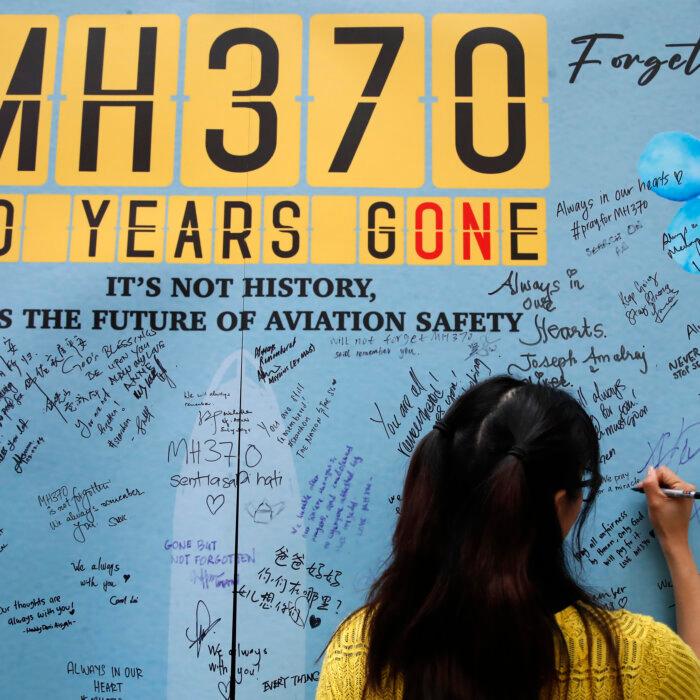
Loke said the move reflects the government’s commitment to giving closure to the families of those on board the doomed plane.
“The extension retains all key terms and conditions of the existing agreement, including the ‘no find, no fee’ principle,” he said in a statement.
The deal has been made on a “no find, no fee” basis, meaning Malaysia will not have to pay Ocean Infinity unless the wreckage is located.
However, if the Texas-based marine robotics company is successful, they will be paid $70 million (RM284 million).
The 12-month extension means that the remaining 2,868.18 square miles of the designated search area can now be fully covered.
Loke added that the decision takes into account Ocean Infinity’s new commercial commitments, which require its main operational assets to be temporarily redeployed elsewhere, and that the new deployment window—between November 2026 and April 2027—coincides with calmer sea conditions, which are more conducive to search operations.
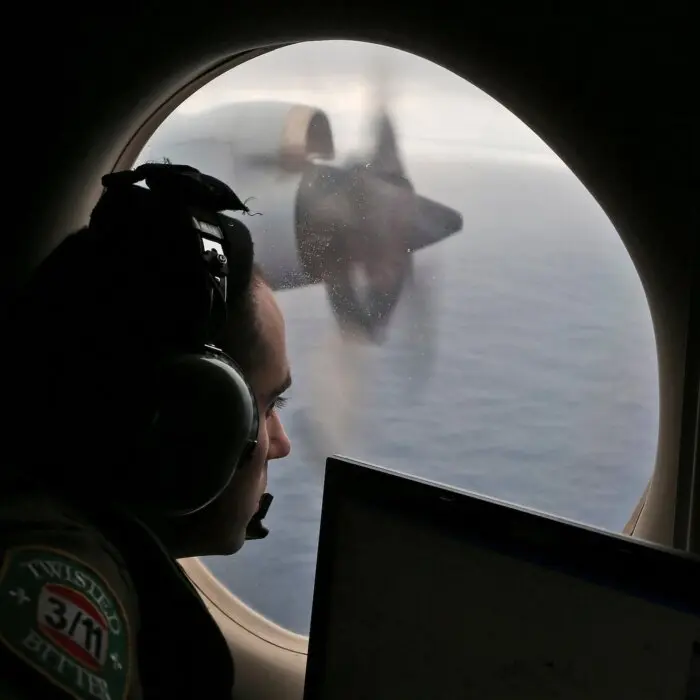
Ocean Infinity first began looking for the aircraft in 2018 and has periodically conducted searches since.
Ocean Infinity CEO Oliver Plunkett said in a statement on March 8 that it was “important for us to take advantage of every piece of information and data available and go back, but despite all that effort, we haven’t been able to find it.”
“If nothing else, we can say with confidence that it isn’t where we looked. That matters—it brings clarity, and it will help those continuing to study the evidence refine their thinking and shape future search strategies,” he said, adding, “Although this phase of the search has concluded, our commitment has not.”
The Epoch Times contacted Ocean Infinity for comment but did not receive a response by the time of publication.
The Malaysian government’s 495-page report into the disappearance, carried out by an international team and published in 2018, found that the Boeing 777’s controls were likely deliberately manipulated as the plane made a turn back after going off course. Investigators believe the plane was manually turned around in midair and not under the control of the autopilot.
The report said that the “possibility of intervention by a third party” could not be ruled out. Investigators found that although there was no evidence of a mechanical failure, this could not be definitively ruled out.
The report stopped short of offering a conclusion as to what happened, saying that could not be done without finding the main wreckage, including the black box.
Investigators have said they did not find anything suspicious in the background, financial affairs, mental health, or training of either the captain or the co-pilot.