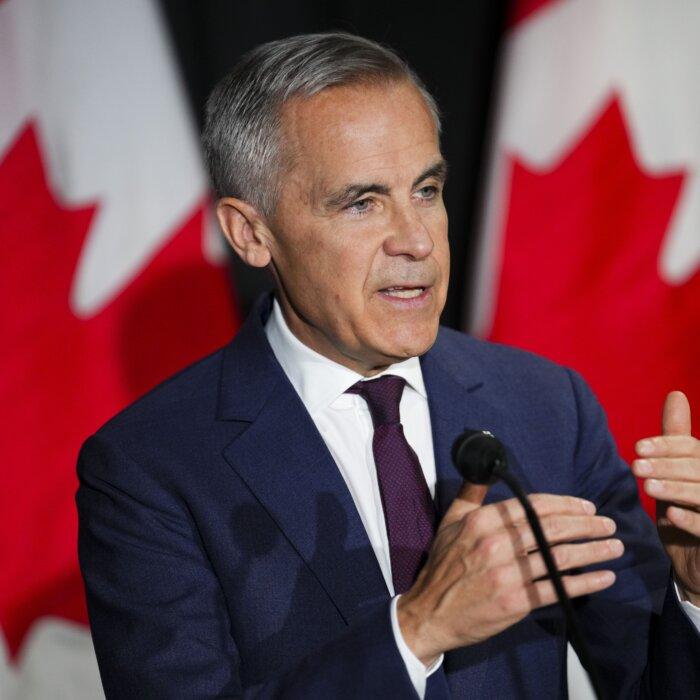
Prime Minister Mark Carney came away from the G20 Summit in South Africa with a few more wins on the non-U.S. trade front and downplayed the importance of the U.S. boycott of the summit.
When speaking to reporters, Carney also dismissed questions on when he had last been in touch with the American president.
No Trump
Trump was not the only leader in the Group of 20 who didn’t attend the summit in Johannesburg, but he was the most outspoken on his reasons for skipping the event.Trump had made a similar accusation directly to South African President Cyril Ramaphosa when he visited the White House in May. Ramaphosa rejected the accusation.
South Africa’s foreign ministry responded to Trump’s boycott saying the claim that Afrikaners are being persecuted is “not substantiated by fact.”
The United States will serve as the G20 chair next year.
Argentina, run by Trump ally President Javier Milei, who also did not attend the summit, also did not endorse the final declaration.
Meanwhile, a spokesperson for Ramaphosa said there was “sufficient consensus” to move it forward.
Carney told reporters on Nov. 23 that he “very much supported” the declaration, noting that it represents a year-long process of engagement between ministers and other stakeholders.
“The others around the table supported it,” Carney said. “Obviously, the United States is not here, so the United States isn’t party to that consensus.” The prime minister added that it’s a consensus representing “three-quarters of the world’s population, two-thirds of the world’s GDP. That consensus, that statement, has weight.”
Carney also dismissed questions from reporters asking when he last spoke with Trump, saying “who cares.” “It’s a detail. I spoke to him. I'll speak to him again when it matters,” he said.
“I look forward to speaking to the president soon, but I don’t have a burning issue to speak with the president about right now,” Carney said. “When America wants to come back and have the discussions on the trade side, we will have those discussions.”
Carney has travelled to Washington twice to discuss a reduction or removal of the various tariffs Trump has imposed. Tariffs on metals, cars, and softwood lumber are having a significant impact on Canadian industries.
During question period in the House of Commons on Nov. 25, Carney told the opposition that saying “who cares” was a poor choice of words for a serious issue.
Trade Push
Carney has expressed hope of doubling non-U.S. exports over the next decade, particularly as the trade impasse with the United States remains unresolved.Several moves along those lines were taken at the G20, the more important one being Ottawa and New Delhi announcing the start of formal trade talks.
From one summit to another, relations between Canada and India appear to have been put back on track.
Indian Prime Minister Narendra Modi visited Canada for the G7 Summit in June, marking the beginning of a deep reset after years of tensions with the previous Liberal government. In 2023 Prime Minister Justin Trudeau had accused India of having a hand in the assassination of a pro-Khalistan activist in B.C., an allegation New Delhi rejected.
Ottawa had cancelled trade talks with India in summer 2023 ahead of making the public accusation.
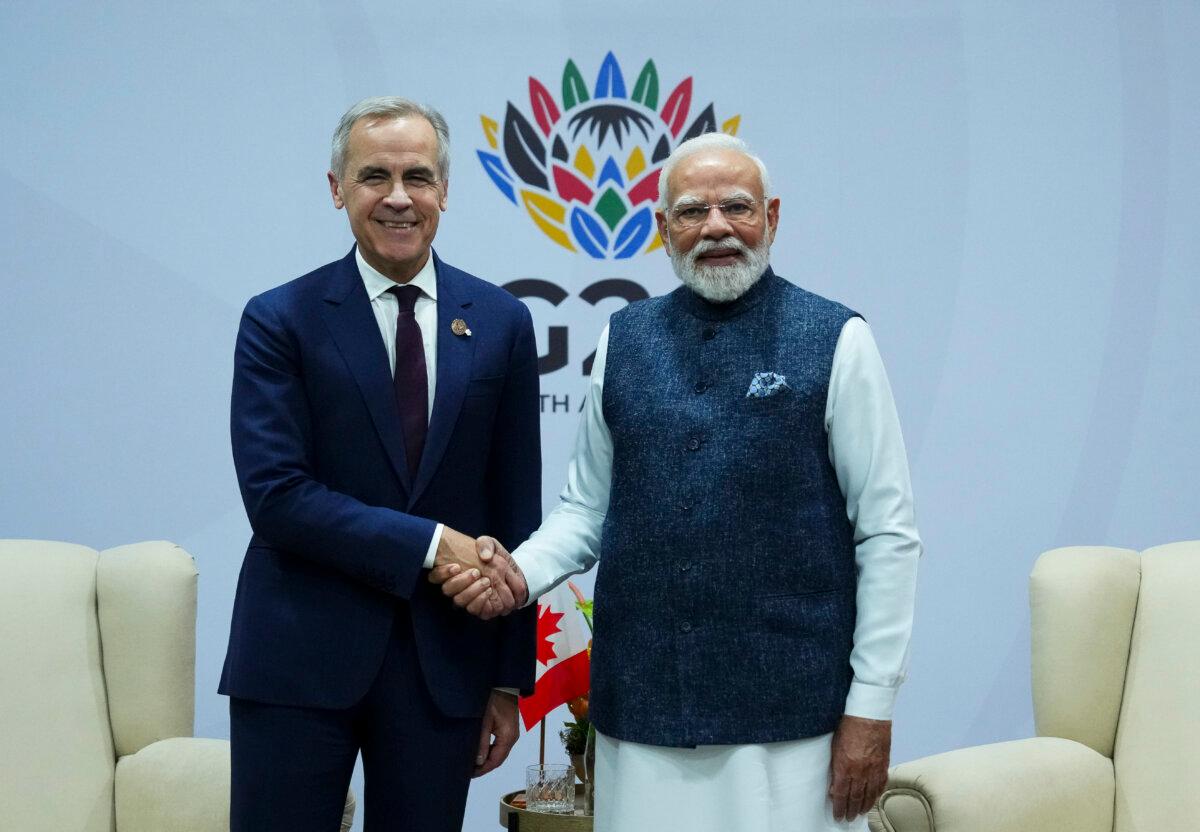
Modi and Carney met again on the sidelines of the G20 five months later and agreed to launch negotiations for a Comprehensive Economic Partnership Agreement (CEPA), a type of free-trade deal. The leaders said this will help bilateral trade reach $70 billion by 2030.
Before travelling to South Africa, Carney made a stop in the United Arab Emirates (UAE), the first visit by a prime minister since 1983. A FIPA investment agreement was signed during the visit with the UAE while negotiations for a CEPA economic deal were also launched.
Hot Sectors
The UAE’s interest in these sectors of the Canadian economy is apparently shared by a number of other countries. They were part of discussions when Carney met with other leaders on the sidelines of the G20, according to multiple readouts issued by the Prime Minister’s Office (PMO).The focus on AI and critical minerals was less reflected in talks with leaders from South Africa, Brazil, and India.
Canada, however, entered a technology partnership with India and Australia, which is said to be focused on “green energy” innovation and building resilient supply chains including related to critical minerals.
The Carney government has said it is seeking to position Canada as a key player in the critical minerals sector, both to achieve the energy transition and to reduce the global dominance of countries like China in supplying material critical to technology and defence equipment.
Ukraine
Russia’s war against Ukraine is a topic that normally surfaces during international forums and can occupy an important place on the agenda.“We concur that, guided by the Purposes and Principles of the UN Charter in its entirety, we will work for a just, comprehensive, and lasting peace in Sudan, the Democratic Republic of Congo, the Occupied Palestinian Territory, Ukraine, as well as ending other conflicts and wars around the globe,” the declaration says.
Nonetheless, Ukraine was a key topic of discussion among leaders on the sidelines amid developments and confusion on the file.
A 28-point peace proposal from the U.S. side, drafted without consultation with European allies, raised concerns over it being too friendly to Russia or even coming from the Kremlin itself.
Following Shaheen’s remarks, Republican Senator Mike Rounds spoke about the call with Rubio and said “he made it very clear to us that we are the recipients of a proposal that was delivered to one of our representatives. It is not our recommendation, it is not our peace plan.”
“It is based on input from the Russian side. But it is also based on previous and ongoing input from Ukraine,” he said. “It is offered as a strong framework for ongoing negotiations.”
Carney and other European leaders issued a critical statement in response. While noting the plan has “important elements that will be essential for a just and lasting peace,” the leaders added the draft is a “basis which will require additional work.”
The Ukrainian military would be capped at 600,000 personnel and the country would receive “reliable security guarantees.” This would include a “decisive coordinated military response” led by the United States if Russia invades Ukraine and a revocation of other benefits for Russia.
A comprehensive non-aggression agreement would also be sought between Russia, Ukraine, and Europe, and “all ambiguities of the last 30 years will be considered settled.”
Carney was asked by reporters which elements of the plan he considers a basis for peace. He mentioned its first point: “Ukraine is a sovereign nation. OK, that was a good start.”