Kawasaki Heavy Industries, the builder of Japan’s P-1 maritime patrol aircraft, has signed a preliminary agreement with Airbus Defence and Space to study whether Europe’s Eurodrone could be adapted for anti-submarine patrols by Japan.
The arrangement marks the first known collaboration between a major Japanese heavy-industry group and a leading foreign company on defense drones, Nikkei Asia reported on June 26.
Kawasaki said in a June 26 statement that the memorandum of understanding will examine whether the Eurodrone, a medium-altitude, long-endurance unmanned aircraft under development in Europe, could be used mainly for anti-submarine missions and operate alongside the P-1.
Airbus said the companies will analyze a possible Japanese variant of the U950 Eurodrone, including configurations, Japanese sensors, mission equipment, industrial participation, and future commercialization if Japan decides to acquire the aircraft.
Anti-Submarine Drones
Anti-submarine warfare involves the hunt for submarines before they can threaten ships, ports, undersea cables, or sea lanes. It can require aircraft to spend long hours over open water listening for submerged targets.A drone could take on some of that time-consuming patrol work while crewed aircraft such as the P-1 handle command decisions, heavier mission tasks, or direct response.
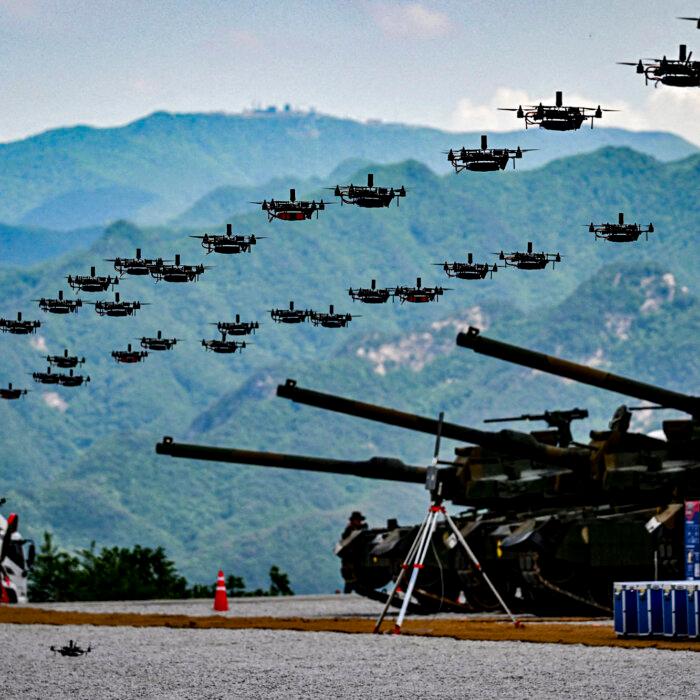

Airbus said the Eurodrone is designed for flights of up to 40 hours and can carry up to 2.3 tons of mission payload, excluding fuel. Those figures describe the baseline European aircraft, not a confirmed Japanese variant.
The company said the aircraft could carry sonobuoys and torpedoes for anti-submarine warfare. Sonobuoys are acoustic sensors dropped into the water to listen for submarines. Torpedoes are weapons used against submarines if a military force decides to attack a confirmed target.
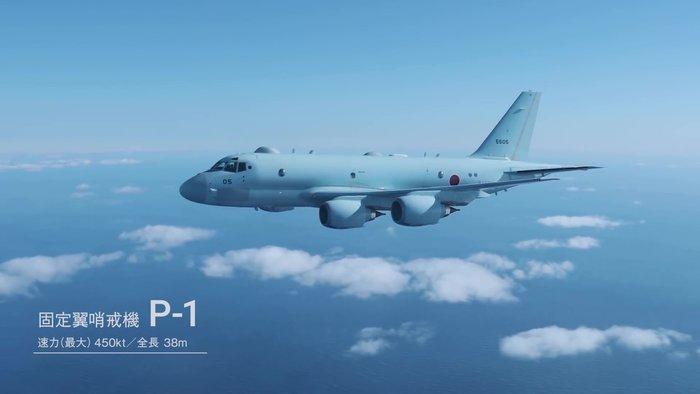
Kawasaki said the study includes possible hybrid operations with the P-1, the maritime patrol aircraft it developed as prime contractor for Japan’s Maritime Self-Defense Force.
Kawasaki’s existing patrol-aircraft work gives it direct experience in the kind of mission systems the study would examine. The company says the P-1 is the successor to the P-3C and is used for prolonged surveillance and patrol over the seas around Japan. According to a Kawasaki technical article, the P-1 carries radar, infrared, sonobuoy, and magnetic anomaly detection systems to find submarines and other maritime threats.
China Activity Around Japan
The study comes as Japan faces growing demands for maritime surveillance across the East China Sea, Sea of Japan, and western Pacific, where its Defense Ministry has documented expanding Chinese naval and aerial activity.A Japanese ministry of defense document on Chinese activity in the East China Sea, Pacific Ocean, and Sea of Japan states Chinese unmanned aircraft have frequently passed through routes near Japan’s southwestern islands, including between Okinawa’s main island and Miyakojima since 2021 and between Yonaguni Island and Taiwan since 2023.
Japan also administers the Senkaku Islands in the East China Sea. Beijing claims the islands and calls them Diaoyu. Japanese officials have repeatedly protested Chinese government vessels entering waters around the islands.
Japan Weighs Drone Production
Japan is already reviewing how unmanned systems fit into its defense plans.The Defense Ministry has begun work tied to a planned revision of Japan’s three main security documents after the prime minister said the government would aim to revise them by next year, citing changes in the security environment and the emergence of new ways of warfare.
Defense Minister Koizumi said in a May 12 press conference that strengthening unmanned-asset defense capability was an urgent issue for Japan. He said Japan should build a domestic production and technology base capable of mass-producing unmanned aircraft and related systems while pursuing discussions tied to the security-document revision.
Cabinet secretariat materials dealing with Japan’s growth strategy list unmanned aircraft and marine drones among major products and technologies for public-private investment planning. The materials say small unmanned aircraft are increasingly important for “new ways of warfare” and that marine drones are important to achieve security in a maritime nation.
Airbus said Japan has held observer status in the Eurodrone program since 2023. India also holds observer status, according to Airbus. The baseline Eurodrone is scheduled for its first flight in 2029.