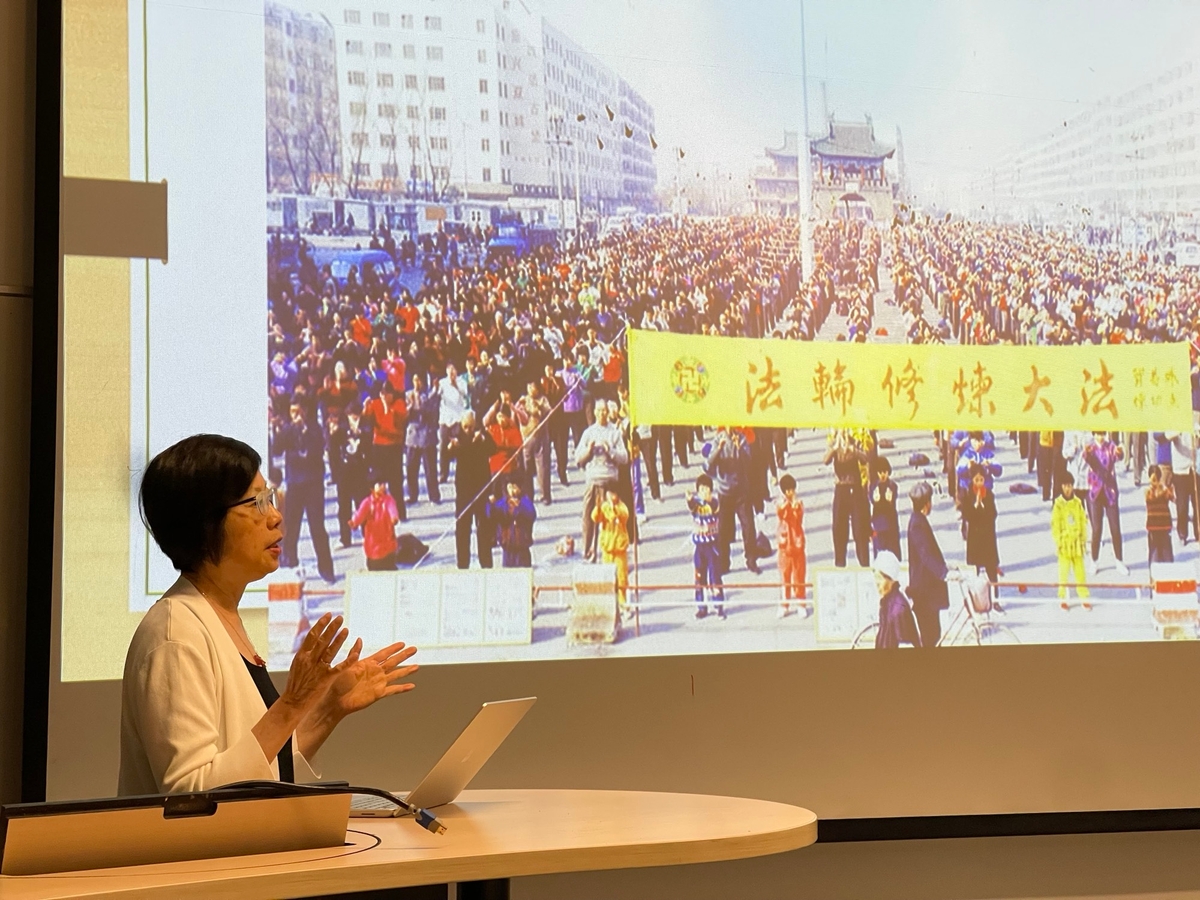

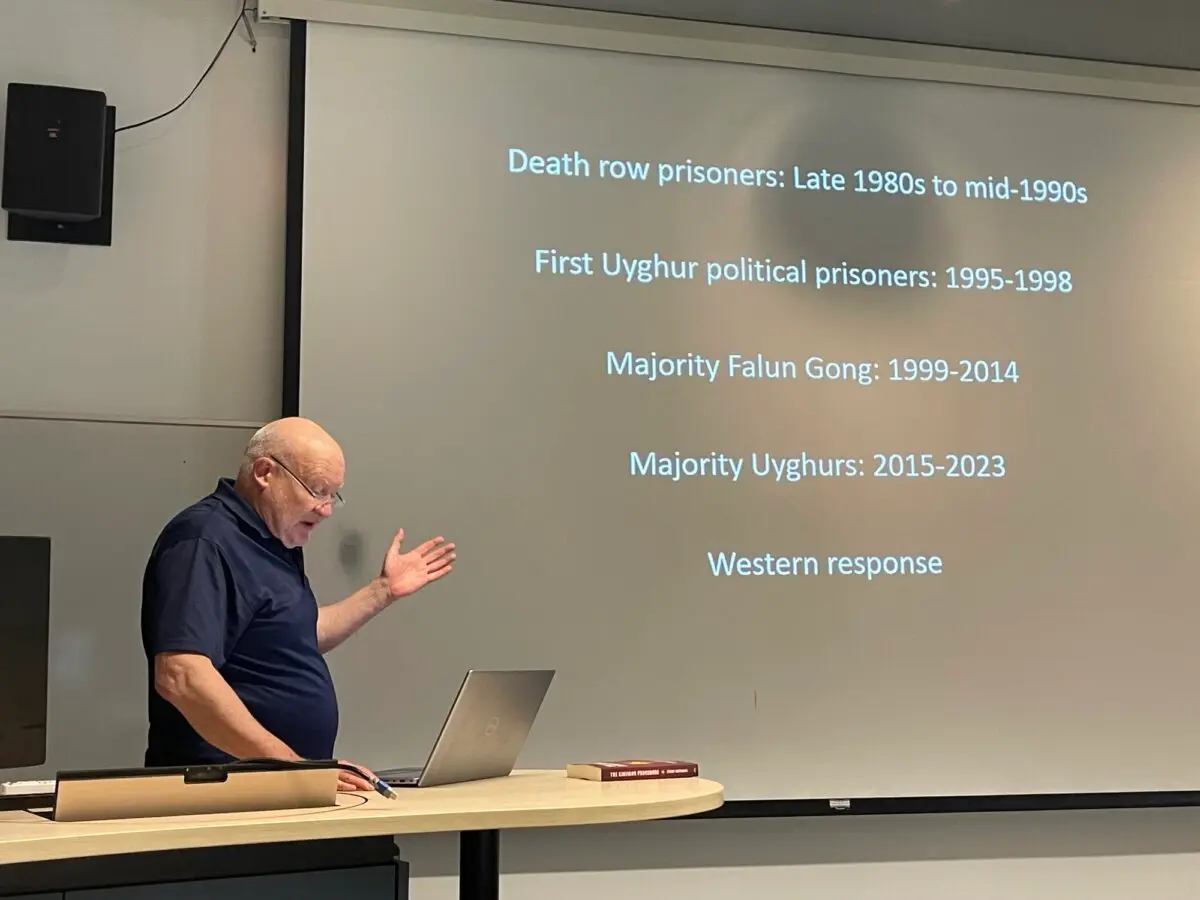
MONTREAL—The international community’s lack of response to the forced harvesting of organs from Falun Gong practitioners in China has led to the expansion of the practice to encompass Uyghurs, researchers said at a conference this week.
“Although there was a lot of advocacy, the world didn’t respond too much. The response was very, very slow, and so the Chinese communist regime already developed a lot of technology,” said Maria Cheung, executive director of the Falun Gong Human Rights Group and a professor emeritus at the University of Manitoba.
“So with the big detention of the Uyghurs later on, we believe that they are also subjected to [forced organ harvesting].”
Cheung was speaking at a panel discussion on forced organ harvesting in China at the International Congress on Law and Mental Health in Montreal on July 1.
Other researchers who spoke on the topic include Winnipeg-based international human rights lawyer David Matas, Uyghur Rights Advocacy director Mehmet Tohti, and investigative journalist and author Ethan Gutmann.
China’s practice of harvesting organs from Falun Gong prisoners of conscience first became public in the mid-2000s through the work of Matas and late Canadian parliamentarian and rights advocate David Kilgour.
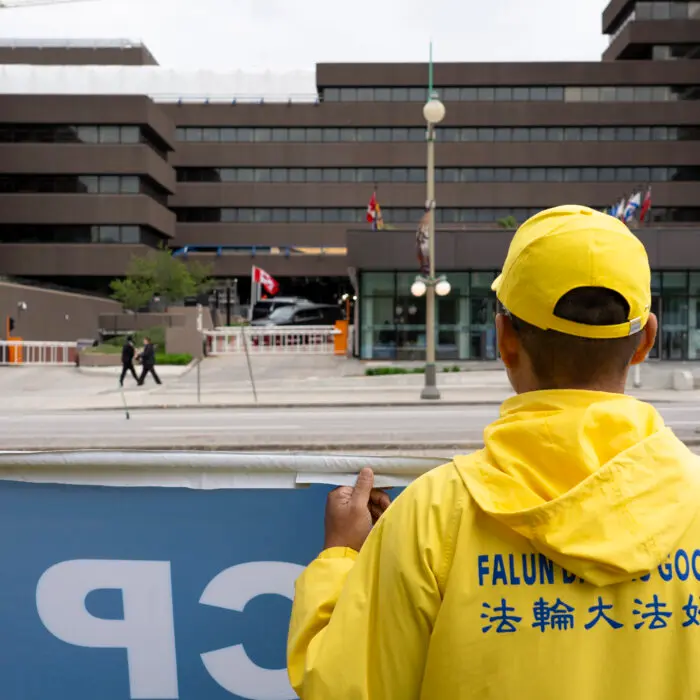

Matas said during his presentation that following the 2006 publication of the report “Bloody Harvest” which he co-authored with Kilgour, the Transplantation Society—an international NGO headquartered in Montreal—adopted some policies to prevent complicity in forced organ harvesting in China, such as preventing Chinese surgeons from attending its events.
This had the effect of putting pressure on Beijing, Matas said, which in 2015 announced it would stop sourcing organs from executed prisoners.
“They said they would stop sourcing organs from executed prisoners, but they never said they would stop sourcing organs from prisoners of conscience,” he said.
Following Beijing’s announcement, the Transplantation Society began re-engaging with China, Matas noted. He made a number of recommendations to address organ transplant abuse in China, including that the Transplantation Society should acknowledge the onus falls on China to prove that sourcing organs from prisoners of conscience has stopped.
The Epoch Times contacted the Transplantation Society for comment but didn’t immediately hear back.
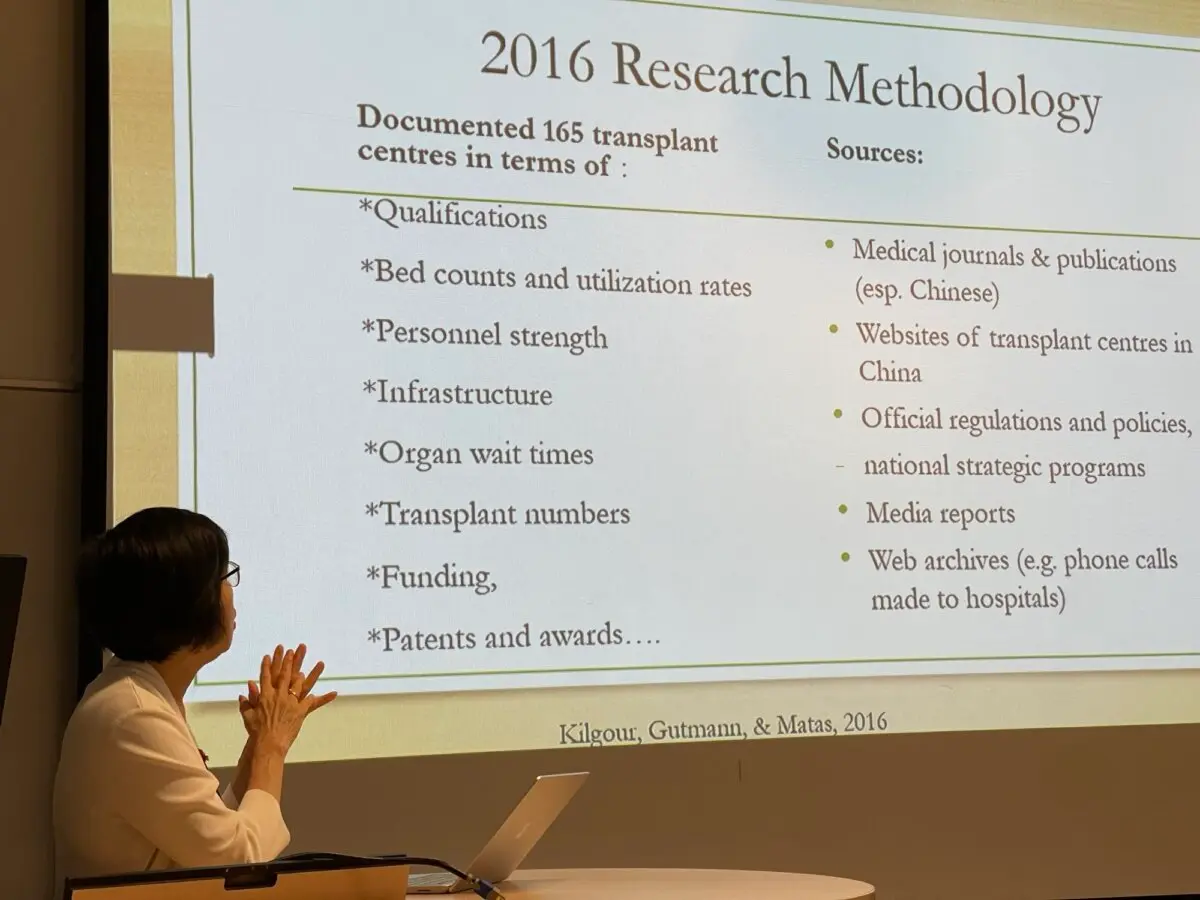
Those researching forced organ harvesting in China have used various approaches to build a picture of the practice amid the almost impossible task of conducting independent research inside China.
Researchers have looked at the expanding number of beds in hospitals where organ transplants are performed and the proliferation of transplant hospitals across China, as well as the extraordinarily short wait times for obtaining a matching organ, said to be as low as two weeks.
Researchers say the Chinese regime views Falun Gong practitioners as a good source for organs because of their healthy habits of not drinking or smoking. In addition, their deaths in prison do not have to be officially accounted for.
DNA Sampling
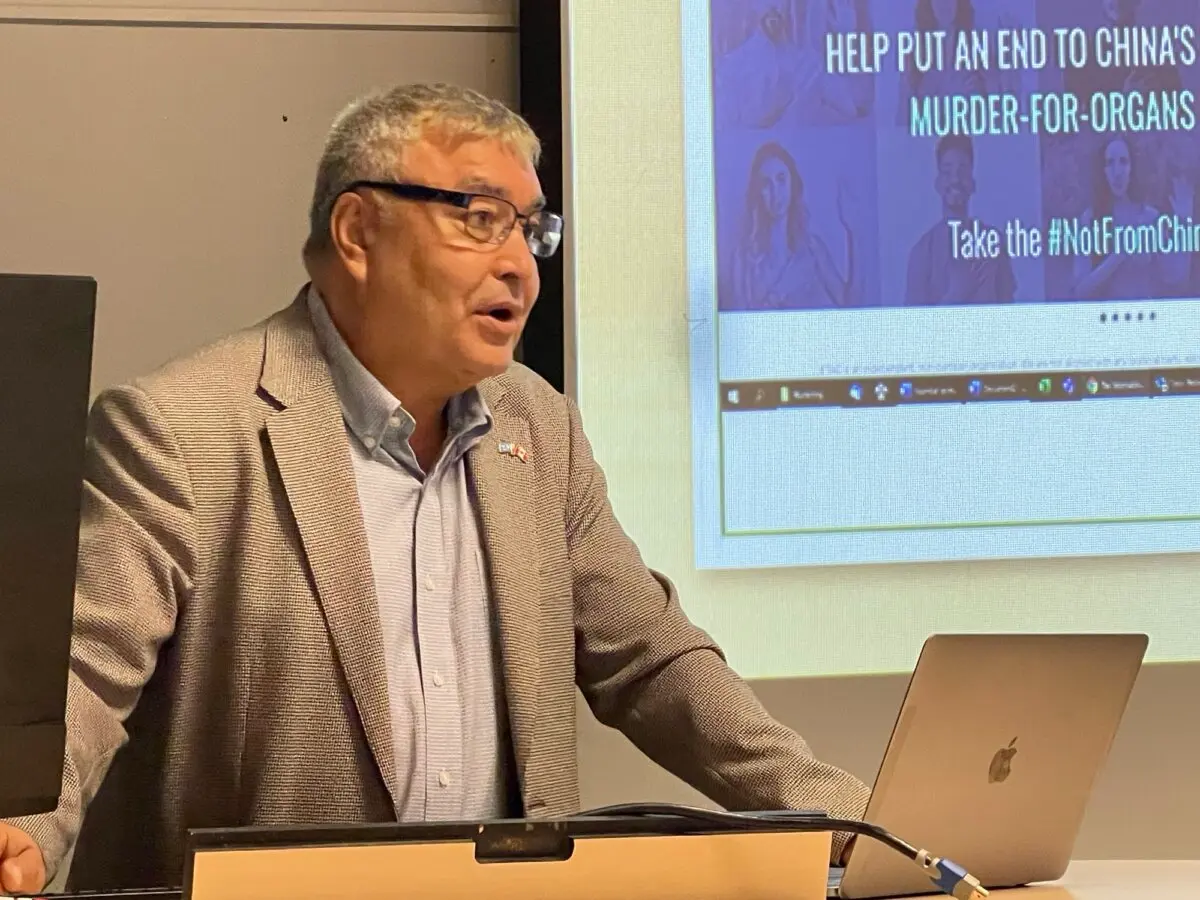
Tohti said there is a similar theme for the forced organ harvesting targeting the Uyhgur ethnic and religious minority in Western China.As Muslims, the Uyghurs do not drink alcohol, and Tohti said Chinese hospitals led a large marketing campaign for “halal” transplants in Gulf and Muslim countries after the regime started targeting Uyghurs for organs.
He noted how China organized the mandatory DNA sampling of more than 15 million people in the Uyhgur area of Xinjiang, which he says was done to facilitate the matching of organs.
What followed was the rapid expansion of Chinese transplant hospitals in the region and elsewhere in China, with some catering specifically to Arab patients with halal food and prayer rooms.
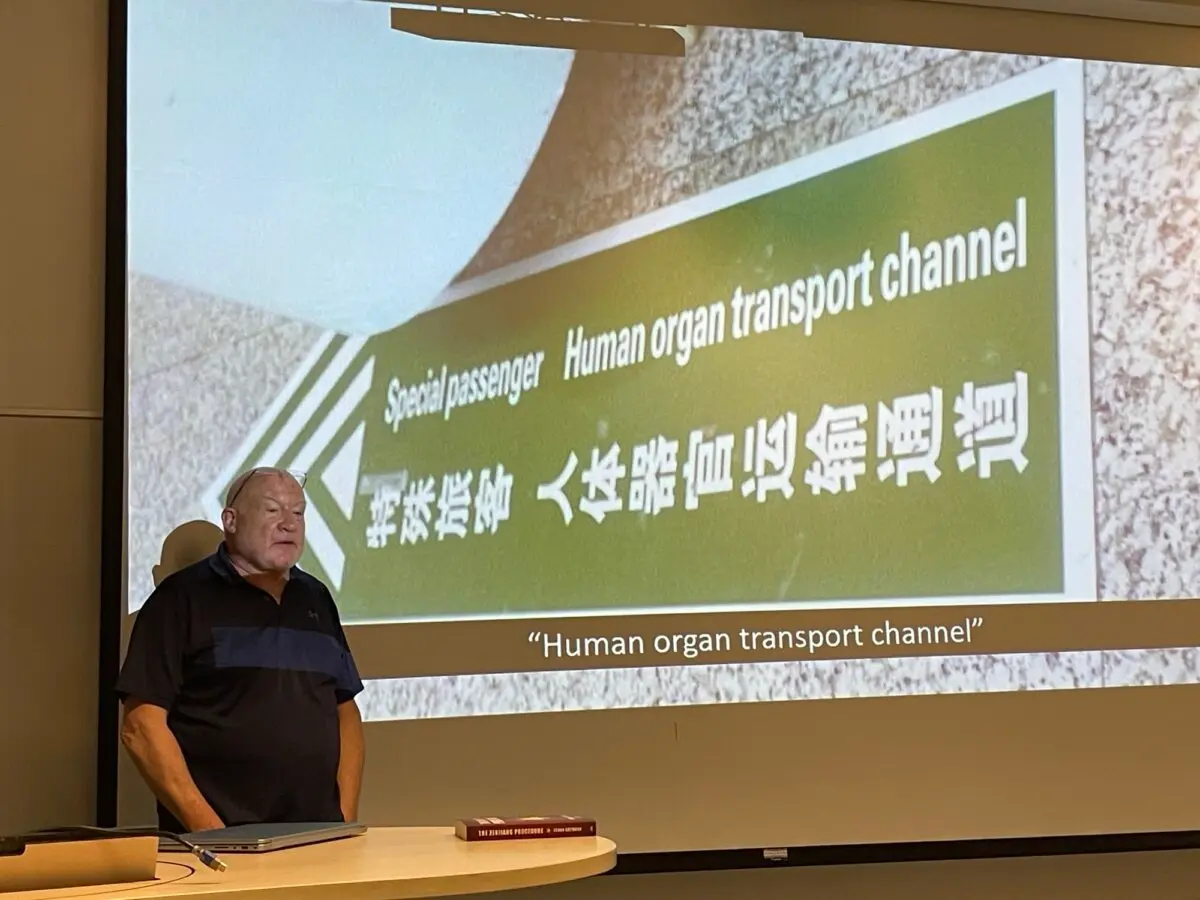
“They established fast lanes at the airports from Kashgar, Aksu, Urumqi” to deliver organs quickly, Tohti said.
Pink Bracelets
Gutmann, whose book “The Xinjiang Procedure” was released in March, provided similar information. He has collected testimonies from individuals who’ve been in contact with the forced organ harvesting system in China.One witness who escaped China told Gutmann she noticed that after blood tests were conducted in one concentration camp, certain prisoners would be wearing pink bracelets before they went missing. The people who disappeared were usually in their late 20s or early 30s.
“That’s exactly the age that the Chinese medical establishment prefers for harvesting, because your organs are fully grown, but have not started to decline,” he said.
Tohti, however, said the bill “doesn’t have any teeth,” noting an individual could easily be involved without being detected. He said someone seeking an organ transplant can go to China and return without any issues.
“We should have some mechanism to trigger a sort of action for deterrence, and currently we don’t have that,” he said.