Europe’s smaller airports are facing an “existential threat” due to the spike in jet fuel prices, the Airports Council International (ACI) Europe said on April 28.
The European branch of the global trade representative of the world’s airport authorities issued the warning during its annual conference, held at Turin Airport in Turin, Italy.
Director General of ACI Europe Olivier Jankovec said that the reality of the post-COVID-19 market had already demonstrated a “clear divide between small regional airports whose passenger traffic still remains more than 30 percent below 2019 levels, and larger ones who have seen their traffic increasing by more than 16 percent.”
“The current levels of jet fuels prices and the prospect of a new cost-of-living crisis mean that many regional airports across our continent are likely to face both a supply and demand shock. For them, this is nothing short of an existential threat,” Jankovec said, according to a statement.
The ACI Europe said that the skyrocketing of jet fuel prices across the continent, peaking at more than $1,800/ton earlier this month, due to the blockage of the Strait of Hormuz caused by the Iran war, is “resulting in air fare increases and tight capacity management by airlines.”
To combat the spike in costs, the organization is calling for five steps to be taken to help ensure the survival of the continent’s smaller regional hubs.
These include abolishing national aviation taxes, safeguarding operating aid for regional airports serving up to 1 million passengers per year, accelerating aviation decarbonization, allowing the full suspension of the Schengen Entry/Exit System, and safeguarding and further developing Open Skies Agreements at the European Union level.
The Schengen Entry/Exit System is an automated IT system that was introduced on Oct. 12, 2025, and became fully operational on April 10, replacing manual passport stamping with digital registration for non-EU citizens entering the Schengen Area.
Schengen is the largest area in the world without internal border controls, where more than 400 million people can travel freely within the zone, with around 3.5 million people crossing internal borders within the area each day. It comprises 25 of the 27 EU member countries, along with Switzerland, Norway, Iceland, and Liechtenstein.
The new entry system for non-EU citizens entering the area has led to significant delays at passport control at some airports.
Open Skies agreements are international aviation pacts that liberalize air travel by removing government restrictions on routes, capacity, and pricing.
Andrea Andorno, CEO of Turino Airport and chair of the ACI Europe Regional Airports Forum, said that an “airport is truly what puts a community not just on the European but on the global map.”
Flights Axed
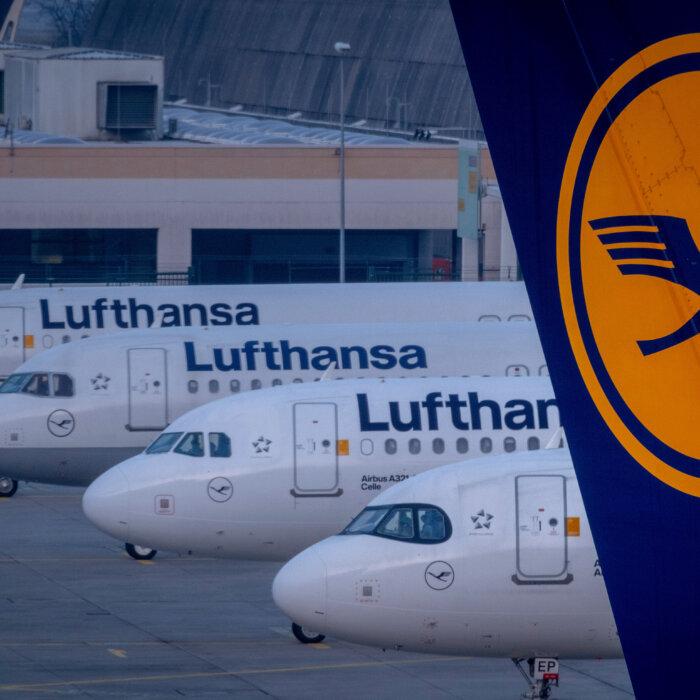
Rises in the cost of jet fuel have already led European companies to axe flights, with Germany’s Lufthansa announcing earlier this month that it would cut 20,000 flights.The German flag carrier said in a statement that the flights “will be removed from the schedule through October, equivalent to approximately 40,000 metric tons of jet fuel, the price of which has doubled since the outbreak of the Iran conflict.”
5 Months of Jet Fuel Left
The Dutch government on April 20 estimated that the EU could supply enough jet fuel to the EU’s economy to last about five months.In a letter to parliament, it said the available supply of kerosene, used as jet fuel, is currently about 78 percent of normal levels, reflecting a roughly 22 percent disruption after imports were cut off due to supply issues caused by the ongoing Iran war.
The government said that if supply disruptions remain unchanged, current demand can be fully met for five months for kerosene and for more than one year for diesel and petrol.