The European Central Bank (ECB) will have to keep raising interest rates as energy prices remain high, ECB board member Isabel Schnabel said in comments published on June 24, saying the ceasefire in the Middle East is no reason for policymakers to rest on their laurels.
When asked by German newspaper Die Zeit whether the bank was planning further rate hikes, Schnabel said that in order to “bring inflation back to our target of two percent in the medium term,” the ECB will, “from today’s perspective, have to raise interest rates further.”
“However, the extent and timing of further measures depend on how the conflict, the economy, and inflation develop,” the economist said.
Quizzed about whether the ECB had jumped the shark by raising interest rates two weeks ago, in light of negotiations between the United States and Iran that commenced in the intervening period, Schnabel maintained that the bank had taken the correct course of action.
“This interest rate decision was correct from the perspective of all the scenarios we considered—including a milder scenario in which oil prices normalize quickly,” she said.
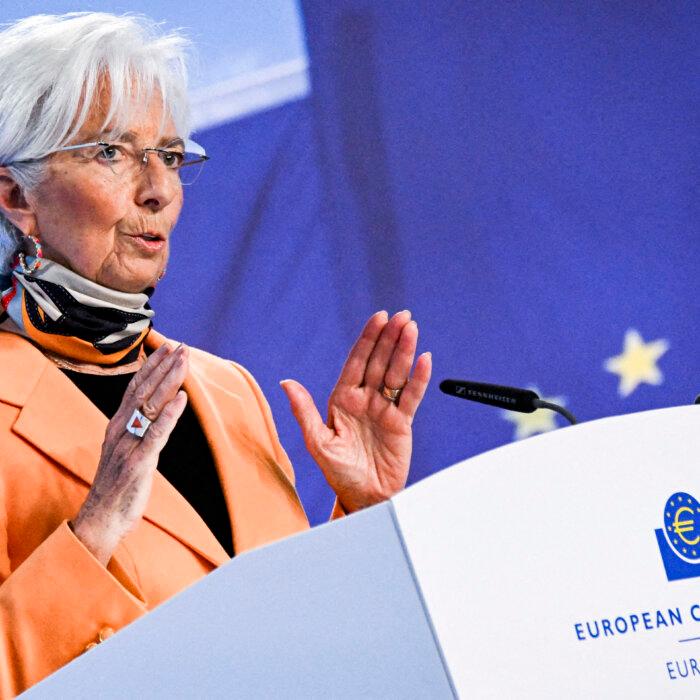

Schnabel said that the hike was “necessary to prevent the increased energy prices in the medium term from leading to second-round effects and even higher inflation,” noting that economic growth was also a factor in the ECB board’s considerations.
“Without this step, inflation would be above our target of 2 percent in the medium term,” she said. “That would not be in line with our mandate to ensure price stability. [People] have experienced in recent years how painful it is when inflation remains above the target for years.”
Explaining why interest rate rises help curb inflation, Schnabel said that the energy price shock from the war in the Middle East has led to a significant increase in companies’ costs, which has been “exacerbated” by the global nature of the crisis.
As a result of the shock, companies were now forced to choose whether to absorb the higher costs by reducing their profits or pass them on to their customers, a decision based on “the strength of demand,” she said.
“This is where monetary policy comes into play: Higher interest rates create lower demand,” Schnabel said. “As a result, companies have less leeway to implement higher prices.”
The June 11 hike by the ECB was the first rate increase since September 2023.
The ECB lifted its three key rates by 25 basis points, taking the benchmark deposit rate to 2.25 percent from 2 percent, according to a June 11 policy statement citing inflation pressures driven by an energy price shock stemming from the Iran war.
“The decision to raise rates is robust across a range of scenarios mapping out how the shock might evolve and affect the medium-term outlook,” the ECB’s governing council said in the statement, which described the outlook as “uncertain, with upside risks for inflation and downside risks for economic growth.”
The rate hike also lifts the main refinancing rate to 2.4 percent and the marginal lending facility to 2.65 percent, effective on June 17. The ECB stated that future rate moves would depend on incoming economic data and policymakers’ assessment of inflation risks.
The move was widely expected by economists and marks the first rate increase by a major G7 central bank in response to the energy crisis driven by the war in the Middle East.
Inflation in the 21-country eurozone accelerated to 3.2 percent in May from 3 percent in April, moving further above the ECB’s 2 percent target. Energy prices remained a key driver, while underlying inflation pressures also strengthened.
“Japan’s economy has recovered moderately, although some weakness has been seen in part, partly due to the impact of the situation in the Middle East,” the central bank said in its June 16 policy statement.
The central bank stated that inflationary pressures have broadened beyond energy markets and could increasingly affect households and businesses.
The UK central bank’s Monetary Policy Committee voted 7–2 to keep rates on hold at 3.75 percent on June 18.
“Global energy prices have fallen since the previous meeting in response to events in the Middle East,“ the BoE stated. ”But they remain higher than pre-conflict and have continued to be volatile. The impact of the energy shock on the UK economy remains uncertain.”
Officials voted 12–0 to keep the benchmark federal funds rate unchanged at a target range of between 3.5 percent and 3.75 percent.
U.S. President Donald Trump, speaking to reporters, said the Fed decision was “all right.”
When asked about the Fed possibly raising rates, the president said that it is “hard to believe.”
“It just keeps the country down, and it’s so, it’s so unusual,” Trump said. “But we have a very good guy over there right now, so I’m guided by what he wants.”