From her New Jersey home, Jacqueline Capriotti envisions a symbolic return to 1945, when many Americans grew their own food and were called upon to support the war effort by creating “victory gardens.”
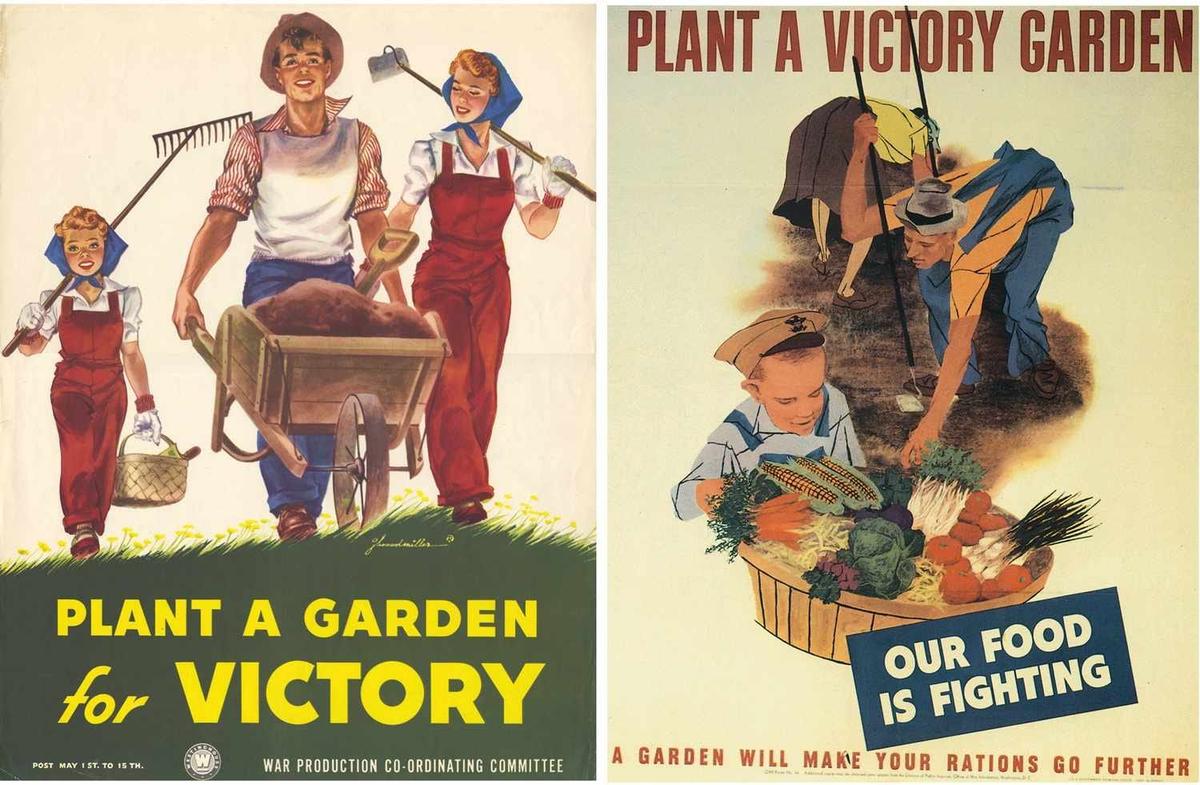
During World War II, more than 20 million registered victory gardens sprouted across the United States. By 1945, these gardens produced 40 percent of the nation’s fresh produce.
The majority were tended by women, children, and seniors while many younger men were fighting on the European and Pacific fronts.
Front yards became vegetable patches, school playgrounds sprouted rows of beans, and churchyards turned into fields of lettuce and potatoes.
In 2024, Capriotti founded the Victory Garden Alliance, which she told The Epoch Times is a nonprofit organization that she is confident will become a nationwide movement.
Capriotti has two adult children with cystic fibrosis, a life-threatening lung and multi-systemic disease. She said that during the COVID-19 pandemic, amid the lockdowns, the family stayed at home for almost a year.
It was a lonely time, she told The Epoch Times. The garden was a place of solace.
“COVID-19 posed an enormous threat to children like mine. The garden gave us freedom. We grew our food, ate healthier, drew wildlife like pollinators to our garden, soaked in the sun, and breathed in the fresh air,” Capriotti said.
Bringing the Nation Together
When Robert F. Kennedy Jr. launched his presidential campaign, he talked about the severity of chronic disease in children, inspiring Capriotti to learn all she could about regenerative agriculture.Capriotti helped manage Kennedy’s presidential campaign in New Jersey. As part of her role, she launched Kennedy Victory Gardens, and Americans from coast to coast started dedicating their existing gardens to the movement or planting new gardens.
When Kennedy left the race to support then-former President Donald Trump, Capriotti said, “I wanted to carry on the idea because it is essential as a country that we get back to growing our own food, so I renamed it the Victory Garden Alliance.”
Capriotti said World War II’s victory garden movement “was one of the most unifying cultural shifts in [U.S.] history.”
“Ordinary Americans became extraordinary citizens, each doing their part to feed the nation and strengthen morale. It wasn’t political—it was patriotic, practical, and deeply communal,” she said.
“Modern-day victory gardens do the same for the Make America Healthy Again movement by celebrating homegrown and homemade food, empowering families to localize their food supply, and honoring our American farmers.”
Building Health and Resilience
The original victory gardens thrived with the support of schools, churches, and local governments. Capriotti’s Victory Garden Alliance is growing through its Home Gardener Trade Program.Participants are partnering with community gardens, farmers markets, food pantries, and other nonprofit organizations committed to sustainable living.
“Imagine if every home gardener in your neighborhood could trade their extra tomatoes for fresh herbs, swap zucchini for berries, or exchange seeds for seedlings,” Capriotti said. “The modern Home Gardener Trade Program allows us to support one another, reduce waste, and expand what’s growing in our own backyards.”
Capriotti said the program reflects the overall purpose of the Victory Garden Alliance.
“The trade network isn’t just about food,“ she said. ”It’s about rebuilding local food resilience, promoting regenerative growing methods, and ensuring that no one has to rely solely on the industrial food system for their nutrition. It’s also about making gardening more accessible to those who might not have all the tools, seeds, or knowledge to get started.”
Richard Lackey is chairman and CEO of the World Food Bank, a Victory Garden Alliance partner. He said the “movement is about reconnecting to the soil and with others.”
Illustrating his organization’s focus on equipping farmers with “the education, resources, and incentives to grow the most nutritious food possible,” Lackey said, “[The] healthier our soils are, the healthier our nation will be.”
“In the Make America Healthy Again movement, we’ve seen people take more responsibility for their own food supply and health,“ Capriotti said. ”They recognize the dangers of ultra-processed foods, and that it’s important to know how their meat, produce, eggs, and other food items are raised.”
“During the victory garden era in World War II, people grew what they needed, shared what they had, and strengthened their communities in the process,” she said.
Preventable diseases such as obesity, Type 2 diabetes, and heart disease now affect more than 60 percent of the U.S. population, Capriotti said.
“That takes a heavy toll on families, our health care system, and even our national security. These conditions not only weaken our workforce but also reduce military eligibility, leaving us less prepared to defend our nation,” she said.
Food and Faith

The Victory Garden Alliance is cultivating relationships with churches, which were involved in mobilizing gardens in World War II.
“The act of cultivating food has been deeply intertwined with faith, community, and resilience,“ Capriotti said. ”The original victory gardens were never just about sustenance. They represented shared purpose, divine providence, and a commitment to caring for one another through the simple but profound act of growing food.”
“Today, food insecurity is rising, chronic illness is widespread, and communities are more fragmented than ever,” she said. “History teaches us that when people come together with a shared mission, transformation happens. Who better to lead this revival than faith communities, which have long stood at the heart of nurturing the body and the soul?”
Capriotti is hopeful that more victory gardens will arise on church grounds and provide produce for food pantries in 2026.
Victory Gardens and Veterans
Veterans are another group involved in the Victory Garden Alliance.Jon Jackson is a Gulf War veteran and the founder of Comfort Farms, a Victory Garden Alliance partner.
“Getting my hands in the soil and getting other veterans to do the same is a simple and proven way to make us happy and healthy again,” he said.
Jackson said that he had asked himself, “Why can’t we do the same for our kids in schools, for the homeless, for the formerly incarcerated, for all Americans?” That led him to get involved with the Victory Garden Alliance because of the organization’s emphasis on bringing the movement to a wide range of groups.
Sunny Welch is the founder of Joint 4ces, a Victory Garden Alliance partner that incorporates “regenerative agriculture with veteran wellness, ensuring that those who served their country have access to the healing power of working with the land, while also opening pathways to meaningful careers in farming.”
A Joint 4ces pilot program in Windsor, California, established a community garden at a supportive housing facility for formerly homeless veterans, who participated in twice-weekly sessions at the facility’s victory garden. By the end of the program, Welch said, 100 percent of participants reported a reduction in suicide risk factors and a marked improvement in overall well-being.
“Veterans who put their hands in the soil aren’t just growing food; they’re reconnecting with themselves, their communities, and a new mission,” Welch said.
“For many veterans, the physical toll of service doesn’t end after discharge. Chronic pain, mobility issues, and injuries are common, making staying active both a challenge and a necessity. Gardening provides a low-impact, high-benefit way to rebuild strength and mobility. Activities like digging, planting, and harvesting engage multiple muscle groups, improving flexibility, endurance, and coordination.”
Growing victory gardens also encourages veterans to embrace healthier eating habits, Welch said.
“As a society, we’ve gotten separated from the land and separated from nature,“ she said. ”Being closer to your food and how you are treating your body and reducing the amount of processed food you consume feeds your physical health, while putting your hands in the soil fuels your mental health.”
Victory Garden 250
Earlier this year, Capriotti launched “Victory Garden 250,” which intends to inspire more Americans to plant gardens in 2026 to commemorate the 250th anniversary of the United States.As part of Victory Garden 250, the organization is working to develop community pantries stocked with fresh produce donated by home gardeners and composting centers to reduce waste and enrich local soil to accompany the trade programs.
The group also has an idea called SNAP Seeds, which would have seeds distributed through the Supplemental Nutrition Assistance Program (SNAP).
“This would not only feed families; it would teach children how to nurture life, connect with their food, and understand the value of sustainability. It would normalize homesteading at every scale—whether a backyard, a balcony, or a windowsill herb pot,” Capriotti said.
“Imagine millions of new gardens planted across the country—in backyards, on school grounds, in churches, senior centers, and veteran homes—each one a living tribute to the resilience, health, and unity of the American people. That’s what we envision for the Victory Garden 250.”
Capriotti told The Epoch Times that she is unsure how many victory gardens have been planted nationwide.
“We had more than 200 of them when they were Kennedy Victory Gardens, but that was more than a year ago,“ she said. ”We believe there are thousands, and it’s our intent to have millions across the country next year. It’s possible because more people are getting involved, and more people understand the importance of growing their own food.”