M&M’s are getting a MAHA makeover.
Mars Inc., which makes M&M’s, said it will introduce a new version of its confection made without artificial dyes starting in August, which marks the candy’s 85th birthday.
Brown and blue M&M’s will not be part of the initial lineup, Mars told The Wall Street Journal, because the colors could not be recreated with natural ingredients in a cost-effective and manageable way.
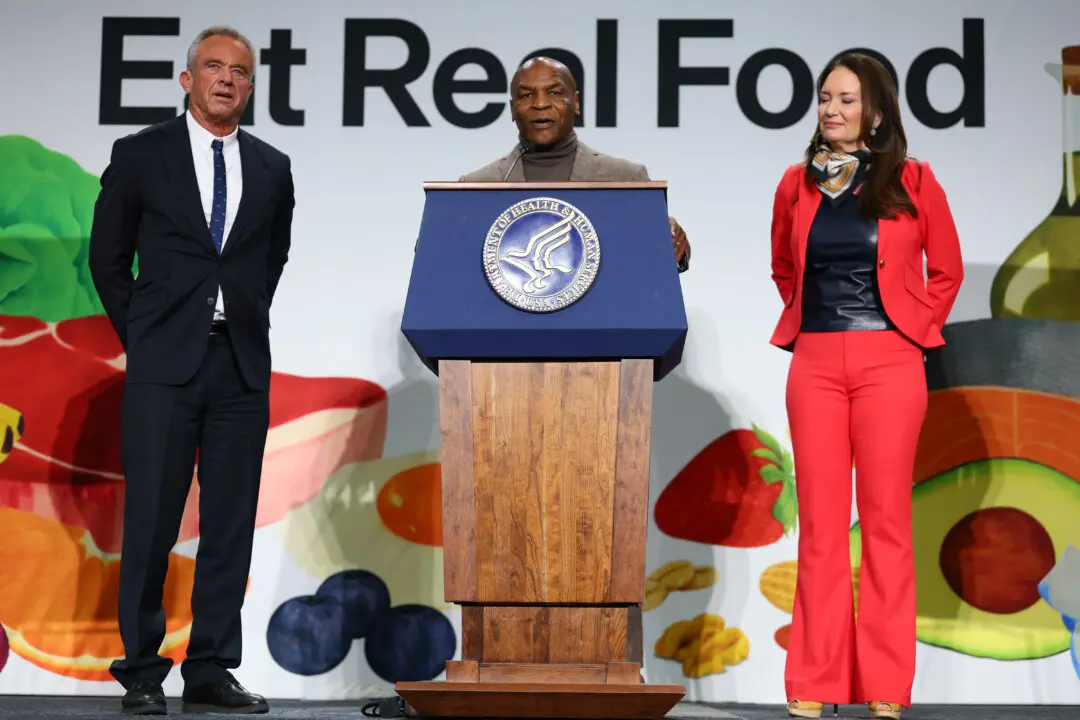
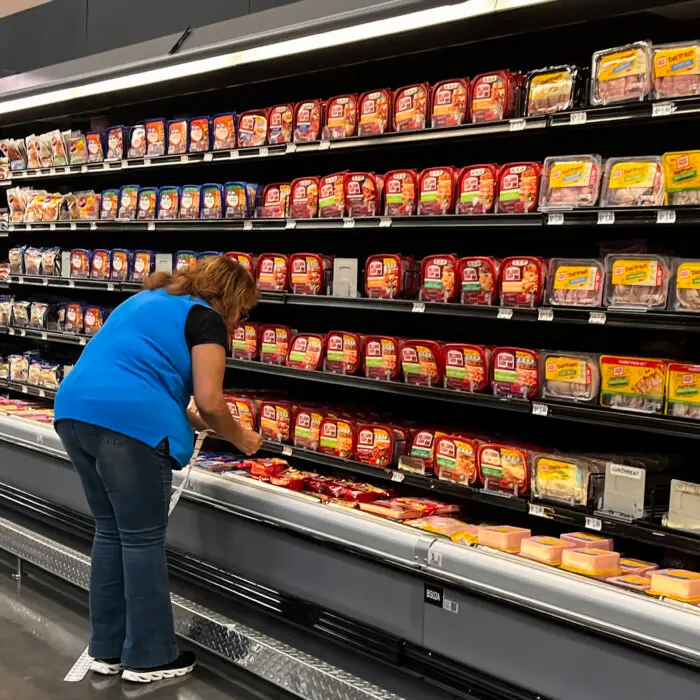
Mars is the latest company to answer Health Secretary Robert F. Kennedy Jr.’s “Make America Healthy Again” movement to address chronic disease and remove artificial dyes from the country’s food supply.
Nestlé, Kraft, Heinz, General Mills, Hershey Co., J.M. Smucker, and a group of ice cream makers are among the companies that have said they would remove artificial colors from their foods, too.
“HHS is driving the most significant public health and nutrition reforms in decades as part of the Make America Healthy Again agenda,” Health and Human Services (HHS) press secretary Grace Davis said in a statement to The Epoch Times on June 22.
“American families have made it clear that they want real food and cleaner ingredients for their children, and we welcome steps by companies like Mars to remove artificial coloring and give consumers safer choices.”
The naturally colored M&M’s will initially be sold on Amazon.com. Mars will still make versions with artificial dyes.
In July 2025, Mars said it would introduce versions of M&M’s, Skittles, Starburst, and Extra made without Food, Drug, and Cosmetic (FD&C) colors.
Mars researchers recreated red, orange, and yellow M&M’s with natural ingredients like turmeric and beets, but there were major issues making blue and brown with natural dyes, the company explained to The Wall Street Journal.
Replicating blue and brown cost-effectively and at scale was daunting, the company discovered.
To make blue and brown, Mars told The Wall Street Journal, the company would have to switch from its artificial color Blue 1 to spirulina extract, a concentrated blue-green algae powder that is often billed as a superfood.
Claire Hewitt, Mars’s self-described “chief color officer,” told the media outlet that around 100 employees at the company’s offices and plants are devoted to its natural-color initiative. A quarter of the team is assigned to blue, Hewitt said.
Spirulina is delivered to Mars in powder form that can foam when combined with a sugary syrup, creating a thicker, smoothie-like mixture rather than a smooth liquid, Hewitt explained.
The ingredient doesn’t fully dissolve in water, leading to clogged spray nozzles in machines and spotty, unevenly colored candy, she said.
Spirulina also leaves a sticky film inside the pipes at Mars’s plants, which could result in build-up and mold, Hewitt noted.
She told The Wall Street Journal that Mars must upgrade 300-plus machines at its M&M’s plants to accommodate spirulina.
Mars hopes to have blue, brown, green, orange, red, and yellow made with natural dyes by 2028, Anton Vincent, who heads the company’s North American snacks business, told The Wall Street Journal.
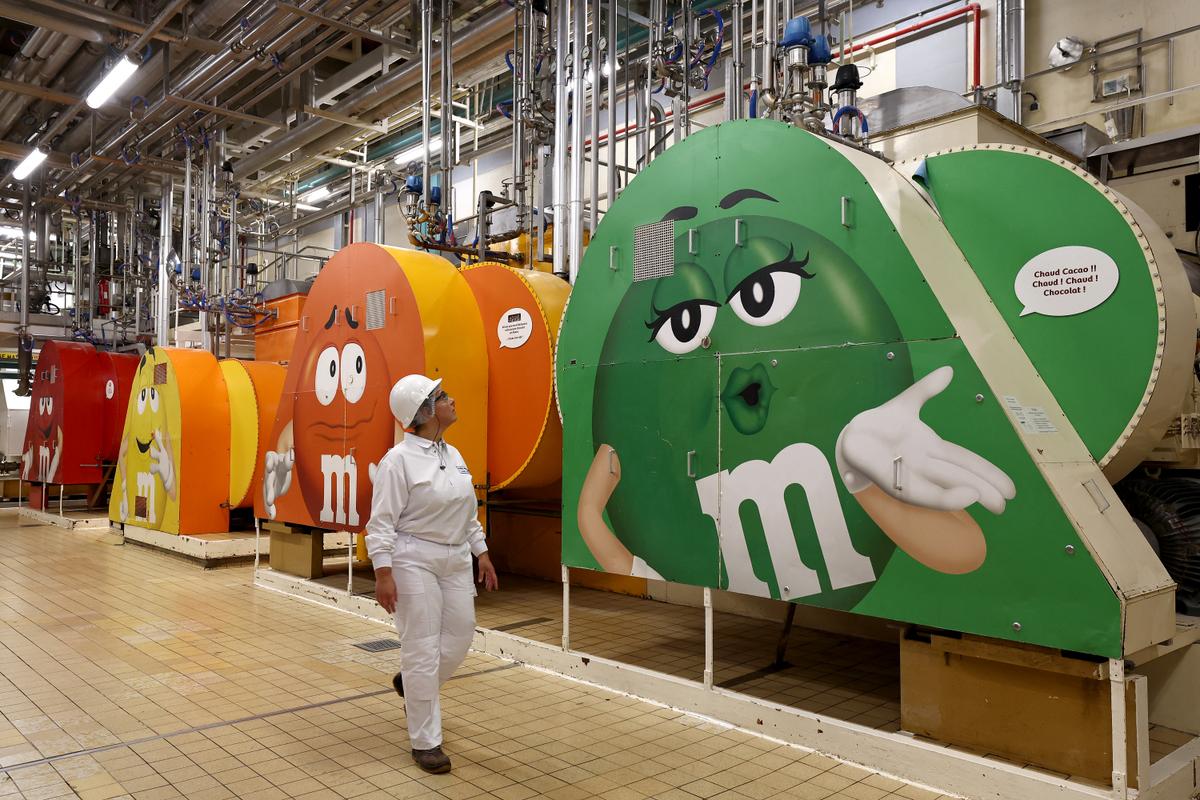
M&M’s were officially created in 1941 when inventor Forrest Mars Sr. received a patent for the candy-making process and started production in Newark, New Jersey.
They were designed with a hard sugar shell to prevent the chocolate from melting and were exclusively sold to the U.S. military during World War II.
When the war ended, the candy was made available to the general public in 1946.
Citing studies showing they may cause neurobehavioral issues in some children, health advocates have long called for the removal of artificial dyes in foods.
For example, a report released by the state of California in 2021, with contributors from the University of California—Berkeley and the University of California—Davis, indicated that synthetic dyes may cause or worsen hyperactivity in some children.
Since Kennedy took office, he has frequently criticized the presence of artificial dyes in American food products and has said they contribute to the nation’s chronic disease epidemic.
The Health and Human Services Department and the Food and Drug Administration have approved six new natural food dyes, including beetroot red, spirulina extract, Galdieria extract blue, gardenia blue, butterfly pea flower extract, and calcium phosphate.
These moves follow the HHS and FDA plan to transition the food industry away from petroleum-based dyes, a key part of Kennedy’s MAHA initiative.
In April 2025, Kennedy and then-FDA Commissioner Marty Makary said the agency would take steps to remove synthetic dyes by the end of 2026, relying mostly on voluntary efforts from the food industry.
Mars originally announced a plan to offer products free of artificial dyes in 2016 but reversed the move, claiming that consumer demand wasn’t there at the time.
Texas Attorney General Ken Paxton has launched an investigation into Mars, alleging that the company misled consumers. The probe centers on Mars’s 2016 commitment to remove artificial colors from its products, while maintaining that approved food dyes do not pose health risks.
“In 2016, Mars publicly pledged to ’remove all artificial colors from its human food products.' The company later chose not to remove the toxic dyes from products sold in the United States but did remove artificial colors from its products distributed in Europe,” Paxton noted in a press release.
“Mars also falsely claimed that ‘artificial colors pose no known risks to human health or safety,’ which could not be further from the truth, as these dyes have been linked to a number of negative health outcomes, including Attention-Deficit/Hyperactivity Disorder (ADHD), autism, and even cancer.”
In 2025, Mars phased out titanium dioxide in the Skittles manufacturing process. That artificial color had been banned by the European Union in 2022 over possible health risks.
Meanwhile, Nestlé USA said on June 15 that it had eliminated FD&C colors from all food and beverage products it sells in the United States.
“Last summer, we committed to accelerating the removal of FD&C colors from our U.S. food and beverage portfolio,” Nestlé USA CEO Martin Thompson said in a statement.
“Today, I’m proud to share that we have fully eliminated them.”
Nestlé said it had already removed the colors from approximately 90 percent of its U.S. products in the past decade ahead of the final push.
FD&C colors are petroleum-based synthetic additives such as Red No. 40 and Yellow No. 5, approved for use in foods, drugs, and cosmetics.