SPRINGFIELD, Ohio—The city of Springfield was thrust into the national spotlight when candidate Donald Trump said on the campaign trail that Haitian nationals there were eating people’s pets.
Now, the western Ohio city is bracing for what’s next in the wake of the Supreme Court’s June 25 decision permitting the Trump administration to move forward with ending Temporary Protected Status (TPS) for Haiti.
Longtime Springfield resident and pastor Kenneth “Barron” Seelig is among the most outspoken locals amid the Haitian immigrant influx.
Known locally as Pastor Barron, Seelig has spent years working with Springfield’s homeless population.
He calls the city a “tinder box” because of “the strain on the housing market and social services, and the homelessness” caused by the “massive numbers” of Haitian TPS holders.
The Supreme Court decision is “a reassertion of the rule of law,” Seelig said. “We have to get some ground rules here, because we’re a city that’s just in turmoil as a result of the amount of Haitians that came here.”


“Charity begins at home,” he added. “Let’s start taking care of the people that were from here, and when we get that all straightened out, then we can be more than happy to take people in.”
On June 25, Supreme Court justices ruled 6–3 that federal law generally does not allow the judicial review of decisions to grant or end TPS designations.
This cleared the way for the Trump administration to discontinue the protections for around 350,000 Haitians and 7,000 Syrians.
On July 10, the federal government gave Haitian immigrants another two weeks before TPS-related work permits expire.
The U.S. Citizenship and Immigration Services announced that employment authorization documents for Haiti’s protected-status designation will remain valid through July 24, extending the previous July 10 expiration date while litigation over the program continues.
When the permits expire, Haitians under TPS may no longer be allowed to work unless they have another form of legal immigration status.
Viles Dorsainvil, who is a Temporary Protected Status holder and arrived in Springfield in 2020, is founder and executive director of the Haitian Support Center.
He told The Epoch Times there is anxiety and fear among many Haitian immigrants because they will soon be unable to work.
Many Haitians would like to receive asylum, but so far in this fiscal year, 88 percent of asylum decisions regarding Haitian applicants have been denied, data from the Transaction Records Access Clearinghouse at Syracuse University show.
The population of Springfield, a blue-collar city that saw many of its factories shut down decades ago, had declined to less than 60,000 before an estimated 15,000 Haitian immigrants arrived in the span of just a few years.
City leaders acknowledged that changes must be made to effectively accommodate its citizens and long-term residents alongside the immigrants, but multiple locals told The Epoch Times that their concerns have always been dismissed by city officials.
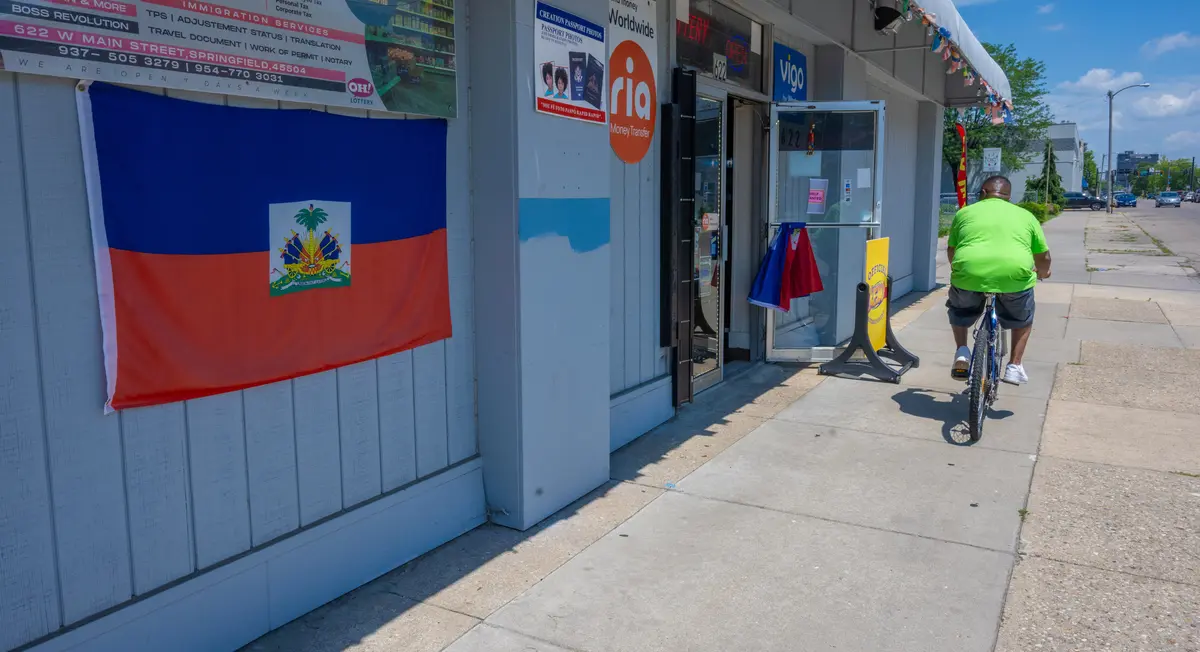
At an Aug. 27, 2024, city council meeting, some residents alleged that Haitians were killing cats, dogs, ducks, and geese for food.
Two weeks later, early in the presidential debate, Trump called attention to the issue, saying: “In Springfield, they’re eating the dogs. The people that came in, they’re eating the cats. They’re eating the pets of the people that live there.”
City officials and police said at the time that they had not received reports of Haitians eating animals.
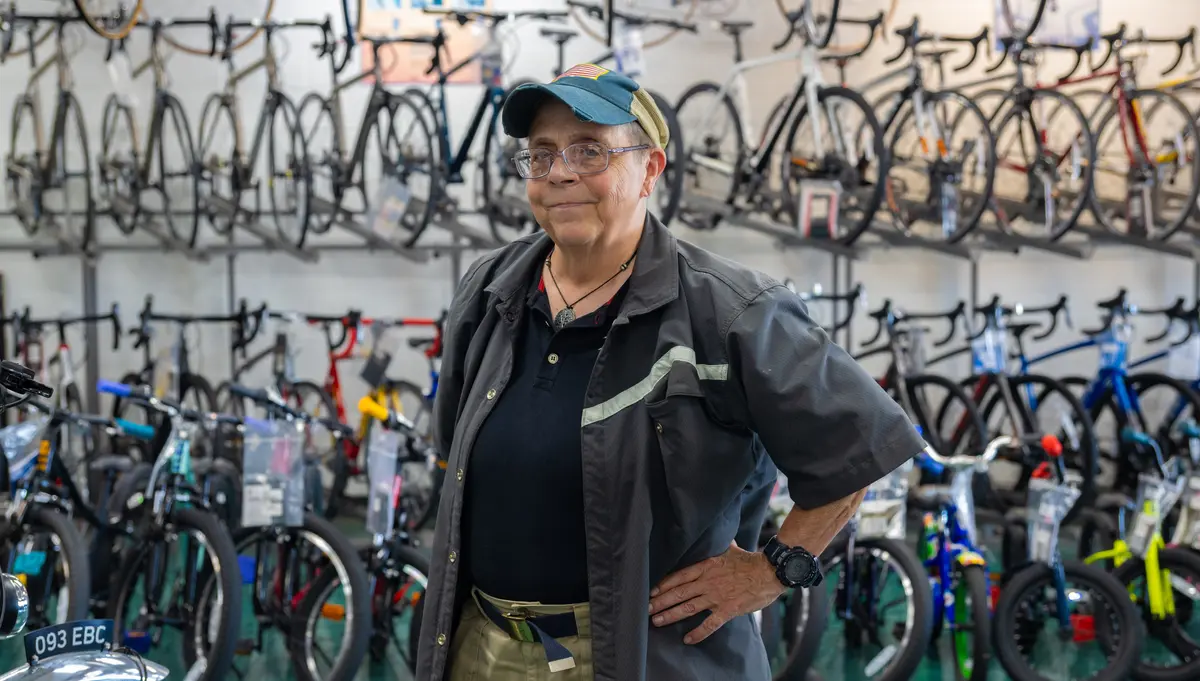
Diana Daniels, a former physical education teacher who has worked at a local bicycle shop for several years, is a frequent speaker during the public comment portion of city council meetings.
She told The Epoch Times that Trump’s comments were welcomed by those in Springfield who criticized the city’s handling of the Haitian immigrant influx.
“The animal reports were good for media clickbait, but the real story here—and what created a crisis—is how the residents are being negatively impacted,” Daniels said.
“We didn’t ask for this, and our city and county officials didn’t install proper infrastructure to prepare for the migrants and address the challenges their presence would cause for the residents who are U.S. citizens,” she added.
Springfield had a small Haitian population before 2021, when illegal border entries began to break records.
A shortage of entry-level and blue-collar workers made the city an attractive destination, especially because of its low cost of living compared to major metro areas.
Topre, a Japanese auto parts manufacturer, expanded in 2022, drawing Haitian immigrants.
While companies needing to fill vacant positions welcomed the surge of Haitian immigrants, challenges escalated in the city.
The cultural differences between the long-term residents and the immigrants have resulted in tension.
Springfield’s public school system had many new non-English-speaking students.
The community’s Federally Qualified Health Care facility, named Rocking Horse, became overwhelmed with the increase in Haitians that are automatically qualified for Medicaid services.
The immigration debate among residents, local officials, and immigrants reached a breaking point when 11-year-old Aiden Clark was killed in a traffic accident that involved a Haitian immigrant.
The boy was aboard a school bus that collided with a minivan driven by 36-year-old Hermanio Joseph that crossed over the dividing line.
“Accidents have been common since the influx. I’ve seen cars drive into buildings and onto sidewalks, go the wrong way down one-way streets, make U-turns right in the middle of the road, and run over street signs and into yards,” Daniels told The Epoch Times.
“They get behind the wheel with little or no education and training about driving laws here, and many of them don’t understand English, so they can’t read the street signs,” she added.
Long-term residents told The Epoch Times that many landlords have increased rents for local residents to the point they can no longer afford to pay, choosing instead to attract new renters, including immigrants with housing vouchers.
The city had a homeless problem before the Haitian influx, Seelig said. Multiple Springfield residents told The Epoch Times that they gradually began to see more residents living in their cars and in abandoned houses, not because of addiction or mental illness, but because they had been priced out of their homes.

Residents say locals have been “pushed to the end of the line,” Daniels said. She described strained food pantries, instances where Haitian men allegedly intimidated long-time local clients, and some immigrants holding large balances on benefits while still using emergency pantries.
Lifelong Springfield resident Rhonda Webster longs for a day when life in the community returned to how it was before the Haitian surge arrived and “we could drive the streets, go to the BMV, or the hospital,” and “lead our everyday lives” without the added economic and safety concerns.
“We were already dealing with a high crime issue. We were already dealing with the drug epidemic. We were already dealing with poverty. But those were our problems,” Webster said.
“I think that, in any city across the country, if you even added 20,000 to 30,000 people from Europe, that would create a major strain, even though the cultural differences are minimal.
“When you add that many people from a country that has drastic cultural differences, that leads to even more issues,” she added.
Author and longtime Dayton-area resident Joshua Lisec is set to release his book “Haitians in Springfield” on Oct. 6 through Skyhorse’s Regnery imprint.
The book documents what some locals describe as an “invasion” that reshaped housing, schools, public safety, and civic life in the community.
When national media outlets descended on Springfield in September 2024 after Trump’s comments in the debate about pets disappearing, many reporters framed the controversy as “a racist hoax” and were “determined to debunk allegations about cats and dogs instead of examining broader community impacts,” Lisec told The Epoch Times.
He describes a housing market distorted by federal, state, and local benefit programs and a non-governmental agency (NGO) ecosystem that, in his view, treated Haitian immigrants as clients in a “NGO administrative complex.”
Lisec said that multiple residents he interviewed reported that landlords charged per person renting to Haitians and packed single-family homes with multiple families or dozens of individuals.
Immigrants or buyers would even sublet rooms or entire homes to additional families, intensifying overcrowding, Lisec told The Epoch Times.
Temporary agencies brought in Haitians as cheaper labor and displaced American workers who had been earning a “working wage,” Lisec added.
“I heard so many accounts of longtime employees being laid off and replaced by migrants being paid significantly less than the prior full-time employee had been,” Lisec said.

Not all Haitians in Springfield have TPS. Some are covered by earlier humanitarian programs while others have green cards or Social Security numbers.
Homeland Security Secretary Markwayne Mullin on July 1 said that Haitians and Syrians who are in the United States under protected status must leave the country now or face forced removal.
Those who leave voluntarily through the department’s self-deportation program—which offers $2,600 and travel expenses—maintain the option to later apply for a visa, Mullin said at an event in Manhattan.
People who are arrested and removed by force will not.
“TPS was temporary,” Mullin said. TPS is the acronym for Temporary Protected Status. “It was never meant to be a permanent status.”
The Department of Homeland Security halted the processing of asylum applications in November 2025 for people from nations included in Trump’s travel ban.
In June, a federal judge struck down the policy.
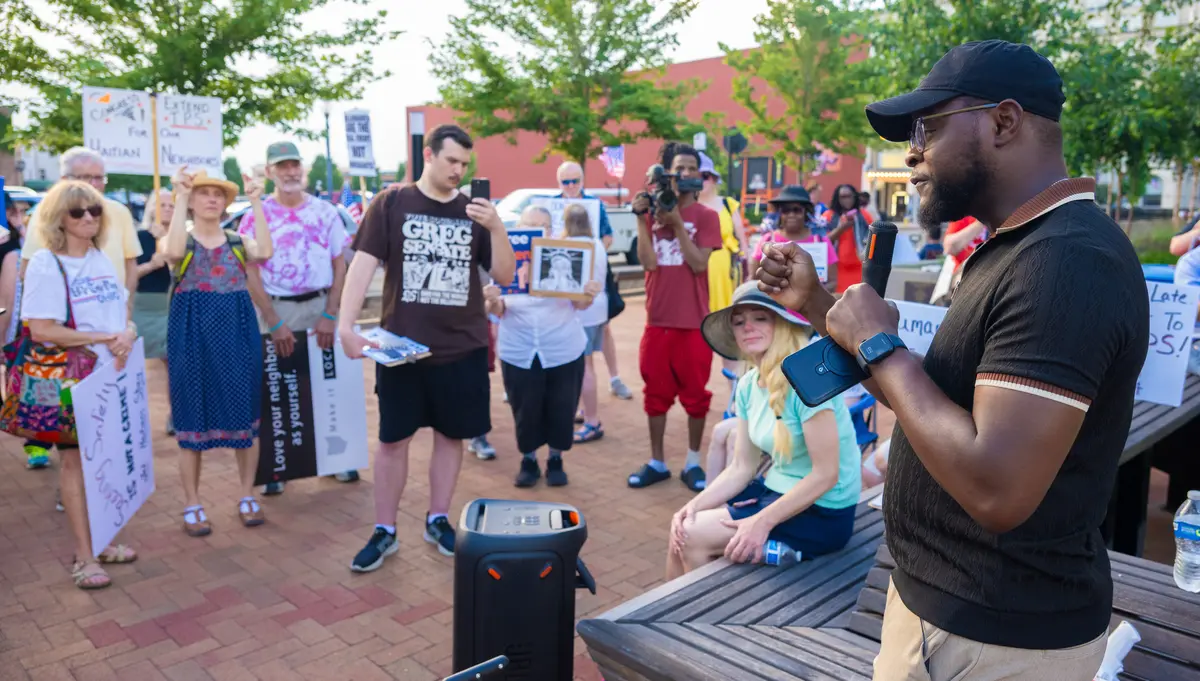
On July 3, as cities and towns nationwide prepared to celebrate the country’s 250th birthday, a group held a rally to support the Haitian immigrants at City Hall Plaza.
At the rally, demonstrators held homemade signs in support of socialism and that invoked Biblical passages, denigrated President Donald Trump and ICE, called locals who do not support the Haitians “fascists” and “racists,” and encouraged Congress to extend TPS.
Counter-protesters coordinated a “patriot rally” and adorned their cars and trucks in American flags and America 250 signs, circling City Hall Plaza where pro-Haitian demonstrators congregated.
Beyond the counter rally, there was no sign of the 250th birthday in City Hall Plaza, which was void of American flags and Independence Day décor.
Springfield resident Terry Adkins, who attended the July 3 event “to show support for America’s 250th birthday,” told The Epoch Times that Haitian immigrants should return to their home country and work to improve conditions there.
“They are people trying to better themselves, but they need to spend the time, money, and effort back at home, and making Haiti a better place,” Adkins said.
“Locally, our city and state officials need to help the residents—American citizens. They’ve ignored us for too long.”

Dorsainvil, the TPS holder, told The Epoch Times at the July 3 rally: “We have hope that one day Haiti will stabilize so those of us who wish can return there safely because it is our homeland.
“That’s not possible now because of the violence and all of the dangers.”
Biassu Pierre also attended the July 3 event. A community organizer for Advocates for Basic Legal Equality, he told The Epoch Times that he and his fellow Haitians in Springfield fear they will be killed if they return to Haiti.
“We came to the United States to escape violence, stability, and danger. Going back to Haiti would be returning to a place where our lives are at risk,” he said.
Daniels, the bicycle shop employee, told The Epoch Times that, if enforced and implemented, the end of TPS “would be a start at putting things back in the right order, which we deserve.”
“No matter how challenging it still might be afterwards, we deserve to have a community that we recognize. We deserve to have a community that feels like it’s ours and is working for us. We deserve Springfield to feel like home again.”