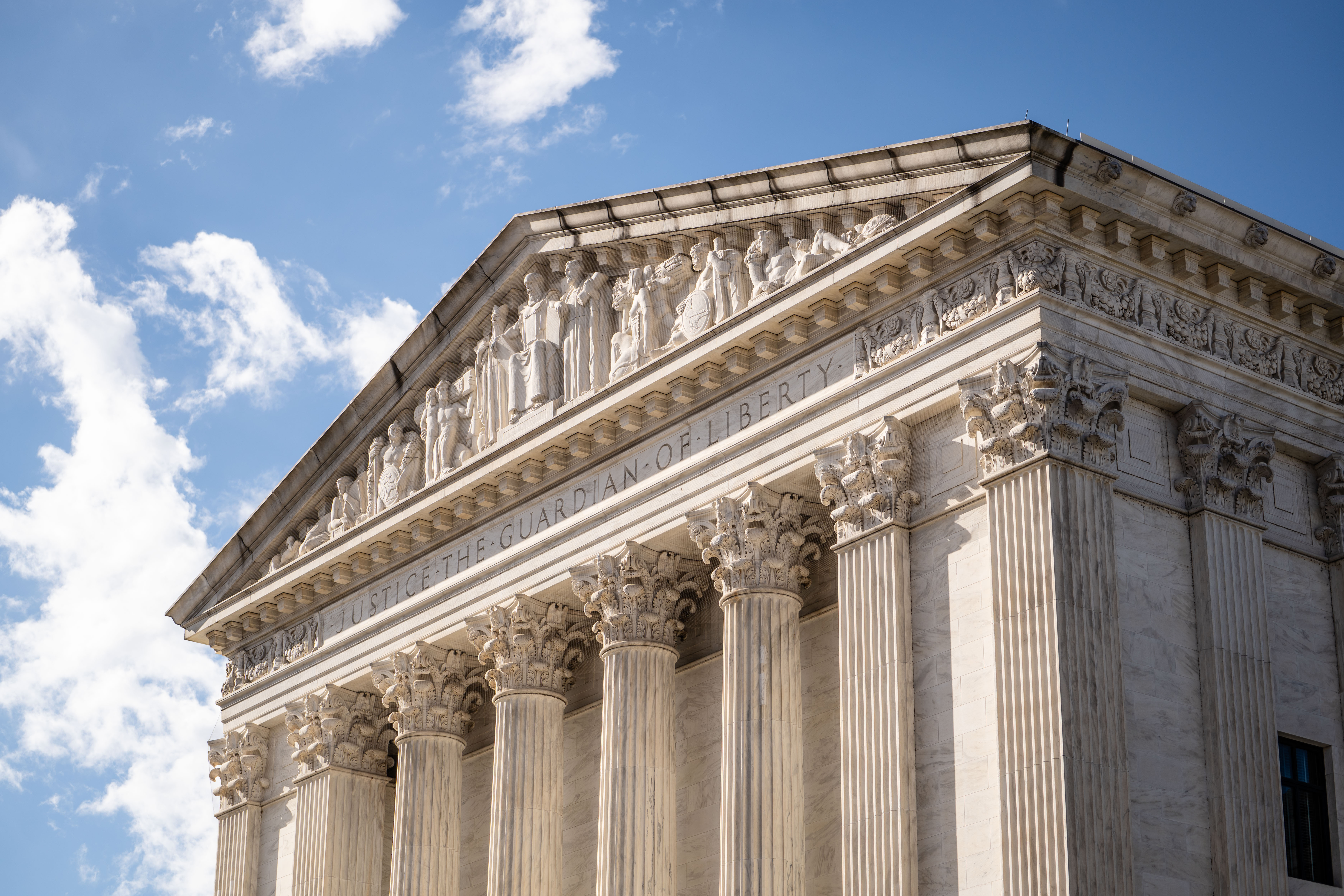


The month of December is set to be a big one for the Supreme Court, which has scheduled oral arguments in hot-button issues such as President Donald Trump’s ability to fire people, campaign spending, and the death penalty.
Its eventual decisions are expected to better define Congress’s power, while having potentially long-lasting effects on Americans’ civil liberties.
1. Trump’s Ability to Fire Bureaucrats
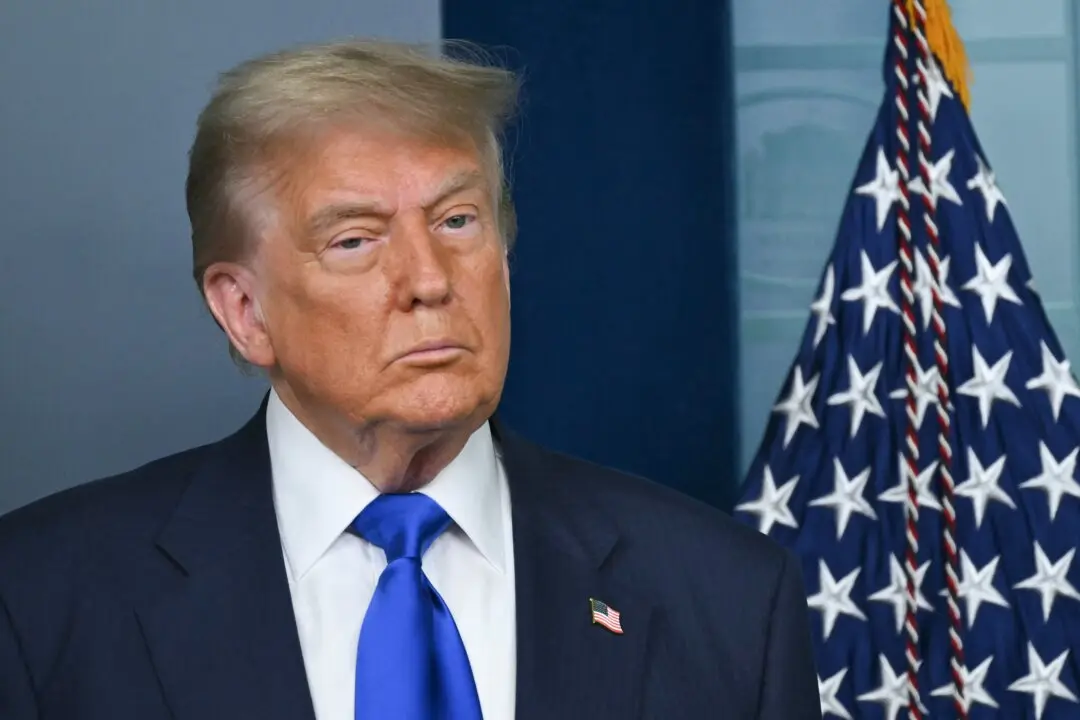
For months, Trump has been asking the Supreme Court to block lower court orders halting his ability to remove high-level bureaucrats. Although the justices have granted him tentative relief on their emergency docket, they have yet to fully weigh in on the president’s removal authority.In March, Slaughter received a letter in which Trump said her “continued service on the FTC is inconsistent” with his administration’s priorities. Slaughter sued, alleging that Trump violated not only federal law, but also Supreme Court precedent.
With the FTC Act, Congress specified that presidents could fire people only for “inefficiency, neglect of duty, or malfeasance,” none of which Trump identified in his letter to Slaughter.
Instead, he cited Article 2 of the Constitution, which vests the executive power within the president. Slaughter and a district court both disputed this argument on the basis of a nearly 90-year-old precedent called Humphrey’s Executor v. United States.
2. Pro-Life Donors
After the Supreme Court’s draft opinion overturning Roe v. Wade was leaked, pro-life pregnancy centers faced a wave of pressure from politicians and activist groups.Along with other attorneys general, New Jersey Attorney General Matthew Platkin accused pregnancy centers of misleading consumers. In attempting to investigate potential legal violations, Platkin subpoenaed a group of faith-based pregnancy centers collectively known as First Choice Women’s Resource Centers.
What followed was a complicated trail of litigation that questioned state authority and, ultimately, whether First Choice would ever be able to bring a challenge in federal court. The Supreme Court is expected to address those issues and others during oral argument on Dec. 2.
First Choice asked the Supreme Court to intervene after multiple federal courts said its case was not “ripe,” or ready for adjudication. At first, a district court said it was not ripe because Platkin had not attempted to enforce the subpoena. After Platkin did so in state court, the district court again said the case was not ripe. Its reasoning was based on the idea that the state court had to first threaten contempt for not complying with the subpoena.
First Choice told the Supreme Court that this created a “Catch-22” because of a legal doctrine known as res judicata, which prevents the relitigation of an issue that was already decided by another court.
“Once a state court adjudicates First Choice’s federal constitutional claims, res judicata will almost certainly bar First Choice from ever having those claims decided by a federal court,” the group said in its brief to the Supreme Court.
3. Campaign Spending Limits
The high court will soon hear a case that may affect the 2026 midterm elections by judging whether the First Amendment allows Congress to limit coordinated spending between political committees and candidates.The case, known as National Republican Senatorial Committee v. Federal Election Commission (FEC) originated with Republicans, including then-Senate candidate JD Vance.
They focused on the Federal Election Campaign Act, which imposes a series of limits on political spending, including individual contributions, expenditures by political parties, and coordination between both parties and candidates. That last category was the one Vance and the National Republican Senatorial Committee said violated their First Amendment rights, specifically because the FEC sought to enforce it in a way that would restrict their advertising activities.
In 2001, the Supreme Court said that that type of coordination opened a backdoor for individuals to use parties as middlemen and circumvent limits on contributions.
It is unclear how the court will rule and the only current justice who was on the court for the 2001 decision is Justice Clarence Thomas, who dissented.
Rather than overturning the 2001 decision, the court could also say the Constitution protects the particular type of activity that Republicans are seeking to perform. Whereas the previous decision focused on a party’s ability to pay a candidate’s bills, Republican committees in the current case are seeking to run ads while getting input from candidates.
4. The Sidewalk Preacher’s Suit
Another case, Olivier v. City of Brandon, involves the First Amendment but in a less direct way. Under Section 1983, Americans can sue governments for violating their First Amendment right and other constitutionally protected rights.During oral argument on Dec. 3, the high court is expected to hear arguments over how and when convicts can use that law.
The issue arose after Christian street preacher Gabriel Olivier was arrested in 2021 for protesting outside a concert venue, which involved calling passersby names such as “Jezebel.” The content of his speech was less of an issue than where he spoke. The city of Brandon, Mississippi, said he violated its ordinance requiring protesters to carry out their demonstrations in a designated area.
Olivier pleaded no contest to the charges, was fined, and received a suspended sentence of 10 days. However, it was not until after his sentencing that he filed a civil suit under Section 1983, asking courts to declare that the city ordinance violated the First Amendment and the 14th Amendment.
The suit was dismissed by lower courts because of a previous Supreme Court precedent, Heck v. Humphrey, which states that plaintiffs cannot bring claims under Section 1983 if they “would necessarily imply the invalidity of a prior conviction.”
Olivier appealed to the Supreme Court, arguing that he was not looking to overturn his previous conviction but just wanted protection from future prosecutions.
He also said his situation was different from the Heck case.
5. IQ and the Death Penalty
Joseph Clifton Smith was sentenced to death for brutally murdering a man in 1997. But after a Supreme Court decision in 2002, Smith alleged that his death sentence was unconstitutional because he was mentally disabled.Smith’s case has led the Supreme Court to review how lower courts are supposed to weigh multiple IQ scores in order to determine whether someone has an intellectual disability.
Although all five of Smith’s IQ scores were higher than 70, four were low enough that the margin of error made it possible that his actual score was lower than 70. A panel of appellate judges said that in order to use IQ to maintain the death penalty, the state had to have evidence strong enough to foreclose the possibility that his actual IQ was lower than 70.
Alabama and the Trump administration sought Supreme Court review, arguing that the appeals court was requiring too much and that courts should consider the cumulative effect of multiple IQ scores.