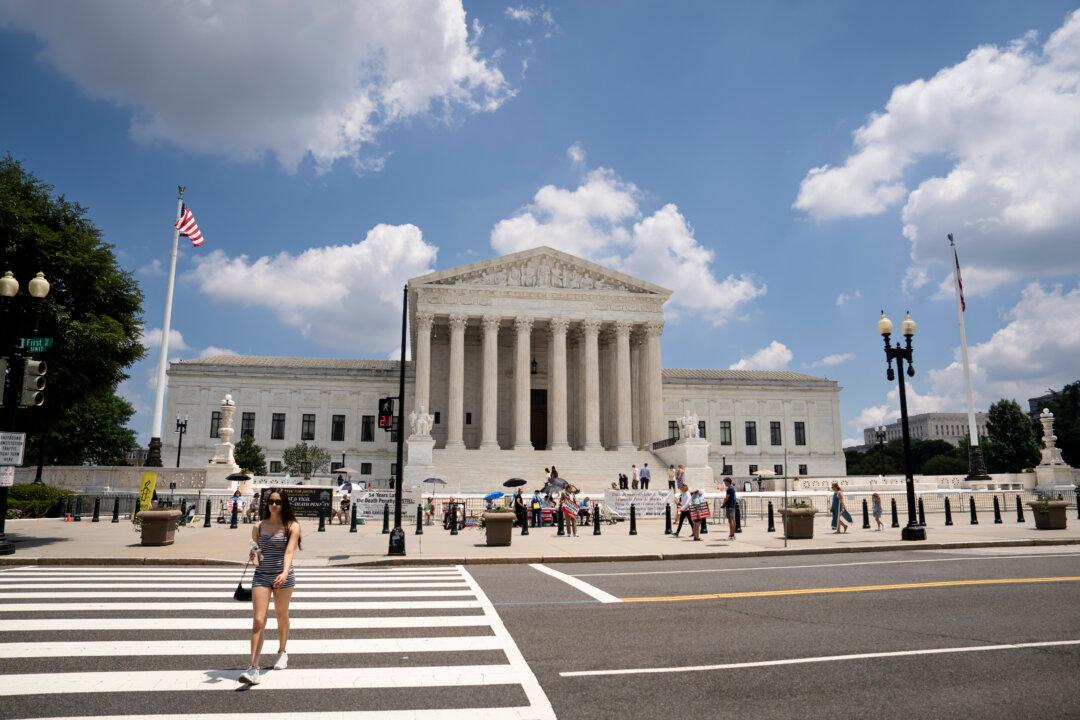
The Supreme Court concluded its 2025–2026 term on June 30 after a series of landmark decisions impacting immigration, President Donald Trump’s agenda, and hot-button social issues.
Among the top decisions were those rejecting Trump’s definition of birthright citizenship, upholding bans on boys in girls’ sports, and striking down Hawaii’s gun control law.
While Trump lost on some critical policies, including his global tariffs, the Supreme Court also granted him and future presidents significant flexibility in immigration enforcement and their ability to fire federal officials.
Here’s a look at some of the consequential decisions this term.
Birthright Citizenship
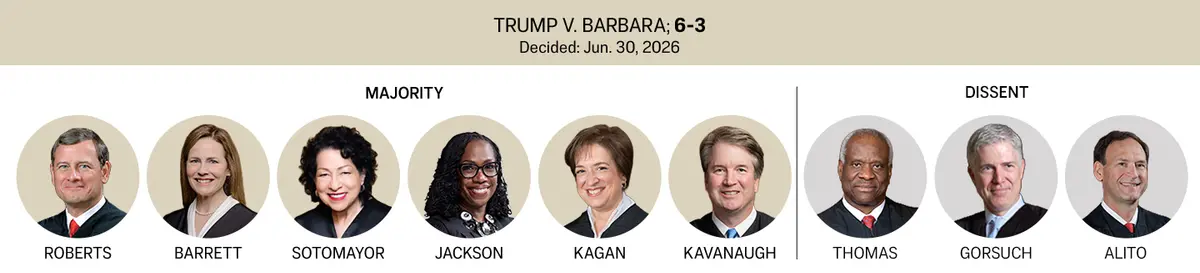
In a landmark ruling, the Supreme Court said that the babies of illegal immigrants and temporary visitors were entitled to citizenship under the Constitution.
The decision marked a significant setback for Trump, who issued an executive order attempting to exclude these children from birthright citizenship.
A majority of the court said his policy was inconsistent with the 14th Amendment’s Citizenship Clause.
That clause reads, “All persons born or naturalized in the United States, and subject to the jurisdiction thereof, are citizens of the United States and of the state wherein they reside.”
Trump had argued that the 14th Amendment’s focus on “jurisdiction” required that parents have some kind of allegiance to the country before their children received citizenship.
Chief Justice John Roberts disagreed, writing in the majority opinion that the Justice Department had advanced a “dramatically revisionist view” of the amendment’s history.
Some of the conservative justices dissented, while Trump urged Congress to end birthright citizenship on its own.
Trump’s Tariffs
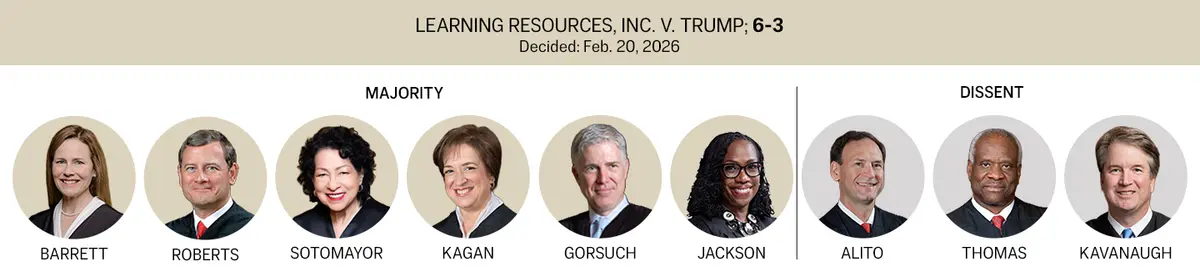
A majority of the Supreme Court ruled in February that large swaths of Trump’s tariffs were illegal.
Although the Constitution gave Congress the power to impose tariffs, Congress passed laws to allow the president to impose tariffs under certain conditions.
Trump had attempted to impose reciprocal tariffs and others related to drug trafficking by using a law known as the International Emergency Economic Powers Act.
That law allowed the president to take certain actions, including regulating imports, in the face of emergencies.
In a 6–3 decision, the Supreme Court said that the law’s language did not authorize tariffs.
Instead, it said Congress would have needed to more explicitly authorize tariffs for Trump to pursue the kind of tariffs he did under the law.
Trump responded by imposing some of his tariffs under a different legal authority, setting up another potential Supreme Court battle.
President’s Firing Power
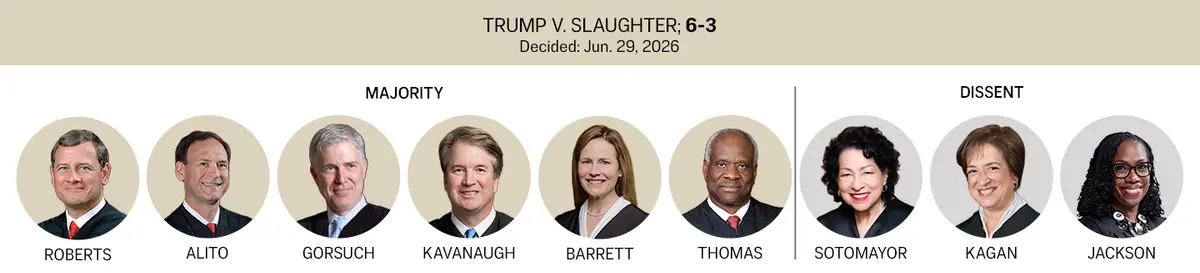
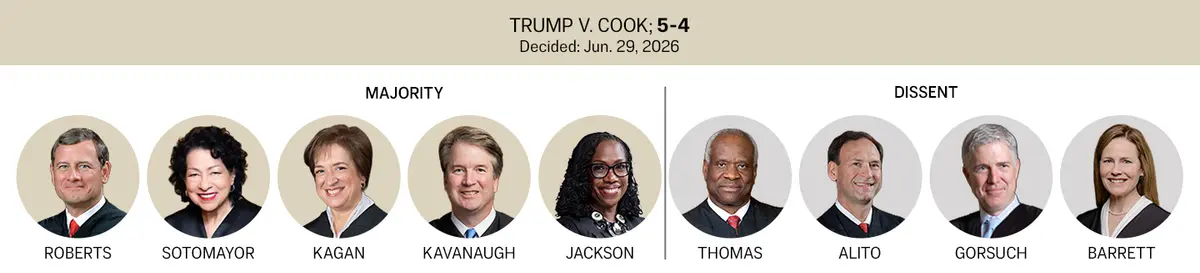
Under two critical rulings issued on June 29, the Supreme Court expanded the president’s ability to fire the heads of federal entities—but indicated that limits on this power remain in place.
The court affirmed Trump’s power to fire a member of the Federal Trade Commission—overruling a nearly century-old precedent limiting presidential power to fire heads of agencies.
The decision marked a win for Trump, who praised the decision as a “Historic and Unprecedented Ruling.”
However, the court made clear in Trump v. Cook that this presidential firing power has limits.
In the ruling, a majority of the court refused to grant Trump’s request to fire Federal Reserve board member Lisa Cook as litigation proceeded in lower courts.
The ruling suggested that the Constitution required some kind of due process for removing officials such as Cook.
Ending Deportation Protections
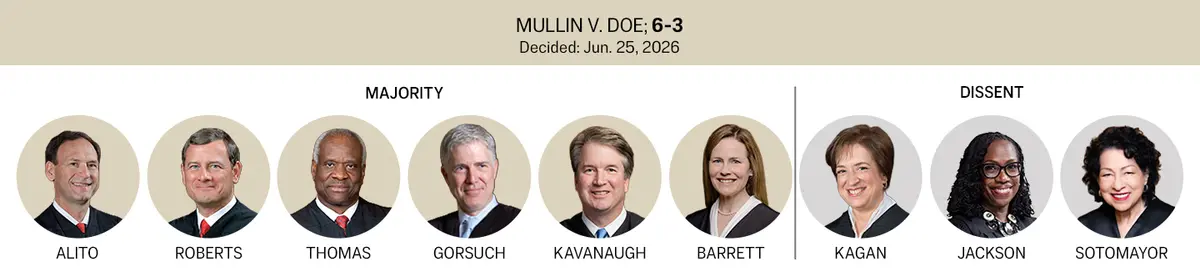
In a key ruling issued in June, the Supreme Court authorized the administration’s efforts to end Temporary Protected Status (TPS) for Haitians and Syrians currently residing here.
The program allows foreign nationals to stay in the United States for humanitarian reasons.
In a 6–3 decision, the majority said that courts have limited power to review the Department of Homeland Security’s decisions to revoke those protections.
It based its decision on a section of the Immigration and Nationality Act that barred judicial review.
The court rejected arguments claiming that the revocation of TPS was racially motivated, citing the administration’s broader opposition to the program.
The decision is expected to affect not just the thousands of Haitians and Syrians on TPS, but also other foreign nationals on the program.
Girls’ Sports
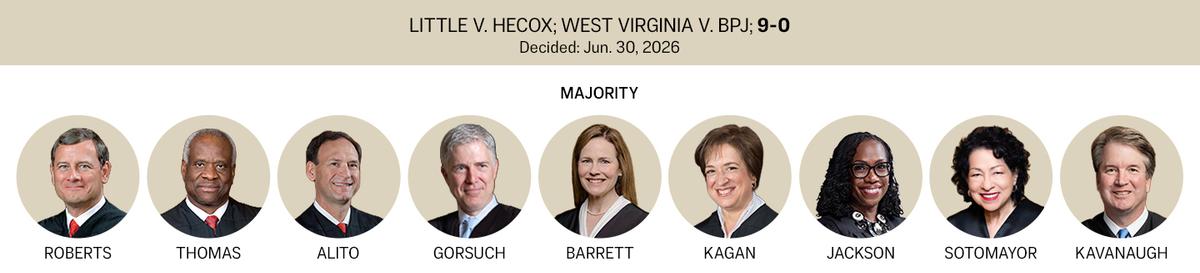
States face significantly fewer roadblocks in banning boys from girls’ sports after a pair of Supreme Court decisions.
The court upheld laws in West Virginia and Idaho, two of 27 states that have enacted laws to maintain separate sports for females in recent years.
The court said West Virginia’s and Idaho’s bans did not violate a civil rights law known as Title IX, or the equal protection clause of the 14th Amendment.
Appeals courts had blocked the laws on the basis that those provisions were violated through discrimination based on “transgender status” and sex.
The Supreme Court disagreed, stating that Title IX, which prevents sex-based discrimination in schools, allowed separate teams for men and women.
It similarly said that the equal protection clause didn’t prevent sex-based classifications like the states’ because their purpose reflected the reality that males and females faced different situations in sports.
Writing for the majority, Justice Brett Kavanaugh questioned whether “at least some biological males who identify as female and take puberty blockers or hormones do not retain physical advantages over biological females.”
The science, he said, was not settled on that issue.
Colorado’s ‘Conversion Therapy’ Ban
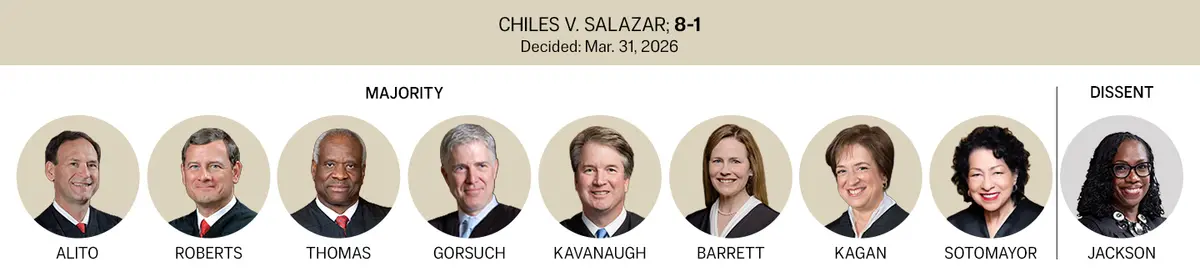
The Supreme Court struck down Colorado’s so-called conversion therapy ban in March, ruling that it violated First Amendment free speech protections.
That Colorado law barred licensed therapists from engaging in talk therapy with minors if it sought to change “their sexual orientation … gender expressions, or to eliminate or reduce sexual or romantic attraction or feelings toward individuals of the same sex.”
The state argued it was regulating therapists’ “conduct,” and any regulation of speech was only incidental.
But Justice Neil Gorsuch pointed out that the law allowed therapists to affirm a patient’s gender identity or same-sex attraction.
Colorado’s law “regulates the content of her speech and goes further to prescribe what views she may and may not express, discriminating on the basis of viewpoint,” he wrote in the 8–1 decision.
Justice Ketanji Brown Jackson was the lone dissenter, writing that expert consensus said such therapy was “ineffective and harmful.”
Parents’ Right to Know
The Supreme Court, in a March ruling on its emergency docket, said that parents likely have a constitutional right to be informed of their children’s decisions relating to transgender identification.
The case concerned a California policy that prohibited school personnel from telling parents about their children requesting to go by a different name and gender while at school.
The guidance also required teachers to use those new names and pronouns when parents weren’t around.
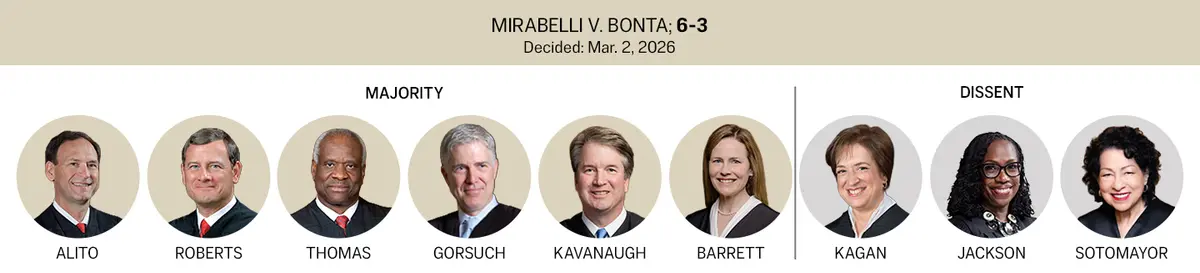
In a 6–3 decision, the court reinstated a judge’s block on the policy.
“These policies likely violate parents’ rights to direct the upbringing and education of their children,” the court ruled.
The court said that the parents suing California were likely to succeed in their argument that the policy violates their rights under the Free Exercise Clause of the First Amendment.
Hawaii’s Gun Restrictions
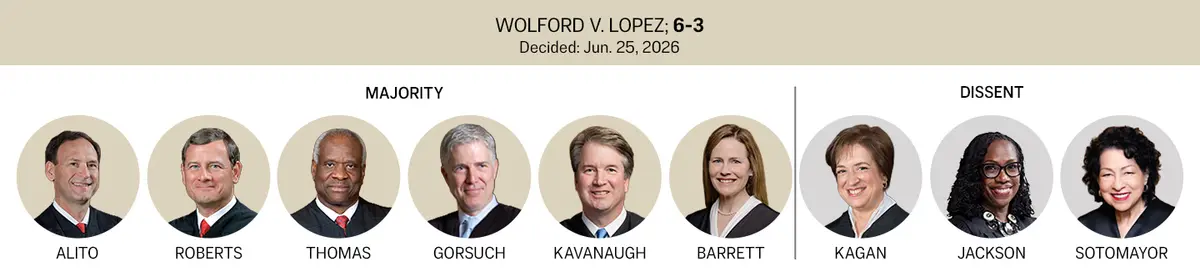
The Supreme Court on June 25 overturned a Hawaii law that said gun owners couldn’t carry weapons in privately owned public spaces such as stores and hotels without permission from the owners.
The majority ruled that the law violated the Second Amendment and that gun owners must have the same rights no matter what state they live in.
The ruling is the latest decision strengthening Second Amendment protections in recent years.
On June 18, the court held that habitual weed-smokers can’t automatically be banned from gun ownership.
The court on June 30 agreed to take up a challenge to bans on popular semi-automatic rifles such as the AR-15.
Race in Redistricting
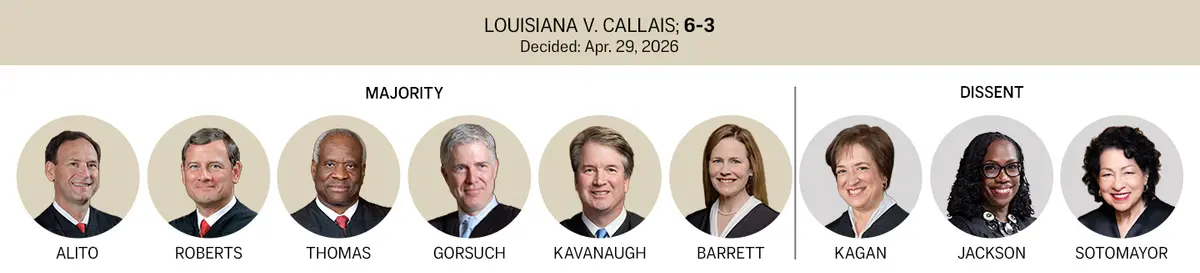
The court in April ruled that using race to draw congressional maps violates the equal protection clause of the 14th Amendment, which bars race-based discrimination.
The 6–3 ruling narrowed the way courts have been applying a key provision of the Voting Rights Act.
That part of the Act was meant to prevent states from passing laws that make it harder for minorities to vote, but courts had been using it to force states to create extra mostly-black districts.
Alito, writing for the majority, said the Constitution rarely lets legislators consider race in drafting laws, and this was not one of those instances.
Following that ruling, other states such as Tennessee and Alabama have sought to reinstate maps that courts previously struck down.
Campaign Spending Limits
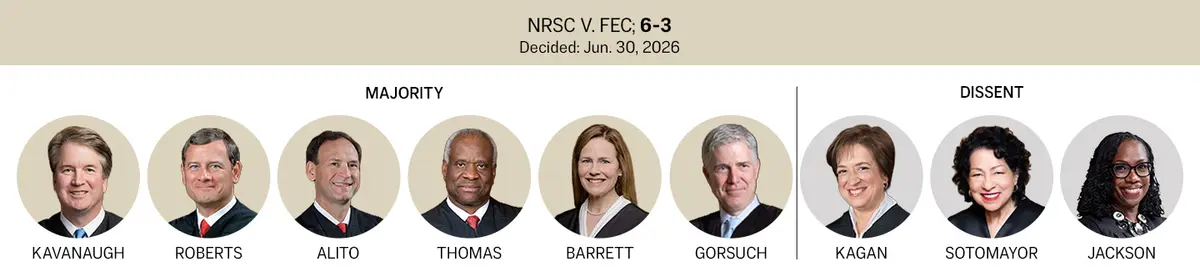
The Supreme Court on June 30 struck down federal limits restricting political parties from coordinating spending with candidates.
The ruling focused on a federal law that restricted actions during election cycles such as a political party spending money on an ad supporting a particular candidate after consulting with their campaign about timing or other factors.
Democrats defended the provisions as ways to prevent quid pro quo corruption, or donors funding indirectly candidates in expectation of a future benefit.
The case was brought by then-Senate candidate J.D. Vance in 2022 after courts had already issued multiple rulings on that law, known as the Federal Election Campaign Act (FECA).
Writing for the majority, Justice Brett Kavanaugh said Congress could generally limit expenditures to prevent corruption but that FECA’s limits went too far.
Congress already had other “prophylactic” measures to prevent corruption, he said, making it more difficult to accept these particular restrictions.
The 6–3 decision saw a strong dissent from Justices Elena Kagan, who was joined by Sonia Sotomayor, and Jackson.
She warned the court’s decision led the country towards “a legal regime increasingly unable to stop political corruption, and thus to preserve our institutions’ democratic legitimacy.”
Late-Arriving Ballots
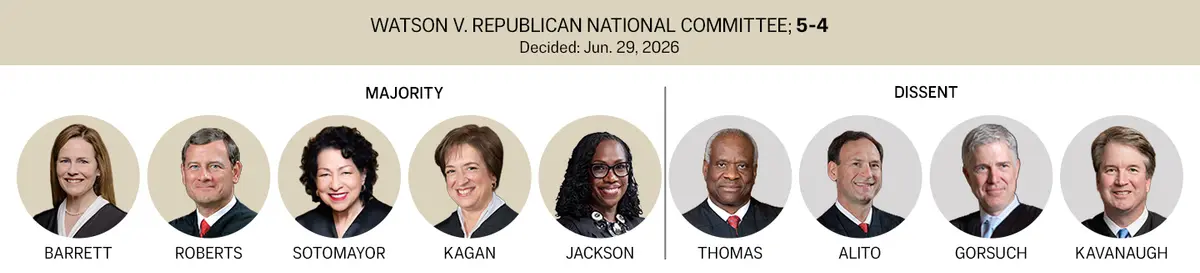
On June 29, the Supreme Court voted 5–4 to uphold a Mississippi law allowing mail-in ballots received as many as five days after Election Day to be counted in federal elections.
The majority led by Barrett and joined by Roberts and the court’s three liberals held that federal Election Day laws govern when ballots must be cast, not when they must be received by officials.
Mississippi and many other states enacted grace periods for the official receipt of ballots during the COVID-19 pandemic in 2020 to give voters flexibility.
Trump criticized the ruling, calling it a “tremendous loss” for voters’ rights, and saying it shows how important it is to pass the SAVE America Act, which would ban mail-in ballots except in cases of illness, disability, military deployment, or travel and is stalled in the U.S. Senate.
Democratic state attorneys general hailed the ruling.
Jennifer Davenport of New Jersey said mail-voting is “a legal, reliable, and secure way to vote,” about which voters should feel confident.
Monsanto’s Liability in Weedkiller Lawsuits
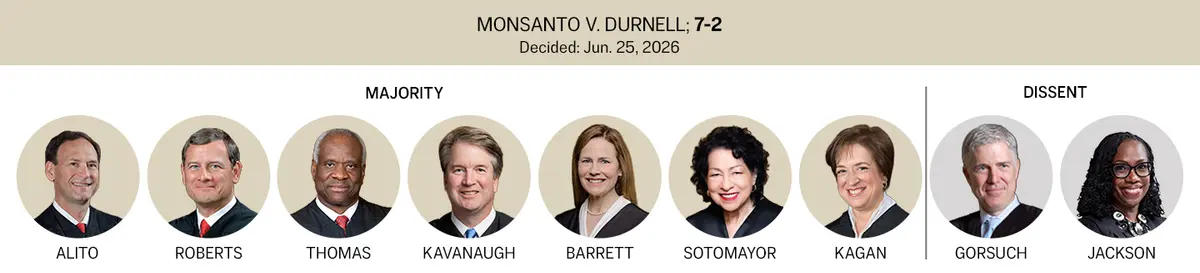
The court’s 7–2 decision handed agribusiness Monsanto a significant victory on June 25, overturning a lower court ruling that had opened the company up to billions in liability over its popular weedkiller, Roundup, and its key ingredient glyphosate and alleged cancer risk.
A Missouri man, John Durnell, sued Monsanto when he was diagnosed with cancer after being exposed to Roundup. He blamed the company for failing to warn him about the risks associated with the chemical.
A Missouri jury agreed with him, awarding him millions, but Monsanto appealed to the high court.
The company argued the verdict was flawed due to preemption, a legal term that says federal law supersedes state law when they are in conflict.
Because the EPA already approved glyphosate’s use through the Federal Insecticide, Fungicide, and Rodenticide Act (FIFRA) and determined it does not require a cancer warning, states could not require additional ones, Monsanto argued.
The Supreme Court, in Monsanto v. Durnell, agreed.
“Durnell’s state tort claim would impose a pesticide labeling requirement ‘in addition to or different from’ the label required by EPA; FIFRA expressly preempts Durnell’s claim,” the majority opinion said.
‘Geofence Warrants’
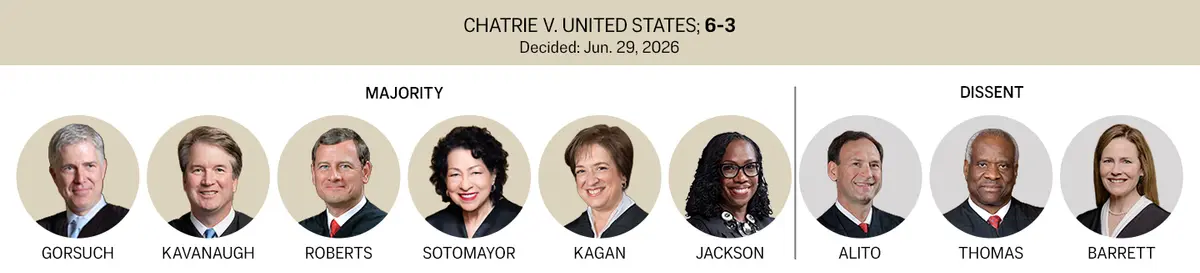
A majority of the court ruled that the government must comply with the Fourth Amendment in its use of so-called “geofence warrants.”
The Fourth Amendment bars unreasonable searches and seizures.
Geofence data—referring to data collected by third-party companies such as Google and Meta—has been targeted in recent years by police warrants.
“An individual has a reasonable expectation of privacy in records about his cell phone’s location,” Justice Elena Kagan wrote in the 6–3 ruling.
In Chatrie v. United States, such data was used to convict Okello Chatrie of bank robbery, which Chatrie argued was a violation of his Fourth Amendment rights.
The Supreme Court did not decide the issue and directed the case back to the lower court to determine if the warrant complied with the Constitution.
Correction: A previous version of this article misstated which judge wrote the majority opinion in the ruling on West Virginia’s and Idaho’s bans on boys in girls’ sports. The Epoch Times regrets the error.