The U.S. Supreme Court ruled on June 29 that law enforcement officials have to abide by the Fourth Amendment when they use cellphone location data to investigate criminal activity.
The Fourth Amendment protects against unreasonable search and seizure. A suspected bank robber said police violated his rights by accessing his location data to place him at the scene of the crime.
“An individual has a reasonable expectation of privacy in records about his cell phone’s location, and police intrude on that constitutionally protected interest when they demand the information—even though for only a limited time, and from a third-party tech company,” Justice Elena Kagan wrote in the 6–3 ruling.
However, the suspect in the case is not quite off the hook yet, she said.
“We leave to the Court of Appeals the further question whether, given the warrant issued, the search here was reasonable, meaning that each of its steps was properly described with particularity and found to be supported by probable cause,” she said.
Justices Samuel Alito, Clarence Thomas, and Amy Coney Barrett dissented. Alito, in his dissent, wrote that the suspect’s chances of having the evidence suppressed are “virtually zero” and that the court should have never taken the case at all.
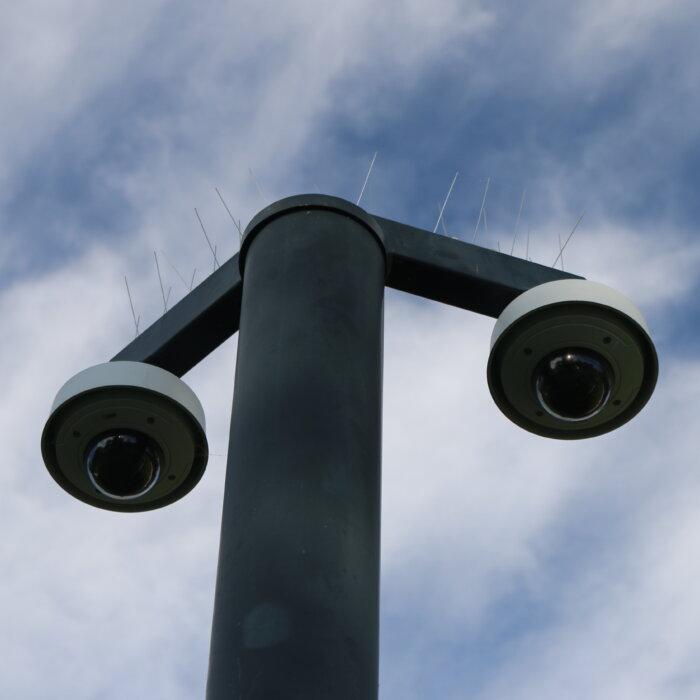
After a 2019 bank robbery took place in Midlothian, Virginia, law enforcement officers served Google with a warrant for geofencing data. The police wanted anonymous cellphone user data within a 300-meter radius of the crime to pinpoint possible suspects.
Using the data provided to them, they gradually narrowed their search down to three individuals and finally arrested Okello Chatrie and charged him for the robbery. After a district court upheld the location data as evidence, Chatrie entered a conditional guilty plea and appealed.
The Court of Appeals for the Fourth Circuit upheld the warrant, but the judges were divided on fundamental legal questions, such as whether examining the geofence data qualified as a search under the Fourth Amendment.
The majority in the June 29 ruling said it does, because Chatrie had an expectation of privacy regarding the location data. Justice Neil Gorsuch agreed in principle, but not totally.
“Count me unpersuaded,” Gorsuch wrote. “Why does tracking Mr. Chatrie’s movements digitally over an hour or two invade his reasonable expectation of privacy when an officer tailing him for the same length of time would not?”
Instead, he wrote, the location data should be considered Chatrie’s personal property.
The lower court was also split on whether the “good faith” exception applied to the use of location data. That principle says that evidence can be used when officers believed that they were acting within the law, even when a warrant is later ruled to have been improperly issued.
The Supreme Court’s ruling doesn’t resolve that second question, and Alito said in his dissent that that was “irresponsible.”
“Although today’s decision will send seismic waves through our Fourth Amendment doctrine, not one iota of the majority opinion will affect the outcome of this case,” he wrote. “The Court knows this and does not claim otherwise.”