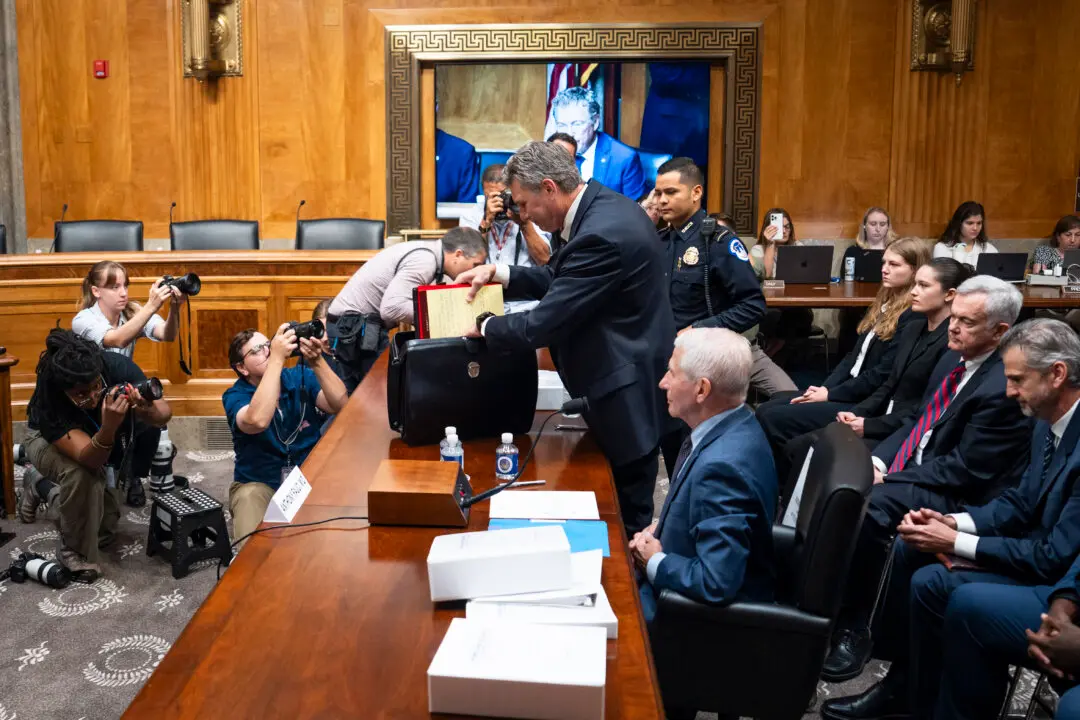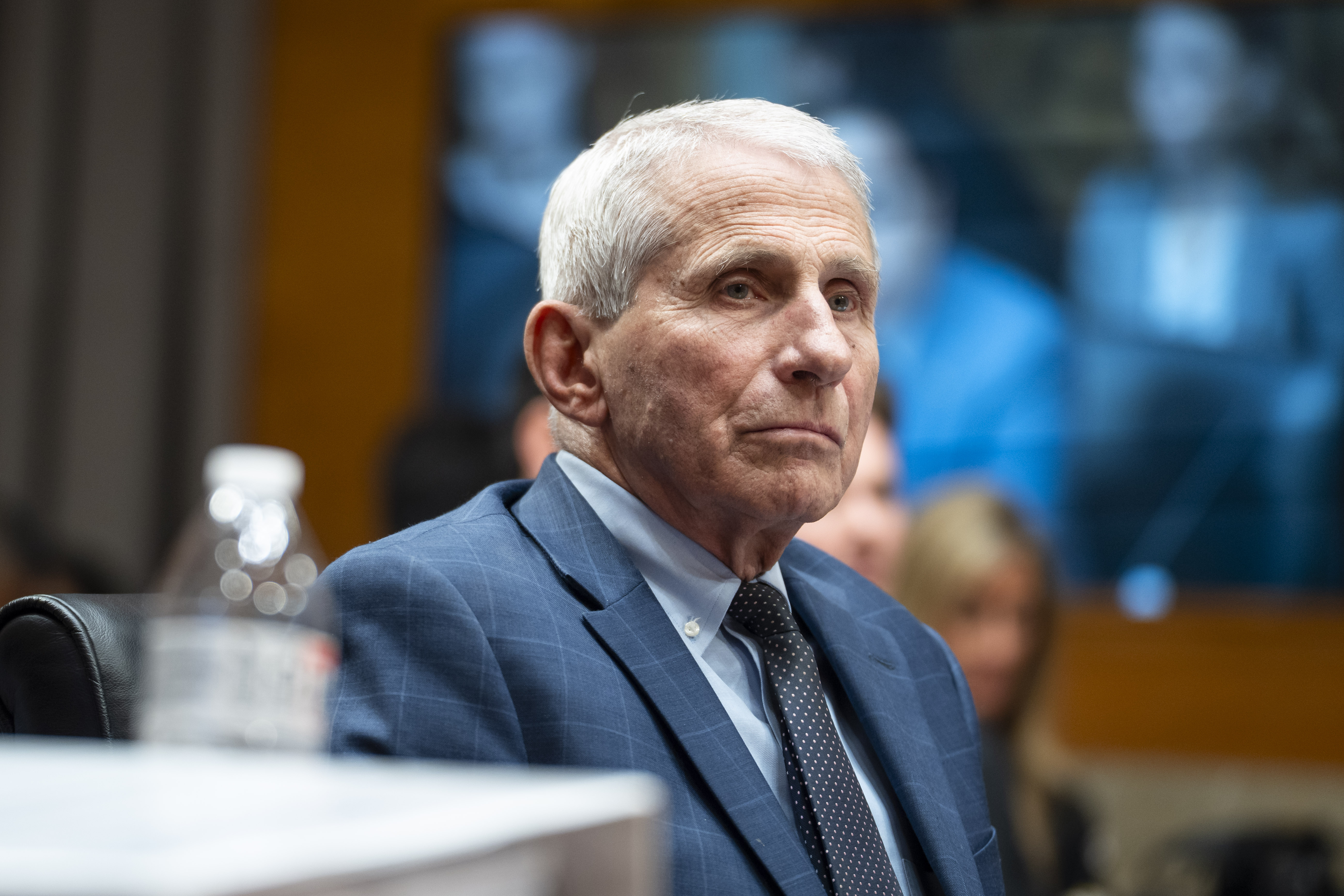

Lawmakers were left with more questions than answers after Dr. Anthony Fauci pleaded the Fifth more than 100 times during a Senate hearing.
The former head of the National Institute of Allergy and Infectious Diseases was subpoenaed to testify on July 29 on his conduct and decision-making during the COVID-19 pandemic.
“The only conclusion I can reach is that the sole reason he is calling me before this committee is to get me to say something, anything that could vindicate his repeated public pledges that I end up, in his words, ‘behind bars.’”
Fauci said he would follow his attorneys’ advice and invoke the Fifth Amendment, which grants protection from self-incrimination.
His refusal to answer could lead to contempt of Congress charges. Here’s what to know:
Biden’s Pardon
Though Fauci pleaded the Fifth, Paul said that might not shield him from congressional scrutiny.
Since President Joe Biden issued Fauci a pardon for all his activities ranging from 2014 until January 2025, Paul said, Fauci had no valid right to claim he would incriminate himself by answering questions.
Earlier in the hearing, Sen. Josh Hawley (R-Mo.) made the same assertion, noting that the Supreme Court had ruled that a person cannot invoke the Fifth Amendment related to crimes for which he had been pardoned.
John Malcolm, vice president of the Meese Institute for the Rule of Law at the legacy advocacy group Advancing American Freedom, agreed.
“Now there are lots of answers that Anthony Fauci could have given that would be embarrassing to him, but it is improper to invoke the Fifth Amendment to avoid disclosing embarrassing information,” he said. “The Fifth Amendment is only available to avoid answering questions that could incriminate you.”
Fauci also refused to answer seemingly benign questions.
“What color tie are you wearing?” Hawley (R-Mo.) asked.
“On the advice of counsel, I respectfully decline to answer based upon my rights under the Fifth Amendment to the Constitution,” Fauci replied.
The doctor gave the same answer, verbatim, when senators asked if he used his office to enrich himself, ordered employees to destroy federal records, or lied to the public.
Though Fauci refused to answer any questions, his attorney, David Schertler, repeatedly interrupted the hearing to defend his client’s right to plead the Fifth.
Paul ordered him escorted out as attendees of the hearing applauded.
“The accusations that Chairman Paul continues to propagate are false and disgraceful, and we will examine all options to hold him accountable,” Schertler later said in a statement.
Possible Contempt
Paul said there would be “repercussions.” The committee is scheduled to vote on a contempt resolution against Fauci next week.
Sen. James Lankford (R-Okla.) asked Paul whether Fauci’s conduct was the same as that of Lois Lerner, a federal employee subpoenaed in 2013 to testify to Congress about the weaponization of the IRS against conservative groups during the Obama administration.
Like Fauci, she gave an opening statement, but then pleaded the Fifth.
“You can’t do both. You can’t both testify and say, ‘I’m not going to answer questions,’” Lankford said. She was subsequently held in contempt, but the DOJ declined to prosecute her.
“So the parliamentary question that I think we’ve got to be able to deal with is: Is this consistent with Lois Lerner?”
If Congress does vote to hold Fauci in contempt, his will be the most recent in a string of high-profile individuals lawmakers have sanctioned.
Former Trump advisers Peter Navarro and Steve Bannon were both convicted of contempt after they refused to comply with congressional subpoenas related to the storming of the Capitol on Jan. 6, 2021.
Both spent months in prison.
John Shu, a constitutional law expert who served in both Bush administrations, said the Fauci situation also resembles that of Monica Lewinsky.
She was given broad immunity in order to testify to a grand jury about her affair with former President Bill Clinton. If that case had gone to trial, Shu said, Lewinsky would have been forced to testify.
He also pointed out that Paul had cleverly worded his last question to Fauci: He said he wanted to know if the doctor had destroyed any federal records only during the period covered by the pardon, but Fauci pleaded the Fifth to that question too.
“There’s a very excellent argument to be made that because Rand Paul limited the scope of his question to that time period, he cannot invoke a Fifth Amendment right not to answer,” Shu said.
State Charges?
But Fauci may have a valid Fifth Amendment claim after all, however remote.
Malcolm and Shu were both skeptical that it would affect the validity of Fauci’s claim, however, since there are no credible state-level charges yet. Fauci’s work was done in his official capacity as a federal employee.
“I don’t know what basis Florida would have to prosecute Anthony Fauci for a violation of Florida state law, but if there is something there, then at least with respect to that conduct, he could conceivably and justifiably invoke the Fifth.”
He added that it was a “far-fetched” idea.