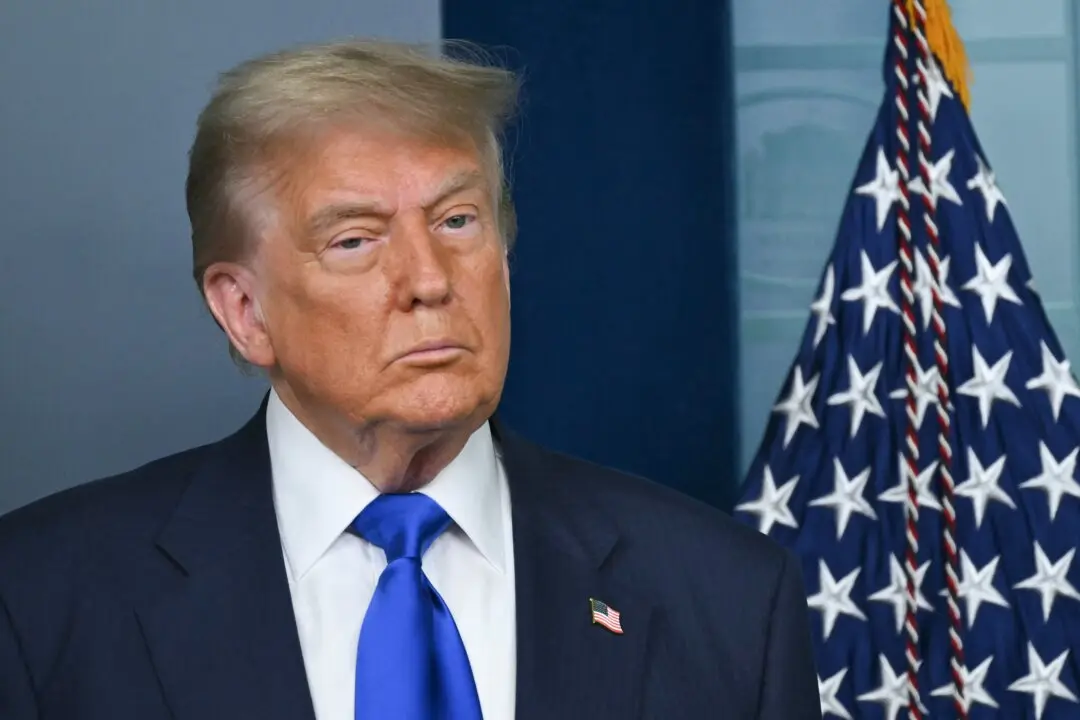
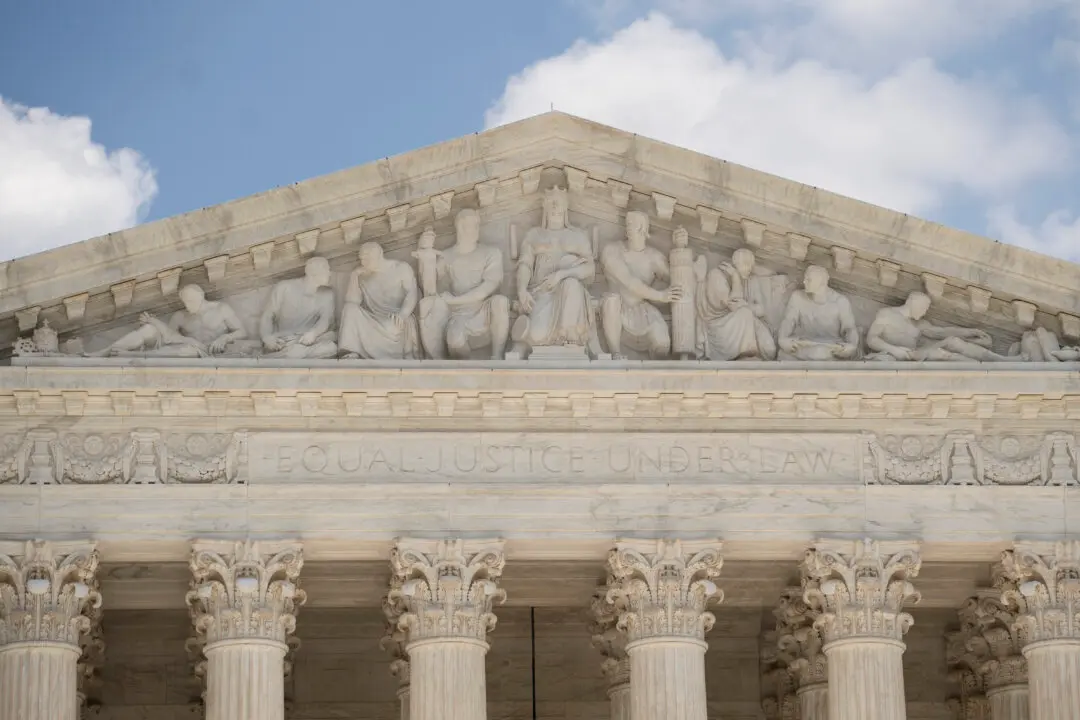
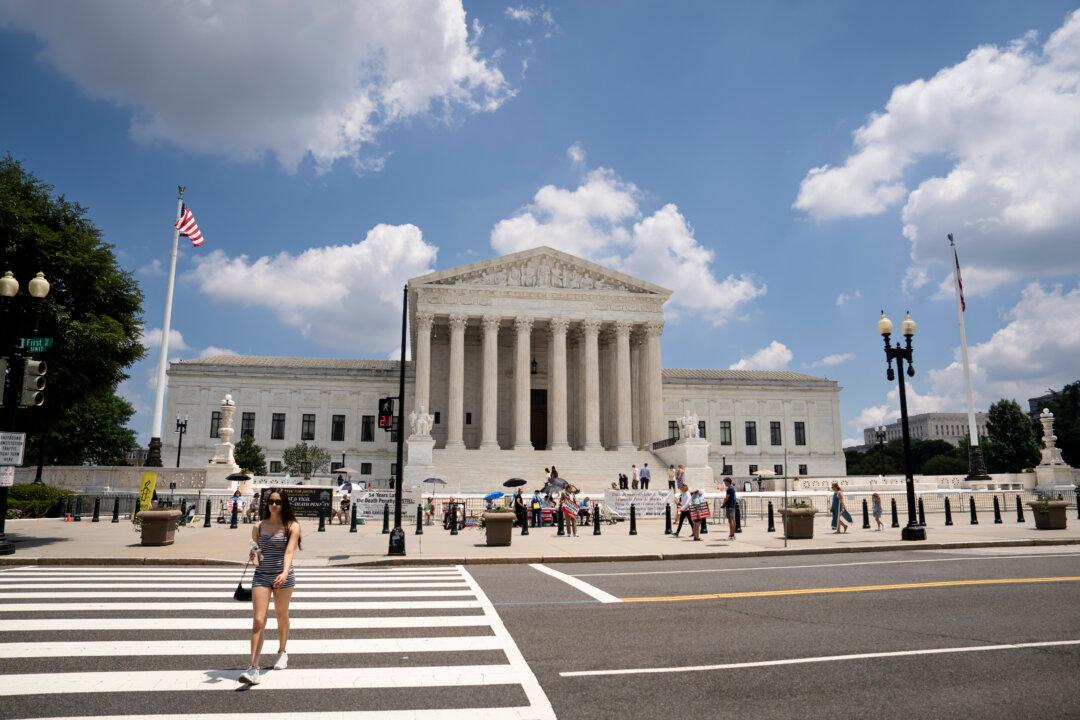
For months, federal judges have been ordering President Donald Trump to reinstate heads of agencies despite his interest in removing them.
Their decisions have been based on a 90-year-old Supreme Court precedent, known as Humphrey’s Executor v. United States, that says Congress can limit the reasons for which presidents can remove officials such as members of labor boards.
However, that precedent and various legal blocks on Trump’s firings could be removed depending on how the Supreme Court rules in an upcoming case—potentially giving Trump and his successors more flexibility with personnel.
Humphrey’s Executor
In a letter sent on March 18, Trump told Slaughter that her continued service was “inconsistent” with his administration’s priorities and that he was removing her pursuant to his authority under Article II of the U.S. Constitution.He notably did not identify any “inefficiency, neglect of duty, or malfeasance,” which are the bases for which Congress said in the Federal Trade Act that presidents could fire commissioners.
Instead, Trump said that Humphrey’s Executor didn’t apply to the current commissioners because the FTC holds more executive power than it did when Humphrey’s Executor was decided in 1935.

President Franklin D. Roosevelt similarly fired FTC Commissioner William Humphrey without identifying a cause listed by Congress.
Instead, he dismissed Humphrey after describing the two as having different visions for the FTC.
In a unanimous decision, the Supreme Court ruled against Roosevelt.
Its primary holding was that commissioners exercise quasi-legislative or quasi-judicial power and therefore can receive greater protection than other agency officials.
‘Executive Power’
Looming over Slaughter’s lawsuit and others is the question of what distinguishes a commissioner’s executive power from “quasi-legislative” or “quasi-judicial” power.In a briefing to the Supreme Court, the administration argued that these categories are erroneous.
“Mixed quasi-powers are alien to our constitutional structure,” U.S. Solicitor General D. John Sauer said, later describing independent agencies as a “myth.”
Sauer said the powers of the modern FTC are clearly executive in nature, and therefore, the president has greater authority to remove commissioners. He pointed to powers such as the FTC’s ability to negotiate international agreements with the secretary of state’s approval.
Slaughter countered that both history and Supreme Court precedent support the idea that quasi-legislative or quasi-judicial functions occur within the executive branch.
Oral argument is likely to focus on how the court has handled this issue in more recent decisions, such as Seila Law v. Consumer Financial Protection Bureau, which the administration said had weakened the effect of Humphrey’s Executor.
In Seila Law, the Supreme Court said Congress had intruded on the president’s authority by imposing a “for cause” removal requirement for the bureau’s director.
A majority of the court said that it would not extend the reasoning in Humphrey’s Executor to the bureau in part because the director possesses significant executive power.
Power of Precedent
Sauer told the justices that they should overrule Humphrey’s if necessary. That seemed like a possibility, and it’s one of the questions the Supreme Court is considering.Judicial Crisis Network President Carrie Severino, a former clerk for Justice Clarence Thomas, told The Epoch Times that the precedent was on “shaky ground” and indicated that the court’s more recent decisions could signal an uphill battle for Slaughter.
Severino added that if Slaughter argues “that she’s really doing things that are legislative and judicial, as well as executive, the court’s going to have issues with that as they have in several recent cases.”
If the court does overrule Humphrey’s Executor, it will have to reckon with a legal doctrine known as stare decisis, which means “to stand by things decided” in Latin. It generally means that courts should abide by the reasoning in prior decisions unless multiple factors indicate it shouldn’t do so.
Slaughter has defended Humphrey’s reasoning but also emphasized how the decision has shaped government and public expectations.
“Congress structured dozens of administrative agencies in reliance on the rule of Humphrey’s Executor,” her brief read.
Judges’ Reinstatement of Agency Heads
Whatever the Supreme Court decides, the effects of its decision are expected to ripple through many other cases—including ones involving Trump.Trump has not only challenged Humphrey’s Executor but also said that even if Congress can insulate certain officers from removal, judges shouldn’t be able to reinstate those officers.
Sauer told the court that although fired officers can seek back pay, their reinstatement intruded on executive power and forces the president to “entrust executive power to someone he has removed.”
Slaughter disagreed, arguing, “There is no Article II problem with requiring the President to ‘entrust executive power to someone he has removed’ if he has no Article II authority to remove that person in the first place.”
The Supreme Court’s recent decisions on its emergency docket indicated it was sympathetic to Trump’s position.
The court has indicated that the Federal Reserve could enjoy more legal protection than the FTC and other agencies.
When the labor board officials attempted to compare their agencies to the Federal Reserve, the court disagreed and said “the Federal Reserve is a uniquely structured, quasi-private entity that follows in the distinct historical tradition.”