This copy is for your personal, non-commercial use only. Distribution and use of this material are governed by our Subscriber Agreement and by copyright law. For non-personal use or to order multiple copies, please contact The Epoch Times Reprints.

The Epoch Times
The Epoch Times
AD
The Epoch Times
US Supreme Court

Supreme Court Says Rastafarian Can’t Sue Prison Officials Who Shaved His Dreadlocks

The court seemed skeptical of Damon Landor’s case during oral argument in November.
Google LogoMark Us Preferred on Google
Supreme Court Says Rastafarian Can’t Sue Prison Officials Who Shaved His Dreadlocks
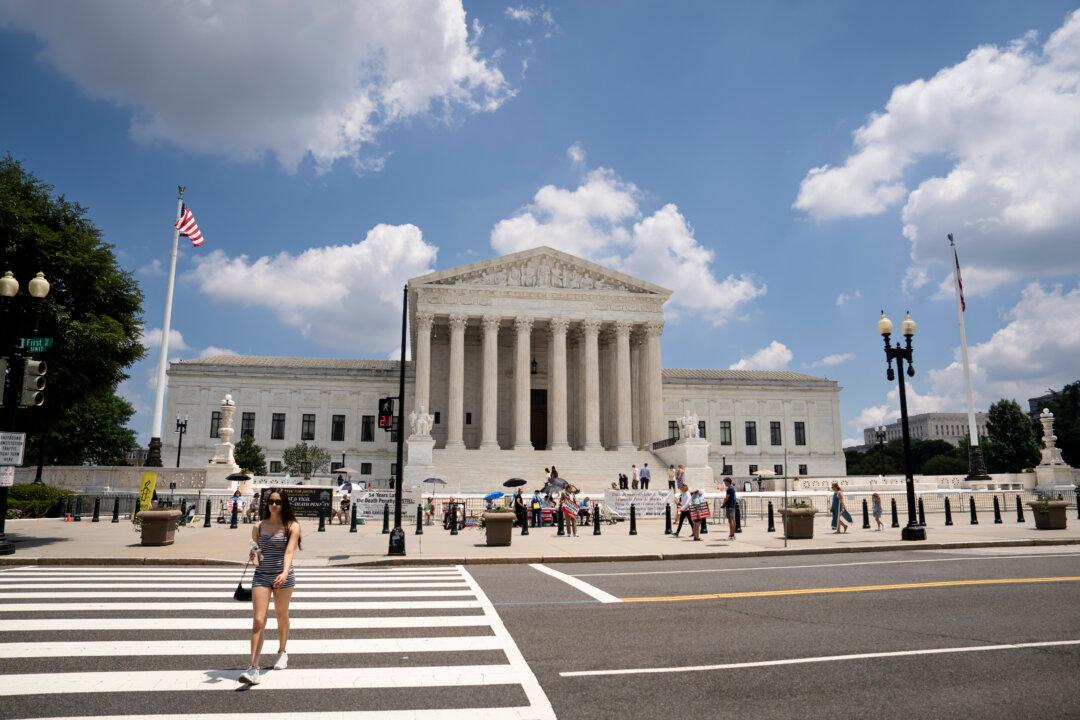
The Supreme Court in Washington on May 21, 2026. Madalina Kilroy/The Epoch Times
Sam Dorman
Sam Dorman
Editor
6/23/2026|Updated: 6/23/2026
0:00

The Supreme Court said on June 23 that a Rastafarian could not sue prison officials in their individual capacities after the officials shaved his dreadlocks.

In a 6–3 decision, the justices said that the officials did not knowingly consent to liability under a federal law protecting prisoners’ religious liberty. Justice Ketanji Brown Jackson penned a dissenting opinion, joined by Justices Elena Kagan and Sonia Sotomayor.

Justice Neil Gorsuch wrote the majority opinion in the case, known as Landor v. Louisiana. He said that the law in question—the Religious Land Use and Institutionalized Persons Act—was unique because it was passed under the Constitution’s spending clause.

“Under the Spending Clause, Congress lacks regulatory authority to impose liability on them directly and must depend instead on consent,” he said. “And because [the officers] never agreed to answer suits like this one, Mr. Landor’s case cannot proceed against them any more than a breach of contract action might proceed against a defendant who never formed a contract.”

Justice Ketanji Brown Jackson penned a dissenting opinion, joined by Justices Elena Kagan and Sonia Sotomayor, in which she accused the majority of “a sleight of hand.”

“Today’s decision magically transforms a federal statute into an invitation to be accepted or declined, deemed binding only if each particular defendant has explicitly agreed to be penalized,” she said. “No matter that laws, as opposed to contracts, don’t ordinarily work this way.”
Related Stories
The Epoch Times
Supreme Court Sides With Trump Administration in Dispute Over Green Card Reentry
The Epoch Times
Supreme Court Rules Policeman Accused of Excessive Force by Protester May Not Be Sued

The case focused on wording in both the Religious Land Use and Institutionalized Persons Act and the Religious Freedom Restoration Act—both federal laws aimed at protecting the right to religious liberty.

In a 2002 case known as Tanzin v. Tanvir, the Supreme Court ruled on the Religious Freedom Restoration Act. It said that people could sue public officials in their individual capacities for violations of religious liberty.

Landor sought to apply that same principle to the Religious Land Use and Institutionalized Persons Act, which Congress passed to protect against religious violations for individuals confined in prisons and other state-run institutions.

Landor told the Supreme Court that a “Nazirite vow” compelled him to keep his dreadlocks.

The U.S. Court of Appeals for the Fifth Circuit said that while Landor “clearly suffered a grave legal wrong,” he couldn’t sue the officials for money damages in their individual capacities.

Part of their reasoning was based on a provision of the Constitution known as the spending clause.

That clause gives Congress the power to collect taxes and other forms of revenue “to pay the debts and provide for the common defence and general welfare of the United States.”

According to the Supreme Court, the Religious Land Use and Institutionalized Persons Act was enacted under that authority.

In the Fifth Circuit’s view, the Religious Land Use and Institutionalized Persons Act was like a contract, with liability assigned to the parties involved.

That liability, it said, should apply only to actual parties to the contract, such as a state government that receives federal funding. Because guards in their individual capacity are not parties to a particular contract, they cannot be held liable in that capacity.

Google LogoMark Us Preferred on Google
Sam Dorman
Sam Dorman
Editor
Sam Dorman is an editor for The Epoch Times. You can follow him on X at @EpochofDorman.
twitter
Author’s Selected Articles
Supreme Court Issues Major Rulings on Weedkiller, Guns, Immigration: Key Takeaways
Jun 25, 2026
Supreme Court Issues Major Rulings on Weedkiller, Guns, Immigration: Key Takeaways
Supreme Court Allows Trump Admin to Remove Deportation Protections for Syrians, Haitians
Jun 25, 2026
Supreme Court Allows Trump Admin to Remove Deportation Protections for Syrians, Haitians
Supreme Court Sides With Monsanto in Dispute Over Weedkiller’s Alleged Cancer Risk
Jun 25, 2026
Supreme Court Sides With Monsanto in Dispute Over Weedkiller’s Alleged Cancer Risk
Supreme Court to Issue 4 Major Decisions on Presidential Authority
Jun 25, 2026
Supreme Court to Issue 4 Major Decisions on Presidential Authority
AD
Add to My List
Save
The Epoch Times
Copyright © 2000 - 2026 The Epoch Times Association Inc. All Rights Reserved.