The Farmers’ Almanac, a long-standing resource that gardeners and farmers have used for weather forecasts and planting guidance, has announced that it will cease publication after a 208-year run.
The company, based in Lewiston, Maine, said in a Nov. 6 statement that its 2026 edition will be its last.
First printed in 1818, Farmers’ Almanac is not to be confused with its older competitor. The Old Farmer’s Almanac, which is based in neighboring New Hampshire, debuted in 1792 and is believed to be the oldest continually published periodical in North America.
Farmers’ Almanac attributed the closure decision to the growing financial challenges of producing and distributing the book in today’s “chaotic media environment.”
“It is with a heavy heart that we share the end of what has not only been an annual tradition in millions of homes and hearths for hundreds of years, but also a way of life, an inspiration for many who realize the wisdom of generations past is the key to the generations of the future,” Farmers’ Almanac Editor Sandi Duncan said in the statement.
“We are incredibly proud of the legacy we leave behind and grateful to our loyal staff, readers, contributors, and partners who have supported us through the years. Though the Almanac will no longer be available in print or online, its spirit will live on in the values it championed: simplicity, sustainability, and connection to nature.”
Editors at The Old Farmer’s Almanac said there has been confusion between the two publications over the years.
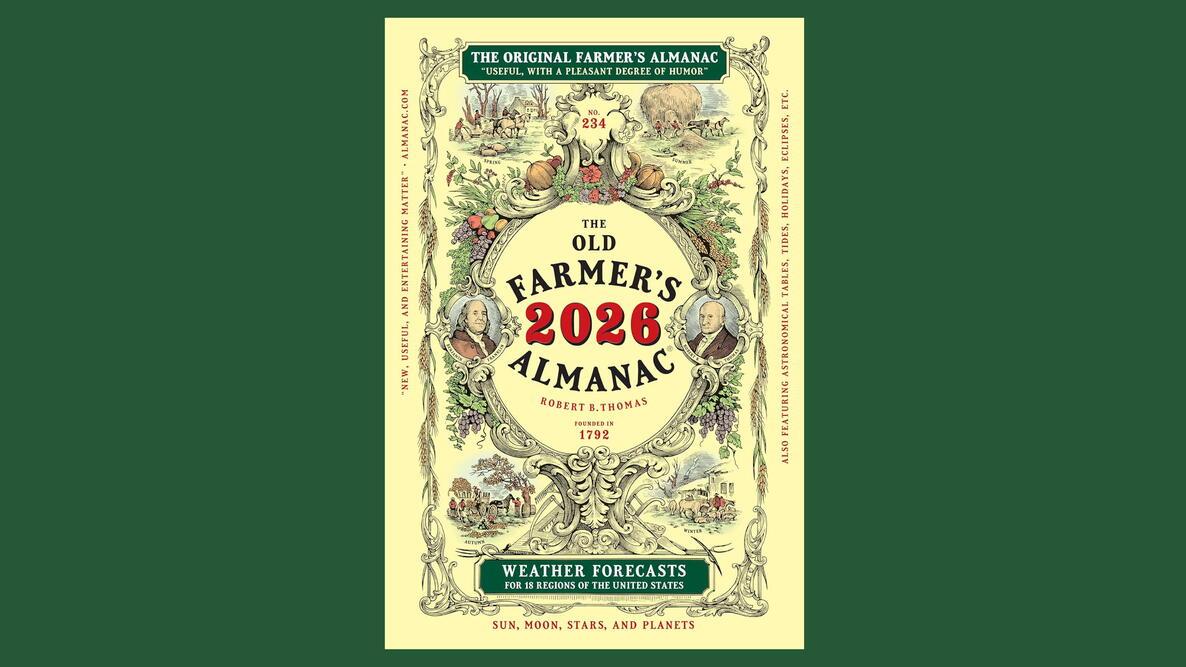
A Nov. 6 Instagram post states, “Rest assured, as sure as the Sun will rise, The Old Farmer’s Almanac—with our familiar yellow cover and 80 percent accurate weather forecasts—will be around for generations to come.”
On Nov. 11, Catherine Boeckmann, executive digital editor at The Old Farmer’s Almanac, posted a statement assuring readers that the elder almanac “isn’t going anywhere.”
“As we have since 1792, during George Washington’s presidency, we will continue to publish our annual edition, while educating and entertaining readers online at Almanac.com,” Boeckmann wrote.
Both almanacs have incorporated secret formulas based on sunspots, planetary positions, and lunar cycles to create long-range weather forecasts.
The Old Farmer’s Almanac predicts next year’s weather for 18 regions in the United States and seven in Canada.
The final version of the Farmers’ Almanac forecasts next year’s weather for seven U.S. regions and five Canadian regions.
Founded in New Jersey, the Farmers’ Almanac moved its headquarters to Lewiston, Maine, in 1955.
Both long-standing farmers’ almanacs contain gardening tips, trivia, jokes, and natural remedies such as catnip as a pain reliever and elderberry syrup as an immunity booster. They are best known for their weather forecasts.
Val Giddings, a senior fellow at the Information Technology and Innovation Foundation and a longtime science and agriculture researcher, said the Farmers’ Almanac was a “quaint relic” with a special kind of charm but that its use as a forecasting tool was debatable.
“It might have had some value looking back, as a historical indicator,” Giddings said. “But I never took any of its prognostications at all seriously.”
Readers expressed their sadness about the end of the Farmers’ Almanac. Many supporters posted online about how generations of their families used the guide to determine when to take vacations and plant gardens.
When the Farmers’ Almanac reported a circulation of 2.1 million in North America in 2017, its editor attributed the growth to more people growing fresh produce in home gardens and becoming interested in where their food came from.
The Old Farmer’s Almanac is printed and distributed by Yankee Publishing Inc., an employee-owned company in Dublin, New Hampshire.
According to Boeckmann, when The Old Farmer’s Almanac was first published by Robert B. Thomas in 1792, there were competitors. Most were regional publications reporting on local news, she said.
At the time, the United States was an agrarian society.
“Everyone grew their own food,“ Boeckmann wrote in an article for The Old Farmer’s Almanac. ”People needed and looked for advice on maintaining farms and fields, planting, tending, and harvesting, as well as weather.
“Astronomy was long an interest of people of that day (they had no TVs or radio to amuse themselves in the evenings); they wanted to know the time of the sunrise and sunset, the Moon phases, when high tide would be, and the like. They wanted recipes for their garden produce, as well as general interest news and amusing stories—all of which were found in our Almanac.”
In 1848, the publication became The Old Farmer’s Almanac, which is known for its yellow cover with large red digits in the center indicating the year of publication. The cover has remained “essentially unchanged” since the 1850s.
According to Boeckmann, The Old Farmer’s Almanac is the only farmers’ almanac to have a full set in the Smithsonian Institute.
Duncan and Peter Geiger, editor emeritus of the Farmers’ Almanac, told readers that the publication “lives on within you.”
“So go ahead—plant your peas when the daffodils bloom,“ they wrote in the statement. ”Watch for a red sky at night. Tell the kids how granddad always swore by the Almanac. That’s how our story stays alive.”