As the war with Iran distracted the United States and Europe is focused on Russia, China exploited the situation to increase its belligerence against Japan and maritime claims around Taiwan and in the South China Sea. But the Iran war also included a blockade of Iran, which forced China to reduce its oil imports.
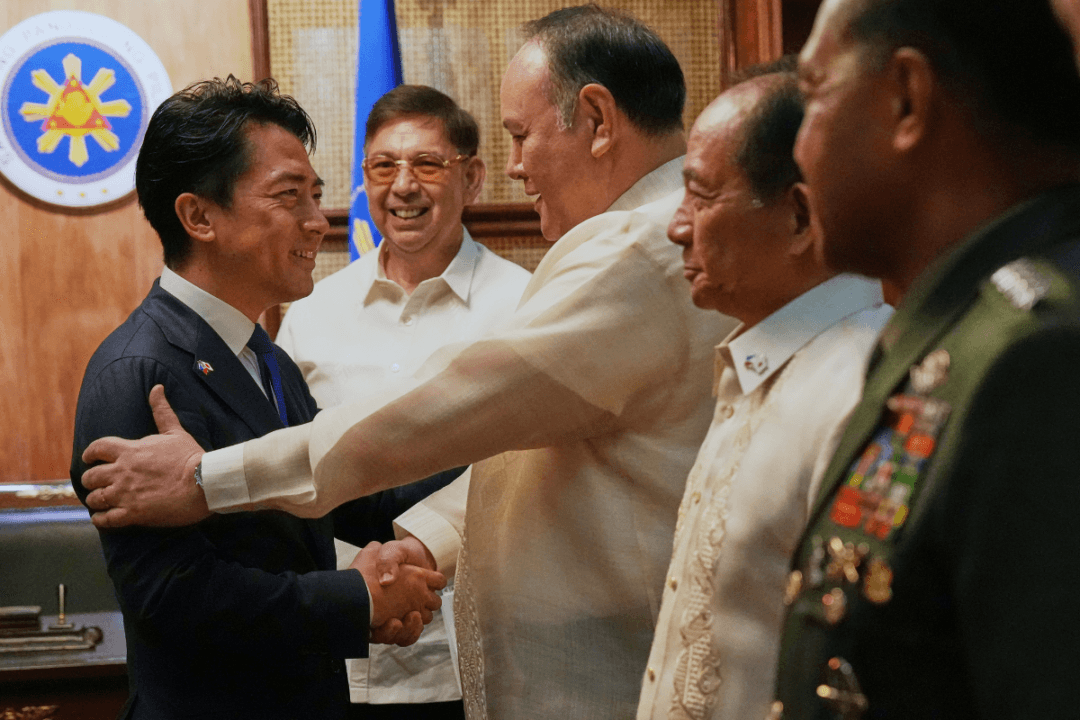
This demonstrates an underused strategy against the regime, and a war that cut both ways for Beijing. On May 31, China’s coast guard patrolled east of Taiwan in the context of efforts by Japan and the Philippines to peacefully agree on their common maritime boundary.
A few days ago, the regime floated its first small structure in Scarborough Shoal off the coast of the Philippines. If allowed, the People’s Liberation Army will likely use this “scientific” structure as a wedge to build one of its biggest and most important military bases in the South China Sea.
The Iran war and Beijing’s reaction indicate that a future conflict with China over its incrementalism continues to be a concern. U.S. strategy and bargaining with Beijing should remain cognizant of non-kinetic points of leverage that the United States retains over the Chinese Communist Party (CCP), including alliance coordination for higher tariffs, more economic sanctions, and options related to China’s dependence on imported oil.
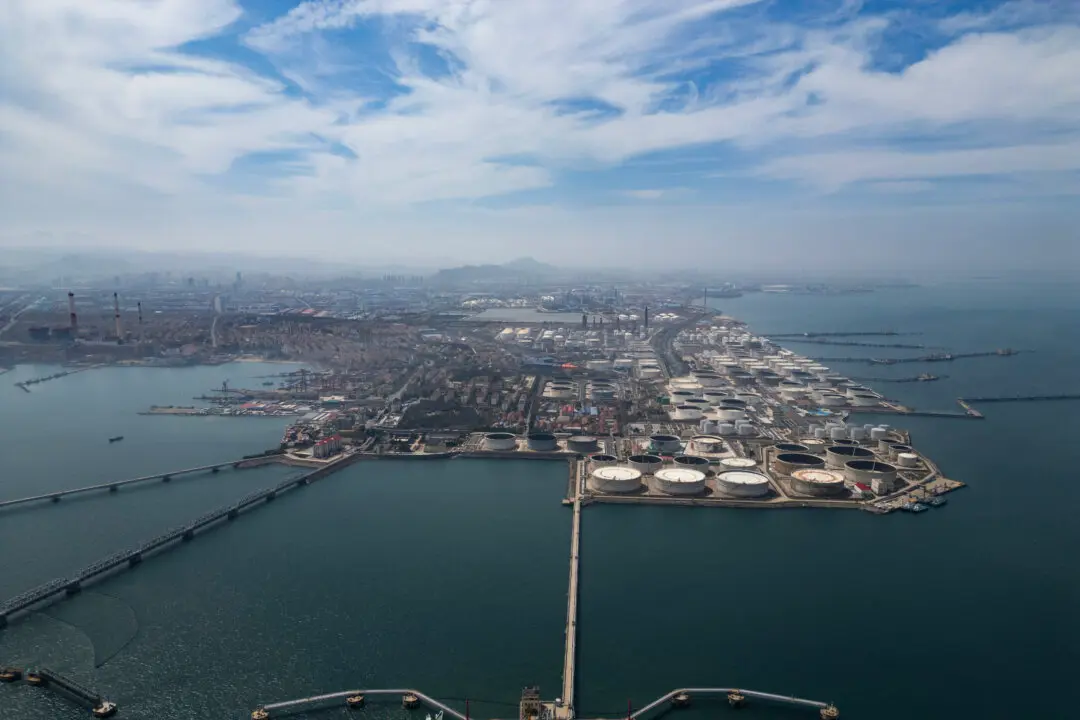
In case of war or the Chinese regime’s continued incremental gains, the United States and our allies could, for example, gradually impose a naval blockade of China’s energy imports. According to analysts, China’s oil reserves may last only a few months, so the threat of a blockade would give Washington leverage.
But China’s dependence on imported oil is no geopolitical slam dunk. China has an estimated 851 million barrels of commercial reserves, 413 million barrels of strategic reserves, and the underground capacity for another 130 million barrels. As oil prices rose due to the Strait of Hormuz blockade, China demonstrated demand elasticity by tapering its oil imports by between 3 million and 4 million barrels per day (bpd). Prior to the blockade, Beijing reported importing about 11 million bpd, which dropped to 7.8 million bpd in the latest figures from May.
Beijing could decrease its oil imports because it opened its commercial reserves starting in April and its strategic reserves in May. The regime restricted exports of refined oil products, including gasoline and diesel.
Chinese industrial and retail consumers demonstrated elastic demand by decreasing their purchases. Consumers decreased air travel and gasoline usage as they turned to electric vehicles and train travel. China ramped up its coal-fired electric power plants. Chemical producers and teapot oil refiners decreased their outputs, including naphtha, that require oil inputs. To supply China’s manufacturing base, China’s industries instead drew down their chemical reserves.
The regime’s figures and the evidence that it lets leak cannot be fully trusted, as the CCP obscures its dependence on foreign oil that could be used to leverage its decision-making in case of one of its worst nightmares: an oil blockade.
But the clues provided by China’s economic resilience to the loss of Iran’s oil supply, along with the likely longevity of that resilience, are key strategic data for any future conflict with China. A Taiwan war that resulted in a U.S. oil blockade of China, for example, would be impactful but not as quickly as sometimes assumed.
Nevertheless, the U.S.–China competition is existential for the United States and democracy more generally. So it merits serious consideration for the toughest of strategic measures against the CCP, including U.S. naval blockades of China’s oil imports and broader economy. The Russian pipelines, one of which transits Kazakhstan, only have about 700,000 bpd of capacity, which is insufficient to replace China’s imports by sea.
U.S. military advantages against China are degrading, but could still allow for an oil or trade blockade, the potential of which should be leveraged by Washington in negotiations with Beijing on any issue, including those related to not only Japan, Taiwan, and the Philippines, but to China’s broader international trade. A trade embargo on the country could affect China’s trade with all countries, including in Europe and throughout Asia.
Such tactics admittedly increase the risk of U.S.–China military escalation, but the regime in Beijing is already doing this by incrementally increasing its territorial claims against U.S. allies. Not reacting in a proportional manner to Beijing’s predation makes the United States appear weak and gives CCP hardliners an argument for more territorial expansion.