Iran announced on July 31 that it hit two ships and turned four others back. The regime’s Islamic Revolutionary Guard Corps (IRGC) claimed that the ships it attacked were under U.S. military escort from the air, as if that were any justification. Ships linked to China, Russia, and some other countries, however, generally get preferential treatment from Iran.
Beijing has good relations with Tehran, which has slowed shipping in the Persian Gulf through its attacks. Beijing also has good relations with Tehran’s Houthi proxies in Yemen, which have blockaded Saudi shipping and slowed much of the rest.
China allegedly provides Iran with military materiel, including upcoming shipments of 400 shoulder-fired surface-to-air missile launchers, and perhaps in exchange, Chinese ships are usually exempt from attacks by Iran and its proxies.
While the IRGC hits non-Chinese ships that try to escape the Persian Gulf through the Strait of Hormuz, the Houthis bottle up the Red Sea through their control of the Bab al-Mandeb Strait. The IRGC and Houthis are both designated terrorist groups.
The IRGC is openly seeking “insurance” payments, and the Houthis are allegedly considering charging “fees” for shipping in the region. Some Houthis believe that the closure of Hormuz quadrupled the value of Bab al-Mandeb.
Iran is allegedly advising the Houthis on how to charge fees, and China has worked a deal with both groups to allow its shipping through. This rewards terrorism while giving a boost to China’s already-booming international shipping industry. The losers if Tehran and Beijing have their way are the United States, our allies, and democracy generally.
The Chinese Communist Party’s (CCP’s) dealings with Tehran and its proxies encourage them to widen the war. That exponentially increases the war’s global impact beyond the increasing price of oil.
Iran’s attacks on Israel, including through proxy groups such as Hamas, started the war. Tehran used U.S. and Israeli retaliation to justify widening the war to several Arab countries, which are now starting to hit back against Iran.
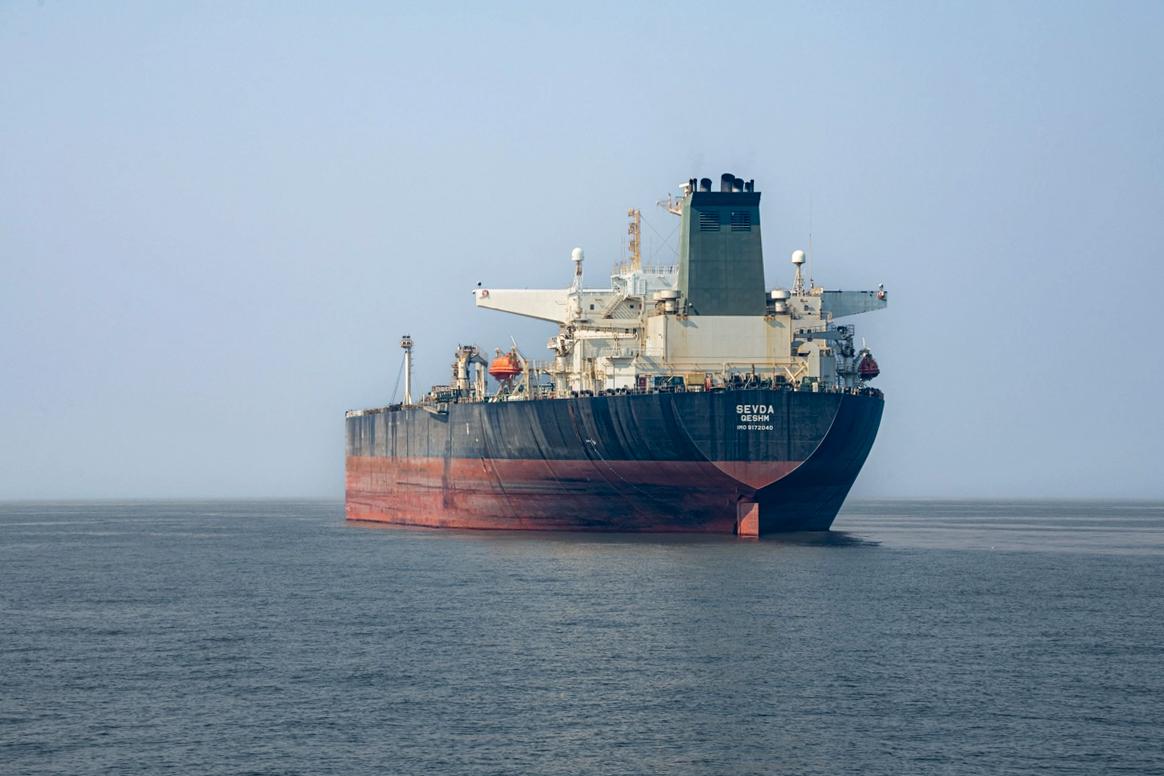
Tehran’s retaliation is also reaching European shipping and probably the U.S. water supply. Dozens of water authorities in at least seven states have reported cyberattacks, likely from Iran. European shipping is under threat due to the continent’s reliance on the Suez Canal between the Mediterranean and the Red Sea. On July 29, a drone attack hit a U.S. gas storage tanker in Damietta, an Egyptian port on the Mediterranean Sea. The fire spread to a Greek gas tanker.
The Damietta attack makes clear that Egypt is no longer safe. All exports to Europe through Egypt, including through the Suez Canal and the Sumed Pipeline, are now at risk.
The Damietta attack could have been an attempt by Iran and its proxies to retaliate against Europe for Ukraine’s July 25 strike on an Iranian vessel in the Caspian Sea. (Iran has long supplied Russia with military drones, and the ship was allegedly carrying military materiel between the two countries.) Or, it could be the set-up to charge tolls of ships not only through Hormuz and Bab al-Mandeb, but through Suez as well. That would give Iran and its proxies chokeholds not only on the Persian Gulf, but also on both ends of the Red Sea.
The Damietta attack followed dozens of attacks on Saudi Arabia by Iran’s militias in Iraq. Other recent targets in Iran’s sights have been Jordan, Kuwait, and Bahrain, including U.S. military installations in all of these locations. In response to some of the attacks, the United States and Saudi Arabia launched joint airstrikes against Iran-backed militias in Iraq on July 28.
Iran and its proxy groups are attempting to control and toll Middle East shipping through chokeholds on the straits of Hormuz and the Bab al-Mandeb. These straits can be used to control the Persian Gulf and Red Sea, respectively, effectively taxing most Arab oil exports.
The Red Sea connects to the Mediterranean Sea via Egypt’s Suez Canal. Control of the Bab al-Mandeb also gives the Houthis an opportunity to toll the Europe–Asia trade that transits the Suez.
On July 29, the United States sanctioned two Iranian entities that offer “insurance” against Iranian attacks. As noted by the U.S. Treasury Department, the risks are created by Iran, and the entities accept cryptocurrency as payment. This is nothing less than robbery on the seas. To deter such criminality, U.S. sanctions have targeted more than 100 ships linked to Iran’s shadow fleet, including many that deliver energy to China.
Two Chinese supertankers loaded with Saudi oil exited the Red Sea through the Bab al-Mandeb Strait on July 23. The Bab al-Mandeb is under blockade by Iran-backed Houthi terrorists, who have imposed a maritime embargo on Saudi Arabia and launched recent attacks on tankers. The supertankers apparently benefited from the China–Houthi deal. Russia is also allegedly assisting Iran and the Houthis with satellite targeting intelligence.
Global shipping difficulties, including rising prices since March, have prompted shippers not covered by China’s Hormuz and Bab al-Mandeb deals to mitigate risk by using alternative routes, including the Suez Canal through Egypt. While maritime transport is still safer through the Suez, loads must be lighter to get through the canal. Some commodities can be trucked overland through Turkey, but this is more expensive than maritime shipping.
Another mitigation strategy is forward storage near key markets, though building storage facilities could take a decade and is again expensive. The tolls that Iran is attempting to impose on global shipping through the Middle East put a drag on the global economy and amount to taxation without representation.
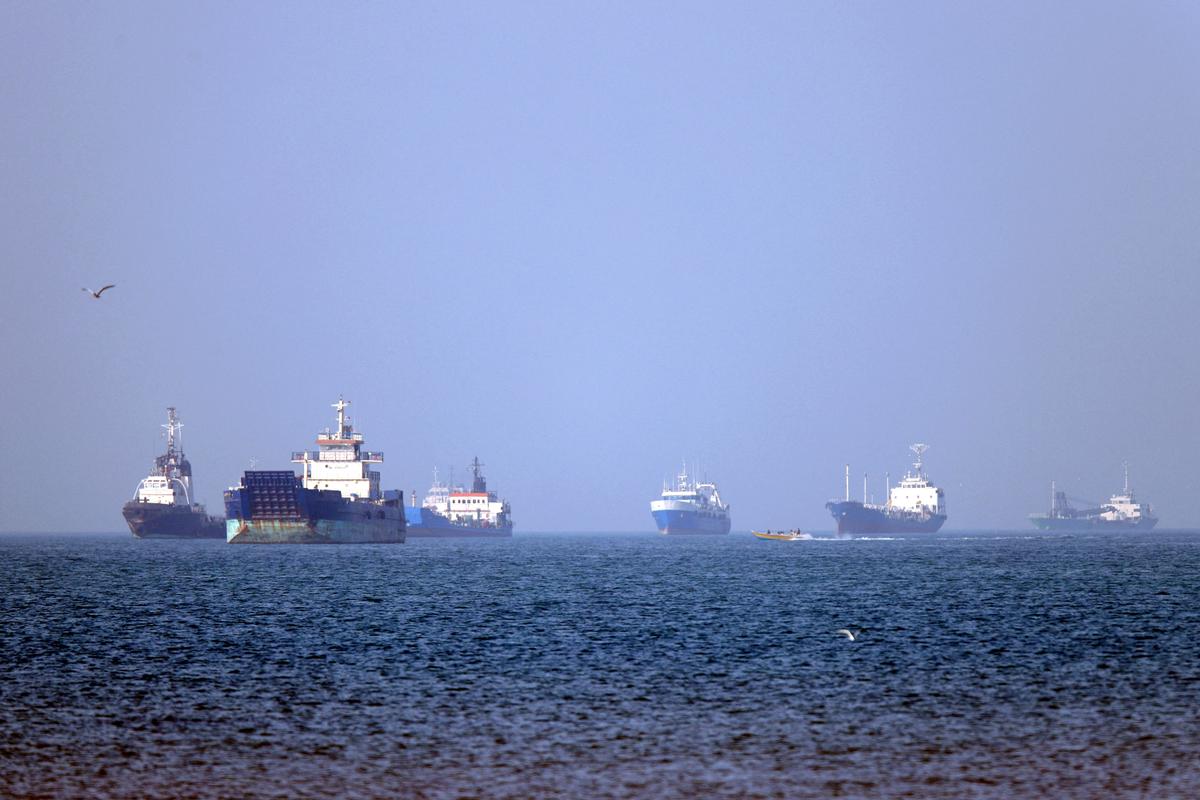
Some ships are getting through the Strait of Hormuz by turning off their transponders to avoid detection by Iran. Ship-to-ship transfers also assist some shuttling of oil through the strait. The global shadow fleet that in the past ferried sanctioned Russian and Iranian oil to markets in China and India is now turning off its transponders to shuttle unsanctioned oil. Their cheaper ships improve their risk calculus.
Simultaneous wars in Ukraine and the Middle East, along with U.S.–China tensions, are negatively affecting oil and gas shipping through the Persian Gulf, Red Sea, Black Sea, Sea of Azov, Baltic Sea, Caspian Sea, and now the Mediterranean. Conflict targeting energy shipping increases global energy prices, putting downward pressure on global economic growth.
Meanwhile, the United States has attempted to pressure China out of the Panama Canal, and in turn, China has pressured Panama. The difference between U.S. pressure and that of the dictators and terrorists is that U.S. pressure is designed in the long run to maintain freedom of navigation and will promote democracy globally.
If the only ships that get through the straits are Chinese ships and the shadow fleet, then Iran, China, Russia, and criminality win. The attempts by Iran to tax Middle East waterways, along with its sponsorship of militias in several regional countries, indicate its regional hegemonic ambitions. These ambitions match those of its partners, Russia and China, which have regional and global hegemonic ambitions, respectively. Russia and China win as the United States gets bogged down in a new and expensive Middle East war. The international system led by the United States since World War II has degraded.
Some Arab countries have supported various proposals to ease shipping in the Middle East, including joint control of Hormuz by Iran and Oman, and a maritime defense coalition announced by Saudi Arabia on July 30. The Saudis want to lead the coalition and host its headquarters. The former proposal would reward Iran’s terrorism by institutionalizing Tehran’s increased control, even if it is not all that Tehran wants. Tehran could use it as a wedge to get more in the future. The Saudi coalition could take pressure off U.S. forces, but would also strengthen an authoritarian regime and steal the lead for securing global freedom of navigation away from democracies.
An alternative is for the United States and our democratic allies to get tougher on the shipping of Iran and its partners, including China and Russia. One way to do so while benefiting the United States financially is to impose U.S. toll, escort, or insurance fees on shipping through the Middle East straits rather than leaving that revenue to the authoritarians and terrorists.
As the United States has long promoted democracy, human rights, and freedom of the seas globally, this approach ultimately supports these goals. Arguments that U.S. international shipping fees violate international law are counterproductive for democracies when dictators and terrorists violate those laws so often, and with so few repercussions, as to empower themselves relative to the democracies.
There is little reason to cede freedom of the seas to those who wish to overturn that freedom. Whichever entity first captures global shipping revenues will not only improve its fiscal position, but also increase its geopolitical influence. Let’s make sure that the entity supports peace and democracy in the long term.