“Tolerance does not mean ‘anything goes.’ There must be zero tolerance towards all those who show no respect for the inalienable rights of the individual and who violate human rights. Zero tolerance must also be shown if, for example, weapons of mass destruction fall into the hands of Iran and possibly threaten our security.
“Iran must be aware of this. Iran knows our offer, but Iran also knows where we draw the line: A nuclear bomb in the hands of an Iranian president who denies the Holocaust, threatens Israel, and denies Israel the right to exist, is not acceptable!”
Yes, America’s and Europe’s joint victory against communism in the 20th century deserves praise. But Rubio cautioned that the reunification of east and west blocs and a subsequent era of prosperity and peace bred complacency, delusion, and dogmatism.
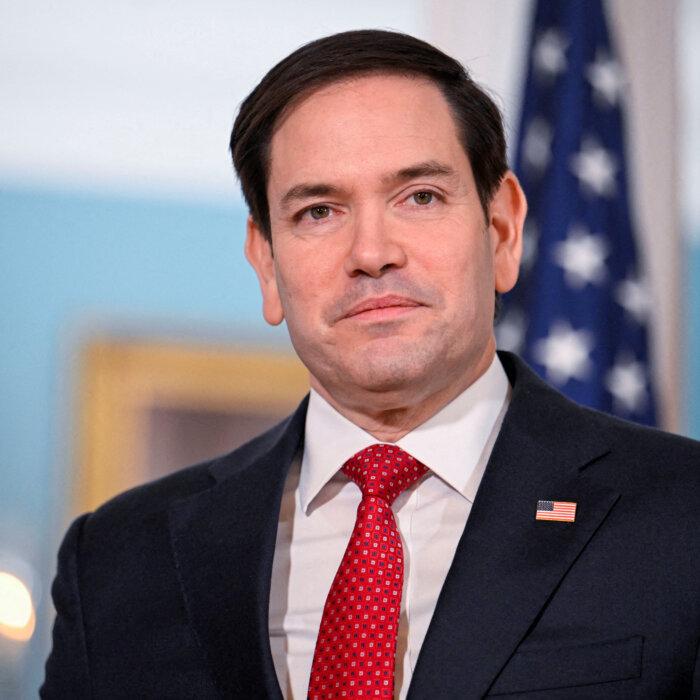
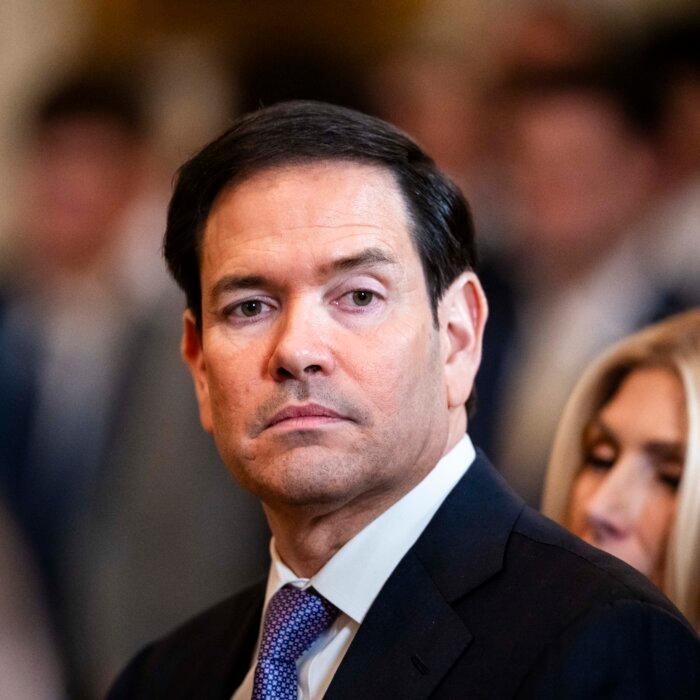
He said: “We embraced a dogmatic vision of free and unfettered trade, even as some nations protected their economies and subsidized their companies to systematically undercut ours—shuttering our plants, resulting in large parts of our societies being deindustrialized, shipping millions of working- and middle-class jobs overseas, and handing control of our critical supply chains to both adversaries and rivals.
“We increasingly outsourced our sovereignty to international institutions while many nations invested in massive welfare states at the cost of maintaining the ability to defend themselves. This, even as other countries have invested in the most rapid military buildup in all of human history and have not hesitated to use hard power to pursue their own interests.
“To appease a climate cult, we have imposed energy policies on ourselves that are impoverishing our people, even as our competitors exploit oil and coal and natural gas and anything else—not just to power their economies, but to use as leverage against our own. And in a pursuit of a world without borders, we opened our doors to an unprecedented wave of mass migration that threatens the cohesion of our societies, the continuity of our culture, and the future of our people.”
Western Introspection
The United States, Rubio clarified, aspires to a transatlantic alliance that draws on the best, not the worst, of Western civilization. This is more than preserving and protecting a mere geography, it’s about nurturing an idea, an increasingly endangered idea. That’s in sync with what respected Western leaders have said over decades.Updating Western Introspection
How is Rubio’s message novel?It reflects a relatively recent awakening among some European leaders to Western blind spots.
Like Western voices before him, Rubio too envisages America’s leadership, but alongside a Europe unshackled by “guilt and shame,“ a Europe that recognizes this shared Western inheritance as “unique and distinctive and irreplaceable.” The United States, he said, refuses to be an orderly caretaker of the ”West’s managed decline.“ His callback to shared culture and shared values bears an edge of urgency because we ”do not live in a perfect world.”
The relatively good-faith world that welcomed Reagan’s offer of democracy as an ideal no longer exists. In an age of cyberattacks, artificial intelligence, and fake news, there are simply too many bad-faith actors weaponizing against the West an ethos of open borders, apocalyptic climate alarmism, grievance, entitlement, and reparations. Worse, many mainstream journalists, academics, and activists insist on rights divorced from responsibilities for everyone except the West.
Far from finger-wagging, Rubio acknowledged America’s joint responsibilities: “We made these mistakes together.” Few foreign policy speeches today allow for this sort of brave, honest, public introspection—or such an unsparing declaration of intent. He was hinting that mistakes will be made in the present and future, too, but should fear of not doing things well always prevent the West from doing the right things?
Yes, a bright future awaits the West, but only, Rubio insisted, if it stops rationalizing “the broken status quo.” He was inviting Europe to step up more as an equal now, economically, militarily, culturally. This isn’t an unprovoked call for Western hegemony, or as some say, “civilizational panic.” It’s a strategic response to a strategic undermining of the Western way of life.
Europe needn’t always agree with the speed or style of America’s response. But Rubio is hoping that it will at least now better recognize and respond to the novel challenges the West faces. When he said it is only because America cares about transatlantic ties that “Americans may sometimes come off as a little direct and urgent in [their] counsel,” he was echoing a European voice back to Europe.
More than 15 years ago, Merkel admitted that America and Europe have disagreements: “One may feel the other is sometimes too hesitant and fearful, or from the opposite perspective, too headstrong and pushy. And nevertheless, I am deeply convinced that there is no better partner for Europe than America.”