A Jewish friend of mine contacted me on June 14 to say that her son is on a programmed trip to Israel and is being evacuated. The group escaped Tel Aviv but is still stuck in the country. She is desperate, thinking of all the possible risks to her son, from Iranian missiles and drones to whatever the Houthis, Hezbollah, and Hamas have left to launch.
Jews minded their own business in Europe, and then in their historic homeland, while being attacked from all sides since the 1940s. Not only the Nazis in Germany, but multiple neighboring Arab states launched attacks on them during that pivotal decade, and after.
Letting Iran get a nuclear weapon—knowing the virulent anti-Semitism of its religious leaders—would be suicidal for Israel. So it is right for the country to eradicate Iran’s nuclear weapons program. The Iranian regime and its proxies also hate the United States and our allies, especially Great Britain. The mullahs in Tehran have embraced China and supplied Russia with the deadly drones that are falling on civilians in Ukraine.

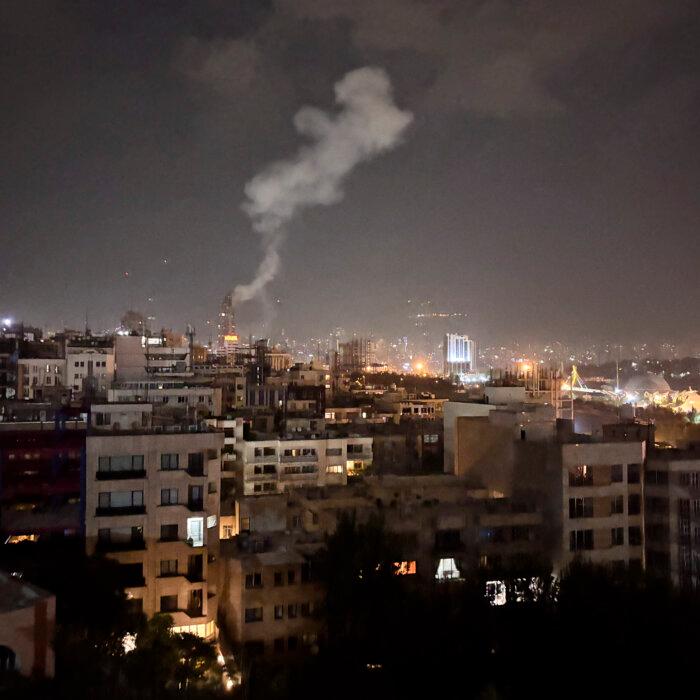
It is good for democracy that Iran’s nuclear weapons, missiles, and drone factories are finally targeted on Iranian soil rather than when Iran’s killing machines are harder to hit on their way toward civilian targets in Tel Aviv, Jerusalem, Kyiv, Riyadh, or New York.
The message from all democracies that support Israel to authoritarian countries around the world should be that we will not be cowed into submission. We will stand up for our rights, for the Israeli and Iranian people, and fight back against dictators and mullahs who seek to destroy the beautiful freedoms, markets, and diversities of democratic societies and those innocents suffering under authoritarian regimes.
If Iran got a nuclear weapon, Saudi Arabia and Turkey would be next. A world of authoritarians with nuclear weapons is not a safe world for the common man, in Israel, the United States, among our Arab allies, or anywhere else. Allowing authoritarians to rise and seek nuclear weapons is just as dangerous for the civilians of the dictator’s own country that allowed this to happen.
Dictators more often seek war and conquest, which typically boomerangs against the innocent civilians used by the dictator for his malign purposes. This is because, unlike in democracies, dictators care more about themselves than they do about the people they purport to represent.
So thank you, Israel, for working to denuclearize Iran. For years, the international community tried to do this peacefully. Washington and Brussels offered friendship rather than war. Hopefully, soon the world can return to this diplomatic approach, which is the only true path toward a lasting peace.
But as long as the regime in Tehran keeps attacking Israel, Israel has every right to self-defense and the goal of regime change in the aggressor country.
For the sake of my friend’s son and everyone else under threat from the world’s most dangerous dictatorships, we ought to think outside the box. Whatever might work to transform them into democracies should be given a hearing.