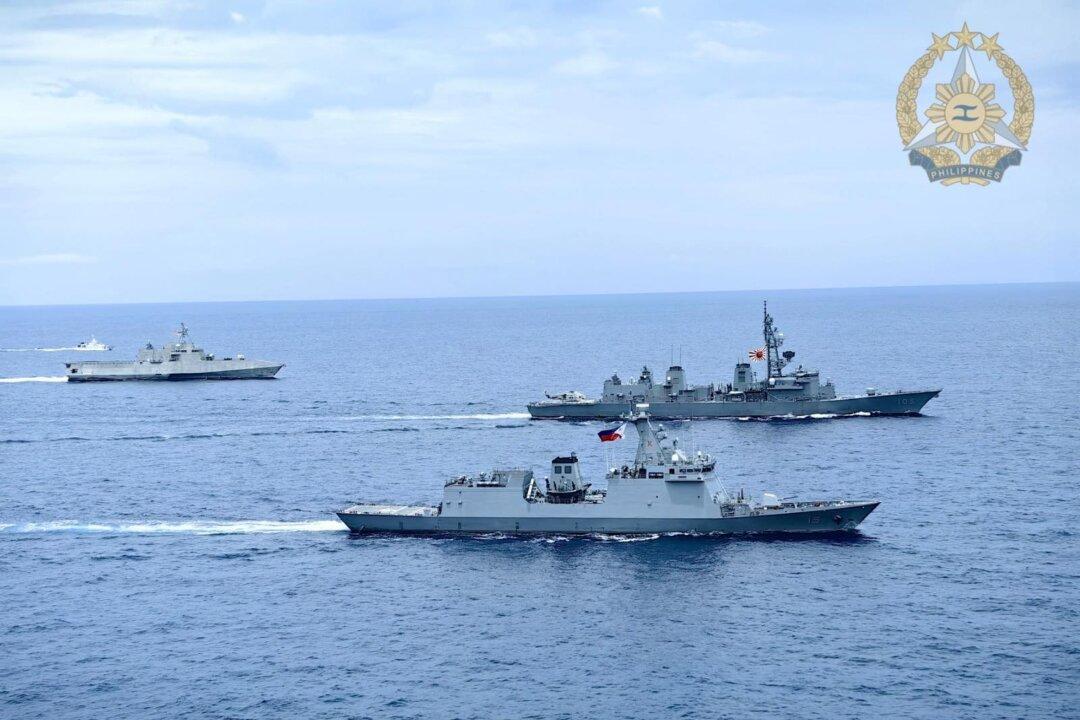
Japan’s 2026 defense white paper identifies China as the country’s greatest strategic challenge, warning of a growing Taiwan contingency while accelerating military cooperation with the United States.
In his foreword, Koizumi wrote that the security environment surrounding Japan “is as severe and complex as it has ever been since the end of World War II.” He called China’s posture “unprecedented and the greatest strategic challenge” that requires a response from Japan and the international community.
The report states that China has sustained high levels of defense spending growth for more than 30 years without transparency, expanding its nuclear, missile, naval, and air forces.
It documents specific 2025 incidents, including aircraft carrier activity east of Iwo-To and in the Pacific, unusual close approaches by Chinese fighter aircraft to Japan Self-Defense Forces (JSDF) planes in June and July, and roughly 30 minutes of radar illumination directed at a JSDF aircraft by a Chinese fighter in December. Of 595 total scrambles flown by Air Self-Defense Force fighters in FY2025, 366 were against Chinese aircraft and 214 against Russian aircraft.
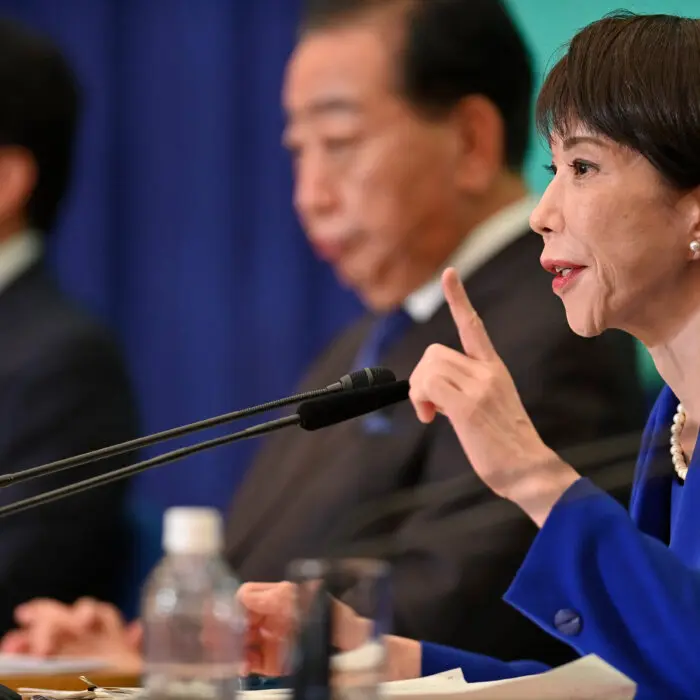
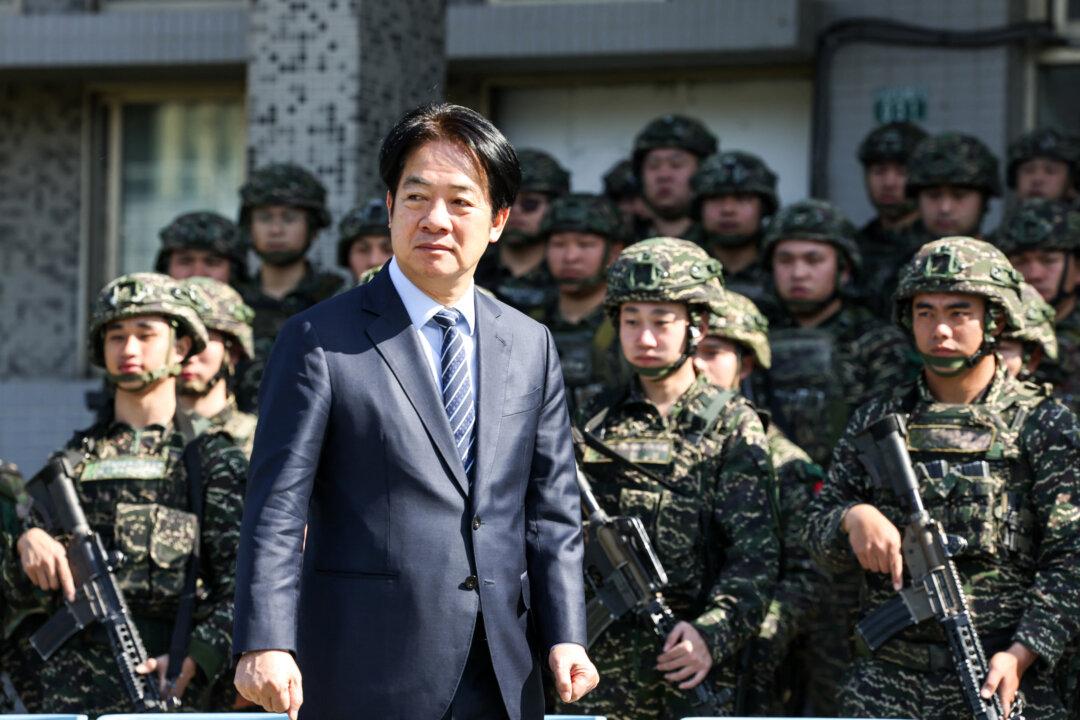
On Taiwan, the paper states the military balance between China and Taiwan is rapidly tilting in China’s favor. It notes Beijing has repeatedly stated it has not renounced the use of force to bring Taiwan under its control, and warns China could impose a blockade of Taiwan in the “gray zone” by forward-deploying China Coast Guard vessels short of open conflict.
The paper assesses that China’s military exercises around Taiwan are intended to establish a fait accompli in which the People’s Liberation Army routinely operates around the island while improving its combat capabilities. Rather than relying on a single decisive strike, the strategy depends on repetition, gradually normalizing PLA activity around Taiwan so that no single incident stands out as a clear act of aggression, until the Chinese military presence simply becomes the accepted status quo.
An assessment of Chinese Communist Party (CCP) aggression toward Taiwan carries direct implications for Tokyo. In November 2025, Prime Minister Sanae Takaichi told the Diet that a Chinese use of warships and armed force against Taiwan, including a naval blockade, “could constitute a survival-threatening situation” for Japan.
Under Japan’s 2015 security legislation, that classification is the legal threshold allowing Japan to exercise the right of collective self-defense and deploy the JSDF, even without a direct attack on Japan itself.
Her remarks made her the first sitting prime minister to identify a specific Taiwan scenario in those terms, triggering the worst crisis in Japan-China relations in more than a decade, with Beijing demanding a retraction.
Closer to home, the white paper identifies the Senkaku Islands as a live flashpoint, noting that China has intensified its activities in the East China Sea, particularly around the islands, as part of a broader pattern extending from the first island chain to the second.
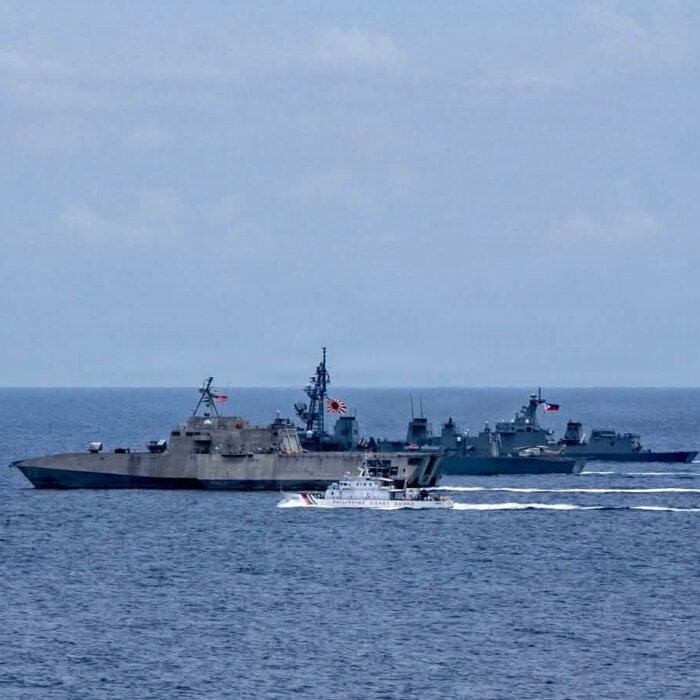
The Japan-U.S. Alliance is described in the paper as a key pillar of national security policy, on the premise that peace and stability in the region cannot be achieved by any country alone.
On the Senkakus specifically, the U.S. position mirrors, in structure, its approach to Taiwan: Washington does not take a position on the underlying sovereignty dispute among Japan, China, and Taiwan. However, because Japan administers the islands, the United States has stated that Article V of the Treaty of Mutual Cooperation and Security Between Japan and the United States of America obliges it to their defense.
The commitment has been reaffirmed by successive administrations. In 2017, President Donald Trump and Prime Minister Shinzo Abe affirmed that Article V covers the Senkaku Islands and opposed any unilateral action seeking to undermine Japan’s administration of them. President Joe Biden made the same commitment in 2021, telling Prime Minister Yoshihide Suga that the U.S. defense obligation under Article 5 “includes the Senkaku Islands.”
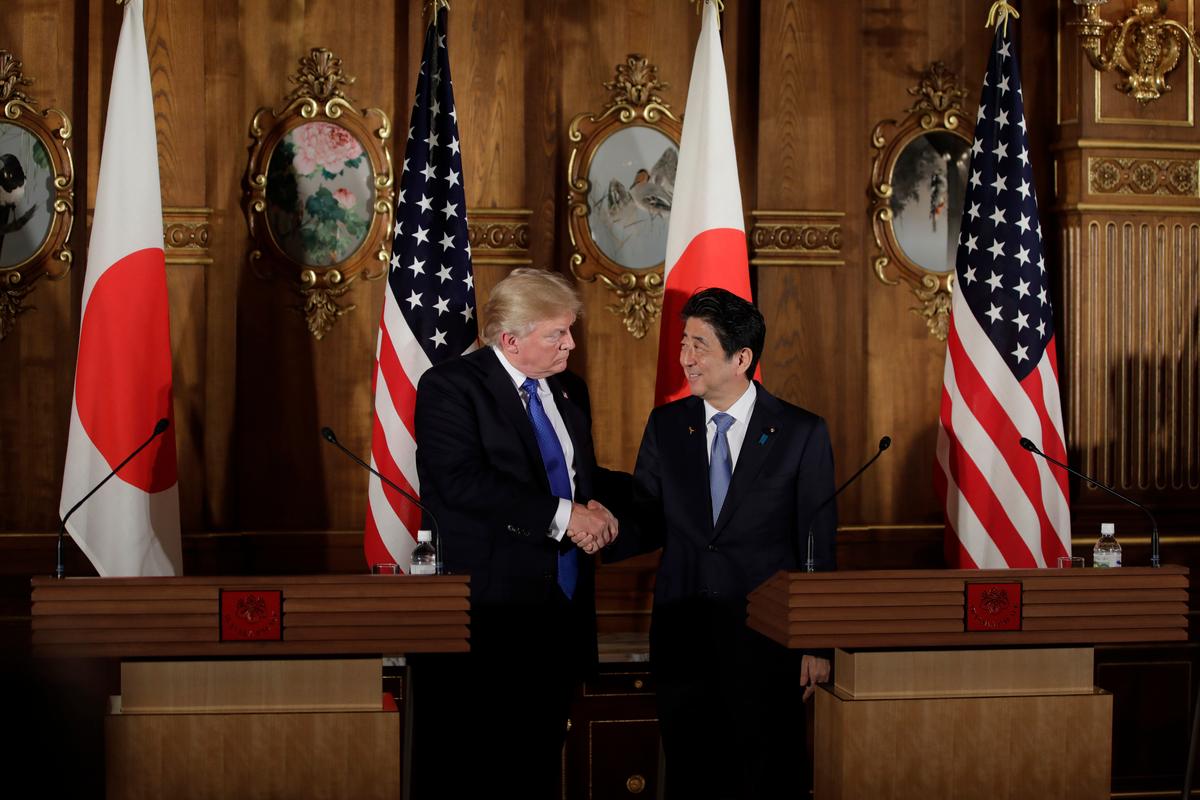
Tokyo and Washington coordinate on this threat through the Alliance Coordination Mechanism, used to respond jointly to North Korean missile launches and Chinese activity around the Senkakus.
The paper notes that Japan’s and the U.S. National Defense Strategies, the latter released in January 2026 under the second Trump administration’s “America First” banner, are aligned in prioritizing prevention of unilateral changes by force, and that Japan will deepen discussions with Washington on their respective roles and capabilities. It also references Koizumi’s January meeting with U.S. Secretary of War Pete Hegseth, at which the two sides confirmed close cooperation and discussed measures to further enhance defense ties.
To address the growing threat from China, Tokyo has accelerated its defense buildup, bringing forward its goal of raising defense spending to 2 percent of GDP and reaching the target ahead of schedule. Fiscal Year 2026 defense expenditures, including costs associated with the realignment of U.S. Forces in Japan, exceeded 9 trillion yen ($57.1 billion) for the first time.
Japan’s “Three Strategic Documents,” which establish the country’s national security strategy, defense strategy, and defense buildup plan, are also scheduled to be revised ahead of schedule in 2026.
The revisions will be overseen by the new Promotion Headquarters for the Transformation of Defense Capabilities, established by Koizumi shortly after taking office. The revisions are expected to further address the challenges posed by the CCP and reflect Japan’s renewed emphasis on defending its sovereignty.
The white paper links Beijing and Moscow, noting that Xi Jinping, Vladimir Putin, and North Korea’s Kim Jong Un stood together at a September 2025 military parade, and that China and Russia have since conducted joint bomber flights near Japan. The paper warns that Russia’s invasion of Ukraine has set a dangerous precedent, drawing a direct parallel to the possibility of Chinese aggression in the Indo-Pacific.
Taken together, the 2026 white paper treats Taiwan, the Senkaku Islands, and Ukraine as interconnected fronts in a broader strategic contest, aligning Tokyo and Washington against the CCP.