Across Asia, countries are realigning their defense relationships to counter the Chinese communist regime. This shift includes new and expanded defense agreements among Asian countries, as well as stronger defense ties with the United States.
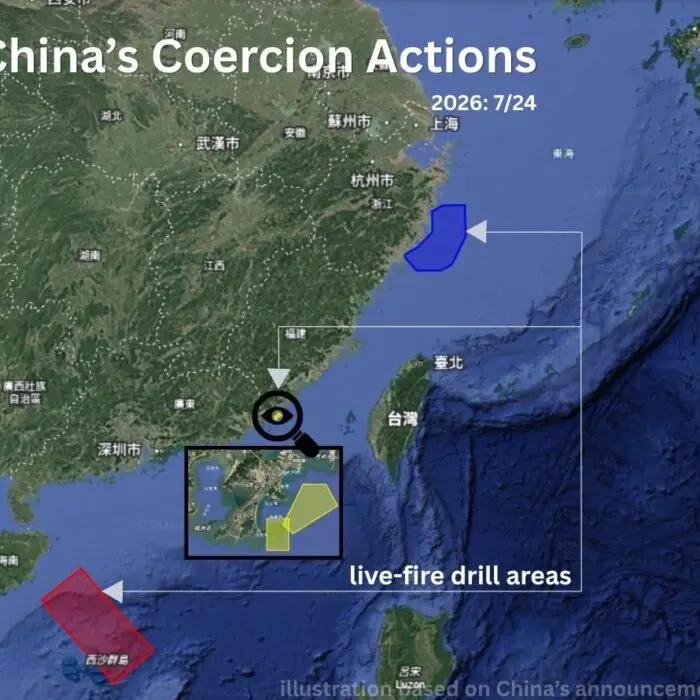
Over the past several weeks, China has extended maritime patrols to cover Taiwan’s east coast, demonstrating its ability to encircle the island, intensified military, trade, and diplomatic pressure on Japan, and test-fired a submarine-launched ballistic missile, showcasing its growing sea-based nuclear capability.
In response, the region’s democracies are drawing closer to one another while also strengthening bilateral defense ties with Washington.
Tokyo’s military buildup began with the December 2022 National Security Strategy adopted under then-Prime Minister Fumio Kishida, which set a goal of raising defense spending to 2 percent of GDP by fiscal year 2027. Under Prime Minister Sanae Takaichi, Japan accelerated that timeline, pledging to reach the 2 percent target by March 2026.
The cabinet’s fiscal 2026 budget, approved in December 2025 at roughly $58 billion, marked the 12th consecutive year of record defense spending. Defense Minister Shinjiro Koizumi called the increase “the minimum needed as Japan faces the severest and most complex security environment in the postwar era.”
Japan and the Philippines have moved in parallel. The two countries signed a visiting forces agreement and have expanded joint training, port visits, and military intelligence sharing, while Philippine efforts to modernize its surface fleet through Japanese technology transfers are giving Manila greater capability to confront Chinese activity in the South China Sea.
The United States has separately strengthened its own bilateral ties across the region. For the Philippines, Trump administration officials have reaffirmed the “ironclad” commitment, supporting Philippine military modernization and a bilateral task force to deter Chinese coercion in the South China Sea.
Congress appropriated an additional $144 million in fiscal year 2026 for Enhanced Defense Cooperation Agreement site infrastructure, and defense ministers from the United States, Philippines, Japan, and Australia have held four multilateral meetings to strengthen cooperation.
Indonesia has also deepened its defense ties with Washington. On April 13, the two countries established a Major Defense Cooperation Partnership. The agreement elevated years of informal cooperation into a structured framework covering joint exercises, technology collaboration, and the modernization of Indonesian military equipment.
The pact expands the U.S. military’s reach over the Strait of Malacca, the chokepoint through which roughly 29 percent of the world’s maritime oil trade passes.
The partnership stops short of a formal alliance; however, Indonesia has maintained a parallel defense track with Beijing. In April 2025, China and Indonesia held the first ministerial meeting of their Joint Foreign and Defense Ministerial Dialogue.
They also signed a memorandum establishing a comprehensive strategic dialogue mechanism. As recently as March 2026, Jakarta said it was ready to enhance security-sector cooperation with Beijing.
On the defense equipment side, the State Department reported $1.88 billion in active government-to-government sales cases with Indonesia as of mid-2025, including proposed F-16 fighters, Apache helicopters, Osprey aircraft, and Javelin and AMRAAM missiles.
That builds on a 2022 deal in which Washington approved a $14 billion sale of F-15 fighters, engines, and munitions to Jakarta, formalized through a 2023 memorandum for 24 F-15EX jets that remains subject to final U.S. authorization and delivery. As of April 2025, Indonesia was still weighing additional purchases of U.S. fighter jets and munitions, in part as leverage against tariffs imposed by the Trump administration on its exports.
Indonesia and China have also had recurring maritime disputes over the Natuna Islands.
In March 2016, an Indonesian navy ship fired on and detained a Chinese fishing boat, the Kway Fey, after it was caught in the Natuna exclusive economic zone.
In September 2020, an Indonesian patrol ship confronted a Chinese coast guard vessel that had spent nearly three days in the same waters before it withdrew.
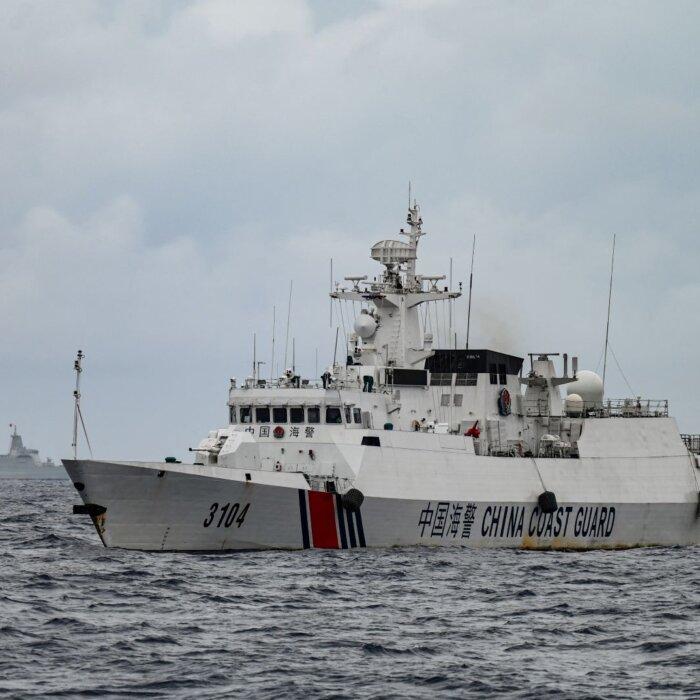
In October 2024, a Chinese coast guard vessel shadowed an Indonesian survey ship contracted by state oil company Pertamina for 12 days over the Natuna D-Alpha gas field, and Indonesia’s Maritime Security Agency expelled the same vessel from its waters twice within days.
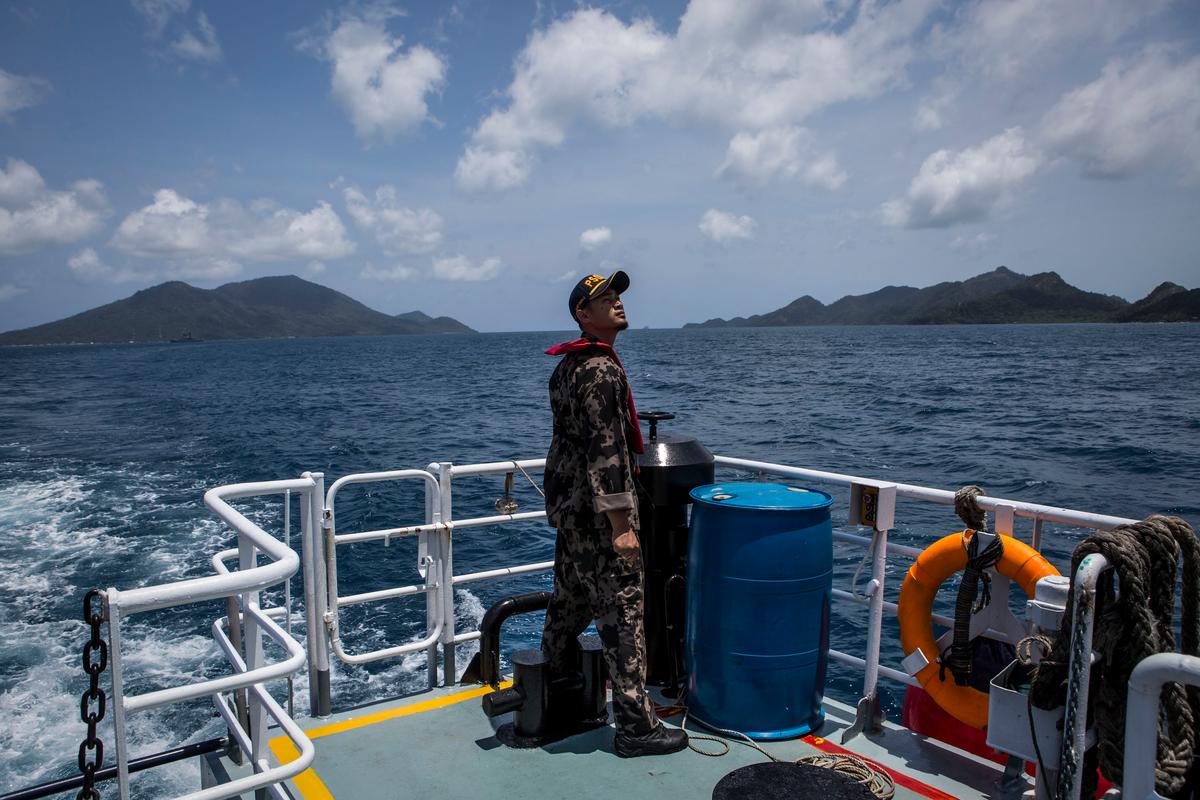
As of March 2026, analysts reported ongoing low-level Chinese fishing incursions backed by maritime militia and coast guard vessels in the area, along with Chinese demands that Indonesia halt drilling and military exercises in Natuna waters.
In the days following the May 2026 Trump–Xi summit, several major news outlets claimed that the Trump administration was weakening U.S. support for Taiwan. However, the numbers show that the U.S. commitment is increasing, not waning.
In November 2025, Washington approved a $1.3 billion package that included medium-range air defense systems and F-16 parts. The following month, the administration notified Congress of an $11.1 billion package covering HIMARS, ATACMS, howitzers, and precision-guided munitions. It was the largest single U.S. arms sale to Taiwan in history.
Together, the 2025 packages total roughly $12.4 billion, exceeding the entire $8.4 billion in arms sales approved during the four years of the Biden administration.
The negative media framing stems from a delay. A follow-on $14 billion package, already approved by Congress, had its announcement postponed in early 2026 ahead of the Trump–Xi summit in Beijing. That postponement was compounded by political developments inside Taiwan.
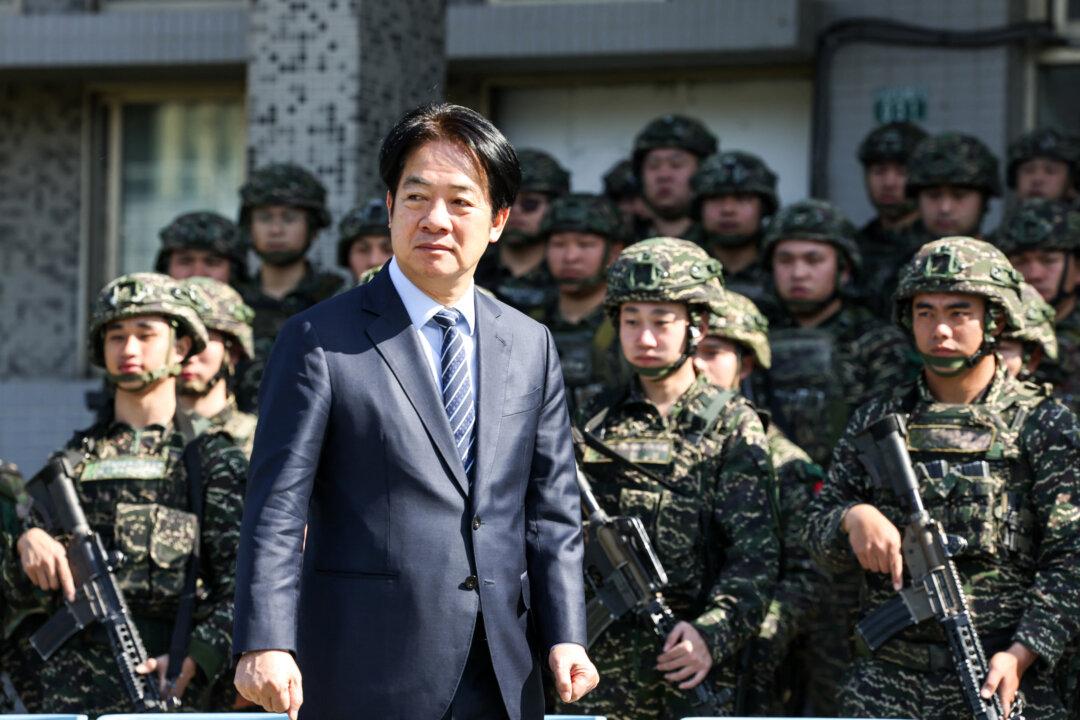
The opposition-controlled Legislative Yuan spent months blocking President Lai Ching-te’s proposed $40 billion special defense budget, which was intended to fund the arms purchases already agreed to. Taiwan’s legislature did not resolve the impasse until May 8, when it passed a scaled-back NT$780 billion (about $24.9 billion) special defense budget, well below the amount Lai had requested.
Taiwan’s own government has consistently said that U.S. policy has not changed. Taiwanese officials said they received a letter of guarantee from Washington indicating its willingness to authorize the next arms sale, and Taiwan’s Ministry of National Defense said in March that the U.S. internal review process was proceeding on schedule.
Although the media has claimed that Trump is withdrawing U.S. support for America’s Asian allies, the facts tell a different story. Across Asia, democracies have accelerated their own defense buildups, while Washington has simultaneously deepened its bilateral commitments across the region. Together, the United States and its allies are strengthening regional defenses to deter CCP aggression.