Taiwan is expanding its collective defense strategy by increasing military spending, investing in drone warfare, and strengthening security cooperation with the United States, Japan, and other democratic partners to deter Chinese aggression.
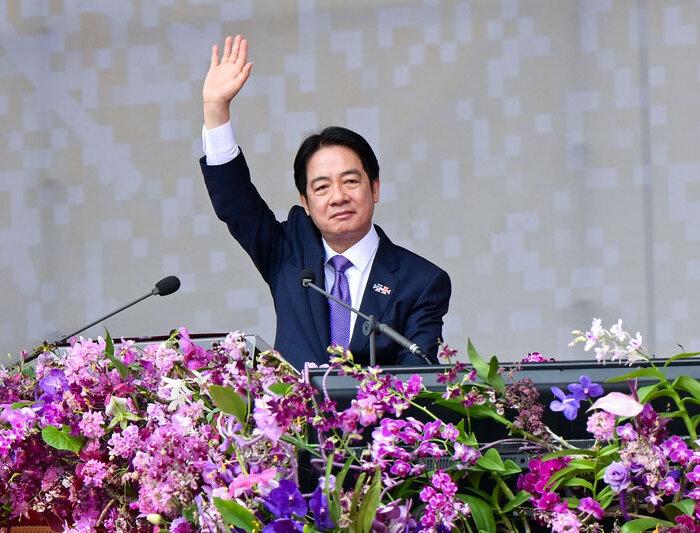
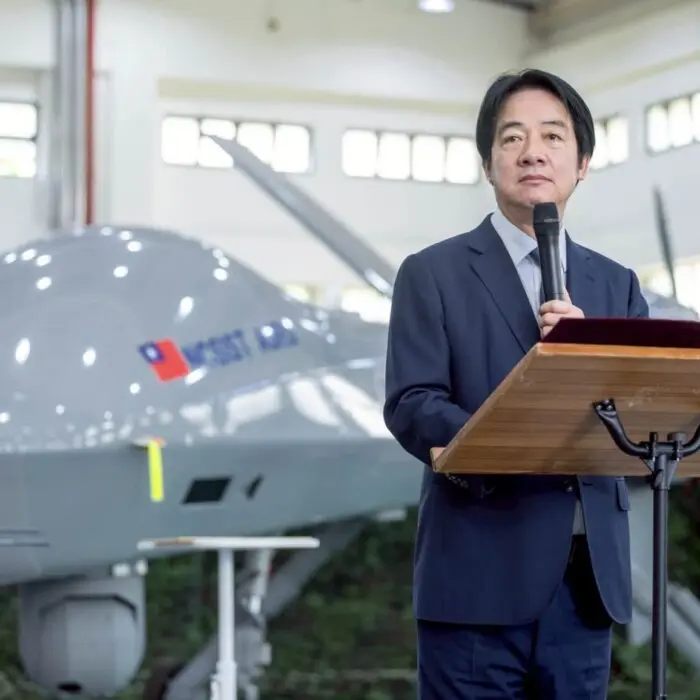
President Lai Ching-te told reporters at the National Chung-Shan Institute of Science and Technology on July 17 that Taiwan “must heed” international calls to share responsibility for collective defense, appealing to parliament to fund new drone spending. The Chinese Communist Party (CCP) has never renounced the use of force to bring Taiwan under its control.
Chinese pressure on Taiwan “has become increasingly intense,” Lai said, and drones have become the “most important assets” on the modern battlefield, pointing to the Ukraine–Russia war and the U.S.–Iran conflict.
Taiwan’s drone industry is also gaining commercial traction. Last month, Saudi Arabia purchased a record $47.2 million worth of Taiwanese drones, suggesting that the country is producing systems that foreign buyers consider combat-capable rather than merely domestic prototypes.
Consequently, there is no reason Taiwan could not invest more heavily in its own defense by capitalizing on its advanced drone technology.
Taipei has no formal mutual defense treaty comparable to NATO. When Lai invokes “collective defense,” he is referring to an informal division of labor with Washington, Tokyo, and other democratic partners, combined with Taiwan taking a more active role in defending its own homeland.
Under this approach, Taiwan increases its military spending and defense capacity rather than relying solely on external protection. In return, it expects continued U.S. arms sales, diplomatic backing, and technology sharing.
One recent example of that collaboration came in December 2025, when the U.S. State Department approved eight arms sales to Taiwan worth $11.1 billion. The package included HIMARS rocket systems, M109A7 howitzers, and Javelin anti-tank missiles. Lai has argued that drones are one of the most cost-effective ways for Taiwan to meet its share of the defense burden.
That argument traces back to Taiwan’s “porcupine” strategy, formally known as the Overall Defense Concept, which Adm. Lee Hsi-min developed while serving as chief of the General Staff from 2017 to 2019. Lee called for large numbers of small, mobile, low-cost weapons systems designed to survive an initial strike rather than a small number of expensive, vulnerable platforms. U.S. and Taiwanese officials have since extended that logic to drone swarms under the name “hellscape.”
The concept has evolved. In its 2021 Quadrennial Defense Review, Taiwan’s Ministry of National Defense described asymmetric capabilities as complementary to conventional forces rather than a replacement for them. The current government’s strategy adapts Lee’s original concept by incorporating drones, artificial intelligence (AI)-enabled systems, and the T-Dome air defense network while retaining conventional military platforms.
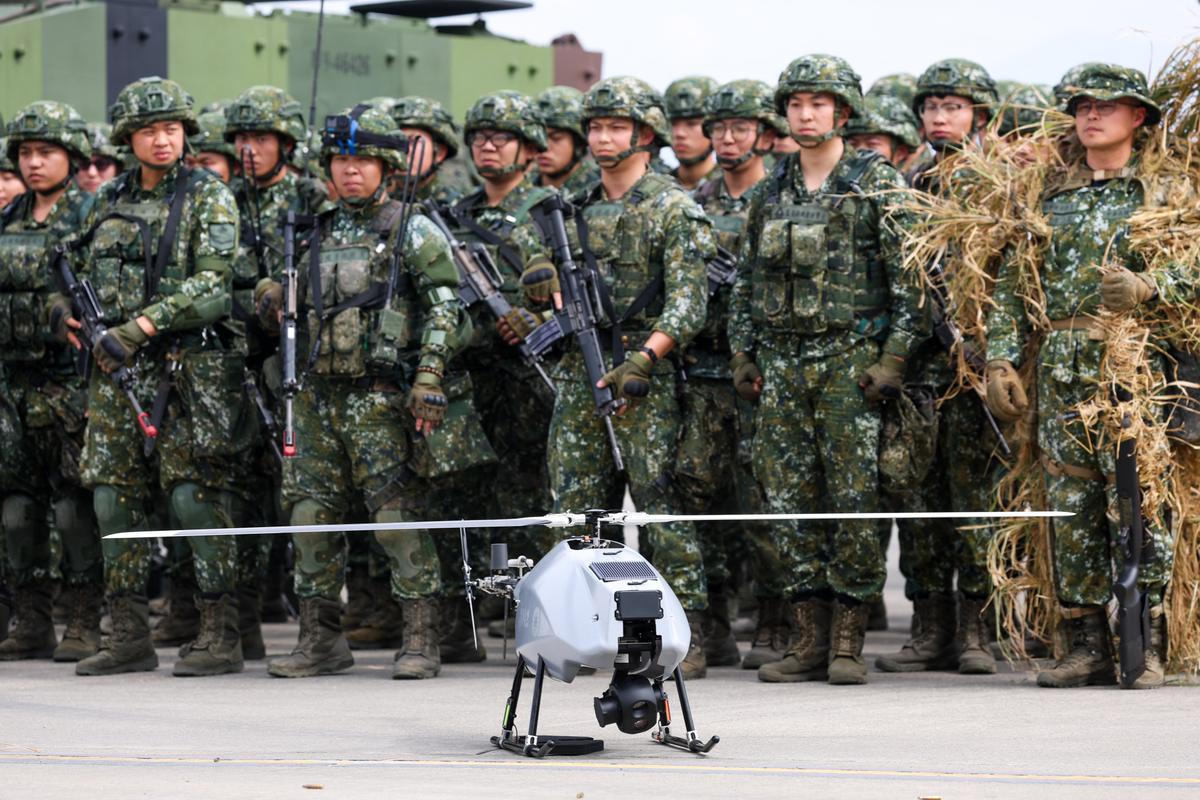
In his April posture statement to the Senate Armed Services Committee, Indo-Pacific Command (INDOPACOM) chief Adm. Samuel Paparo wrote that the command “continues to provide security assistance to enable Taiwan to build a self-defense capability that is credible, resilient, asymmetric, distributed, and cost-effective,” adding that Taiwan has committed to strengthening its reserve forces and funding both U.S. and indigenous acquisition programs.
Indo-Pacific Defense FORUM, a publication of INDOPACOM, describes the strategy as pairing “missile and drone capabilities” with mobile coastal defenses.
Lai has set defense spending at 3.3 percent of GDP for 2026 and set a 5 percent target by 2030. In his October 2025 National Day address, he said the budget increase would fund the multilayered T-Dome air defense system, AI integration, and defense industry self-reliance.
He has also favored co-producing weapons with U.S. companies rather than simply buying finished hardware. This includes an agreement with Anduril to jointly manufacture the Barracuda-500 cruise missile and an underwater drone.
Lai has also aligned Taiwan’s defense posture with statements from groups such as the Group of Seven (G7), which he cited directly in his June 25 remarks on collective defense and burden sharing.
Taiwan has extended the concept into whole-of-society resilience as well. The American Institute in Taiwan, which functions as the de facto U.S. Embassy, has co-hosted international workshops through the Global Cooperation and Training Framework on civil defense, stockpiling, and infrastructure protection. The workshops have drawn participants from more than 130 countries.
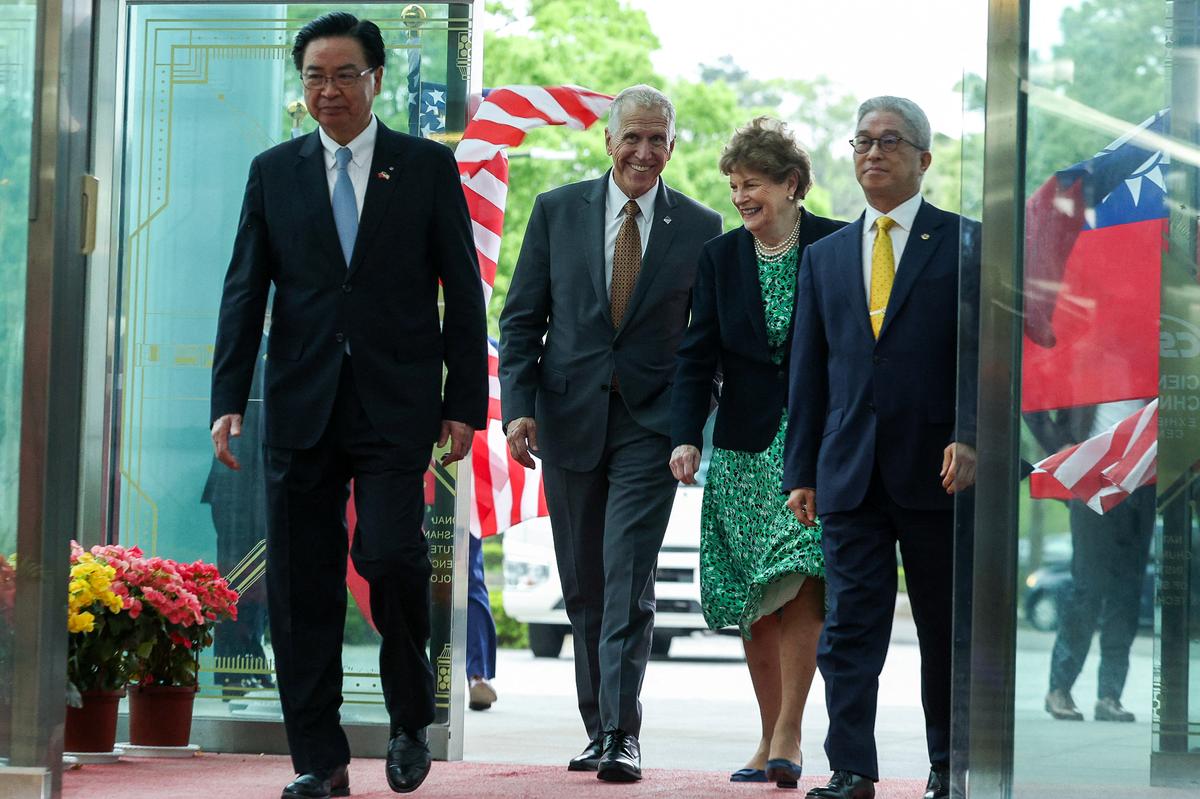
Japan has also shifted its own posture. In November, Prime Minister Sanae Takaichi told parliament that a Chinese blockade or invasion of Taiwan would constitute a “survival-threatening situation.” That language invokes Japan’s right to collective self-defense and aligns Japan’s security interests more closely with Taiwan’s.
Japan’s Ministry of Defense is deploying an electronic-warfare unit to Yonaguni Island, 110 km (68 miles) from Taiwan, in 2026. Medium-range air-defense missiles are set to follow by 2031.
After the G7’s November 2025 joint statement opposing forced changes to the status quo, Taiwan’s Ministry of Foreign Affairs issued a formal response welcoming it. The statement came from a meeting of G7 foreign ministers and the European Union’s high representative for foreign affairs in Niagara, Canada, where they reiterated their opposition to unilateral changes to the status quo in the Taiwan Strait by force or coercion, while also encouraging peaceful cross-strait dialogue and supporting Taiwan’s participation in international organizations.
Taiwan’s Ministry of Foreign Affairs said it “sincerely welcomes and appreciates” the statement, calling it evidence that maintaining the status quo has become an international consensus.
Under Lai’s collective defense concept, the goal is to raise the political, economic, and military costs of any Chinese blockade or invasion high enough to deter such actions. Taiwan would do this by strengthening its own defenses while partnering with the United States and Japan, and welcoming broader G7 backing. The strategy emphasizes burden sharing and cooperation rather than dependence on foreign protection.