Iraq has become a key battleground in two conflicts that are increasingly overlapping: Baghdad’s anti-corruption campaign in the oil sector and the U.S.–Iran war. Together, they are reshaping the U.S.–China competition for global energy.
For more than a decade, Iran-backed militias embedded in Iraq’s state institutions used Oil Ministry corruption as a financial conduit, with Chinese state enterprises operating alongside those militia structures through joint ventures and preferential contract arrangements. Washington has responded with sanctions, dollar-flow leverage, and diplomatic pressure that produced both a new Iraqi prime minister and a wave of arrests targeting oil officials linked to Iranian smuggling networks.
When the U.S. launched Operation Epic Fury against Iran on Feb. 28, Iran-backed militias in Iraq responded with hundreds of drone and rocket attacks on U.S. targets. Those attacks activated the same Popular Mobilization Forces networks embedded in Iraq’s oil sector.
The war has intensified U.S. pressure on Baghdad. It has forced the Iraqi government to choose between the militia security architecture that has protected Chinese oil operations and the dollar flows and Western investment that sustain the Iraqi state.
China holds a dominant position in Iraq’s oil production. State-owned China National Petroleum Corporation (CNPC) holds stakes in the al-Ahdab, Rumaila, Halfaya, and West Qurna oil fields and alone accounts for about half of Iraq’s oil production. Collectively, Chinese state-owned companies control about 34 percent of Iraq’s proven reserves and produce roughly two-thirds of the country’s oil.
That dominance was built by displacing Western operators, including replacing ExxonMobil on the Common Seawater Supply Project and at West Qurna 1. It has continued despite occasional Iraqi resistance, such as blocking a Sinopec-Lukoil joint venture at West Qurna 2 and a CNOOC-PetroChina bid for ExxonMobil’s stake in West Qurna 1.
Chinese contractors won 10 of the 13 blocks awarded in Iraq’s most recent upstream licensing round, while no U.S. company received a contract. Iraq’s Planning Ministry has also identified additional projects for Chinese firms under an oil-for-reconstruction framework.
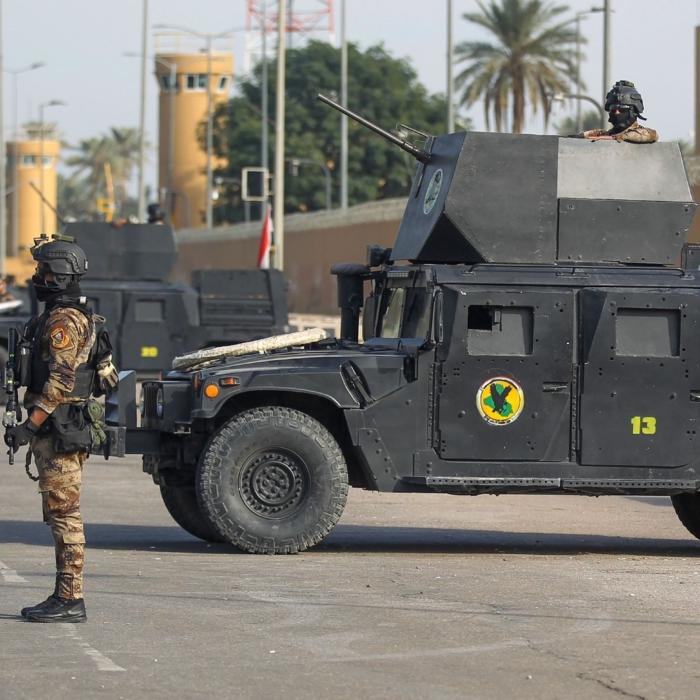
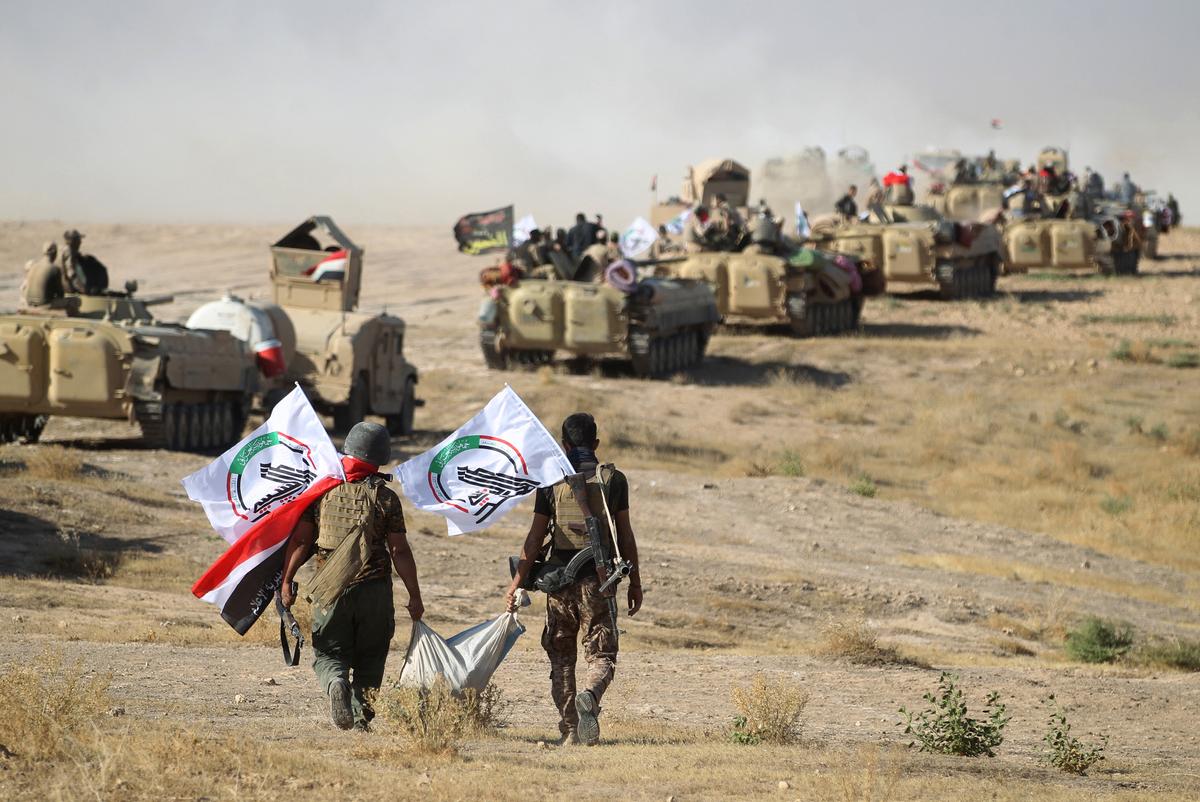
The mechanism sustaining Chinese dominance runs through Iran-backed militia networks embedded in the Iraqi state. The Popular Mobilization Forces (PMF) are an umbrella organization of roughly 60 to 70 brigades and approximately 230,000 personnel, drawing an annual budget of around $3.5 billion from the Iraqi state. Although formally incorporated into Iraq’s armed forces and nominally under the prime minister’s command, the core leadership of the PMF’s most powerful factions answers to Iran’s Islamic Revolutionary Guard Corps rather than to Baghdad.
Chinese state-owned firms rely on security provided by PMF factions that control the southern provinces of Basra and Dhi Qar, where Iraq’s largest oil fields are concentrated. Western firms have repeatedly withdrawn from southern Iraq because of security concerns, while Chinese companies have remained, providing the PMF with financing and political legitimacy in exchange for protection.
Iraq’s main ruling Shia bloc, the Coordination Framework, views China as a welcome partner because, unlike the United States, Beijing imposes no anti-corruption conditions and does not pressure Baghdad on governance or political alignment.
Shia political factions allied with Iran actively promote closer ties with Beijing to reduce dependence on Washington and circumvent U.S. pressure. When non-Chinese companies win contracts, Iran-aligned parties and militias have mobilized protests in Basra and Baghdad.
That political cover has enabled deeper financial engagement. The Muhandis General Company (MGC), owned by the PMF and controlled by U.S.-designated Kata‘ib Hizballah leader Abu Fadak, uses a subcontracting model to divert funds from Iraqi government contracts to Kata’ib Hizballah and, through it, to the IRGC. In March 2024, MGC partnered with China Machinery Engineering Corporation to jointly bid on a $1.5 billion Iraqi export pipeline project.
Corruption within Iraq’s Oil Ministry supported the same network. In May 2026, the U.S. Treasury’s OFAC designated Deputy Oil Minister Ali Maarij al-Bahadly. Treasury alleged that he controlled oil smuggling financing, dealt directly with the IRGC’s Quds Force, and arranged for Iranian oil to be shipped under Iraqi documentation to evade sanctions. According to the Foundation for Defense of Democracies, that smuggling operation nets an estimated $1 billion per year for the Iranian regime and its proxies.
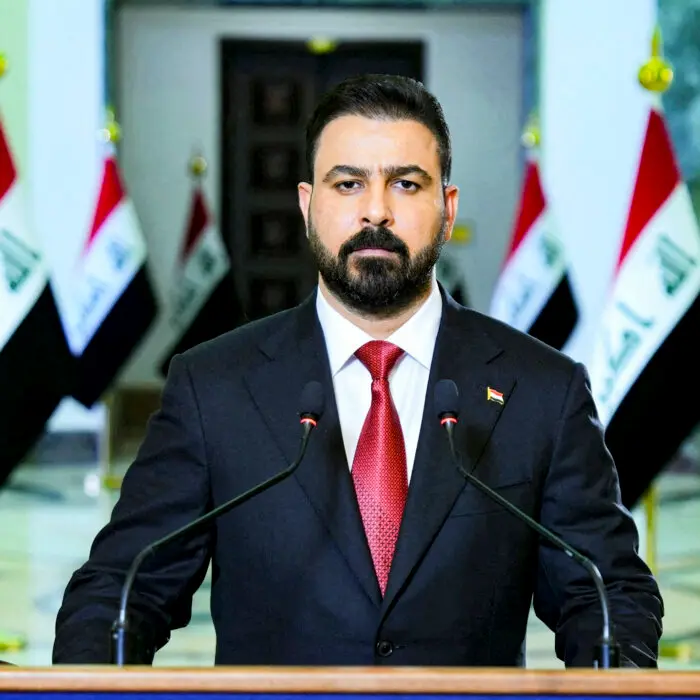
Against this backdrop, new Prime Minister Ali al-Zaidi, who assumed office on May 14, launched the most extensive anti-corruption campaign in Iraq’s modern history, with the oil sector at its center.
Security forces detained 47 individuals, including sanctioned Deputy Oil Minister Ali Maarij al-Bahadly. They also seized approximately $86 million in cash, 70 properties, and 21 vehicles. Al-Zaidi also canceled the $764 million Baghdad airport development project, citing corruption.
For China, the purge poses a direct risk, as procurement relationships with officials now under arrest could be subject to renegotiation. Al-Zaidi has also established a central committee tasked with reviewing all major contracts signed by the previous government. Moving forward, the China-friendly officials who awarded those contracts will no longer be in positions to steer future preferential deals to Chinese state-owned companies.
China’s position in Iraq’s oil sector, however, is more difficult to dislodge. It is anchored by long-term technical service contracts on producing oil fields rather than one-off construction projects. At the same time, the Coordination Framework that allowed Beijing to sink its hooks into Iraq’s oil sector continues to control both the Oil and Finance Ministries.
As a result, Iran-aligned political forces remain embedded in the institutions that oversee contract awards and oil revenue. The anti-corruption campaign has targeted individuals but has not dismantled the underlying political structure.
On the other hand, the purge has created an opening for U.S. investment. As officials linked to Iranian smuggling networks face prosecution and the militia-China contracting model begins to unravel, Western energy firms are returning to fields they had previously abandoned.
Chevron signed an agreement to develop West Qurna 2, which holds an estimated 14 billion barrels of recoverable reserves and produces about 9 percent of Iraq’s crude. The company replaced Russia’s Lukoil after U.S. Treasury sanctions forced its exit. Chevron also signed an agreement to develop the Nasiriyah oil field. ExxonMobil signed a heads of agreement for the Majnoon field, while BP agreed to redevelop fields in the Kirkuk region.
Whether this shift proves durable depends on al-Zaidi’s ability to consolidate enough authority to sustain the anti-corruption campaign against Iraq’s patronage-based political system. If he succeeds, the Iran-backed militia network that helped protect China’s dominance in Iraq’s oil sector will weaken. That would begin to level the playing field that excluded U.S. companies for more than a decade.