The Chinese communist regime has weaponized counterterrorism as an instrument of domestic repression and international influence projection, but despite years of diplomacy, military exercises, and financial commitments across Africa and Central Asia, no country has replaced the United States with China as its primary security partner.
In January, China’s Ministry of Foreign Affairs organized a diplomatic tour across Africa focused on security cooperation and counterterrorism.
On April 24, Chinese Ambassador to the United Nations Fu Cong appeared at a joint U.N. Office of Counter-Terrorism–Pakistan counterterrorism event in New York City to pledge China’s continued support for Pakistan’s counterterrorism efforts. He also called on the U.N. Security Council to expedite the designation of Pakistan’s Balochistan Liberation Army and its Majeed Brigade as terrorist organizations. The groups were responsible for the October 2024 suicide bombing that killed two Chinese workers on a Belt and Road Initiative (BRI) project.
China and Pakistan agreed to establish a quarterly joint security working group, hold annual meetings between their interior ministers, expand police training exchanges, and increase cooperation on cybercrime investigations. Pakistan reaffirmed that protecting Chinese nationals and Chinese-funded projects was a national security priority and announced plans for a dedicated protection unit.
According to analysts from the Combating Terrorism Center at the U.S. Military Academy West Point, the Chinese Communist Party (CCP) uses counterterrorism as a dual-purpose instrument: domestically to suppress the Uyghur population under the cover of security policy, and internationally to displace the United States as the preferred security partner across Africa and Central Asia while expanding its military presence, exporting authoritarian governance models, and embedding BRI infrastructure within a security architecture that serves Chinese strategic interests.

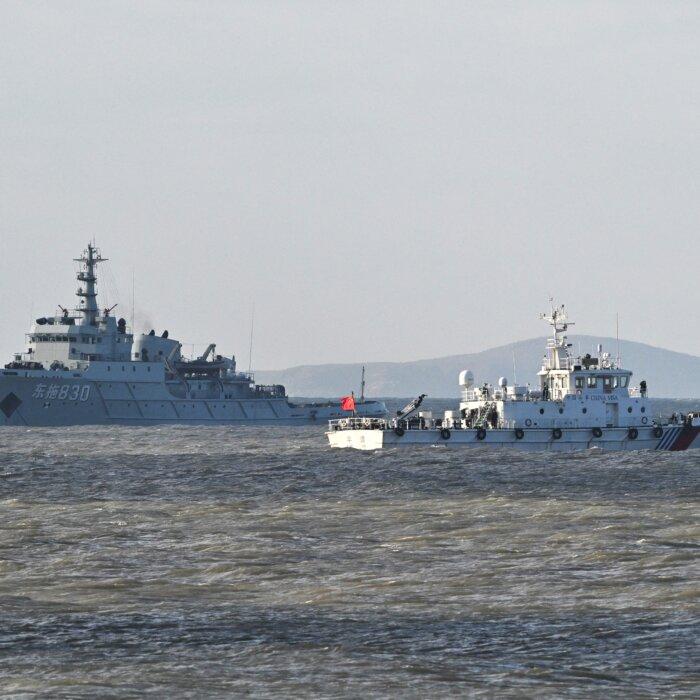
On April 28, 2025, in the Ili River Valley of China’s Xinjiang region, the CCP mobilized a 4,000-strong joint task force made up of military units, armed police, border inspection personnel, public security forces, and members of the Xinjiang Production and Construction Corps. The operation, designated “Counterterrorism Deterrence-2025,” was supported by drones, armored vehicles, and assault vehicles.
In many ways, the event mirrored the recurring military drills Beijing uses to intimidate Taiwan. Like those exercises, the Xinjiang region operation was a demonstration of state power intended to deter resistance and reinforce political control. According to the CCP’s own description, the exercise was meant to strengthen border defenses and “lawfully combat violent terrorist activities, resolutely safeguarding national political security and social stability.” The stated objectives suggest that the display was directed primarily at maintaining control over the Uyghur population rather than responding to an external terrorist threat.
The Forum on China-Africa Cooperation (FOCAC) Beijing Action Plan (2025–2027) contains more security commitments than any previous framework. Building on initiatives launched at the September 2024 FOCAC Summit, Chinese leader Xi Jinping pledged $140 million in military assistance, training for 6,000 military personnel and 1,000 police officers, expanded joint exercises and patrols, and visits to China for 500 young African military officers.
China now trains about 2,000 African military officers annually and has become a leading arms supplier, with roughly 70 percent of African countries operating Chinese armored vehicles. More than 80 percent of China’s U.N. peacekeeping deployments since 1990, totaling more than 30,000 personnel, have been to Africa. Chinese People’s Liberation Army (PLA) officers have described these missions as a laboratory for gaining military experience while maintaining China’s non-interference doctrine.
Counterterrorism discussions between senior Chinese and African officials have taken place across the continent, including in Algeria, Egypt, Mali, Niger, Benin, Burkina Faso, Cameroon, Djibouti, Gambia, Tunisia, and Togo. Formal counterterrorism agreements were signed with Nigeria in 2020 and 2025 and with Egypt in 2024.
China has donated reconnaissance drones and howitzers to Benin and expanded intelligence-sharing with Egypt, including in 2022, in a documented case in which Chinese intelligence officers assisted Egyptian authorities in interrogating Chinese nationals held in an Egyptian prison.
Between 2018 and 2021, roughly 2,000 African police officers received training at Chinese Ministry of Public Security academies, with another 1,000 expected by the 2027 FOCAC Summit.
The most visible aspects of China’s counterterrorism engagement are joint military exercises. The Peace Unity-2024 drills involving China, Tanzania, and Mozambique focused on counterterrorism operations, including reconnaissance, stealth assaults, rescue missions, arrest operations, and live-fire exercises. Analysts described the drills as the clearest indication yet of China’s ambition to establish itself as a major counterterrorism actor in Africa. China also expanded military cooperation through the joint Chinese-Egyptian air exercise Eagles of Civilization 2025.
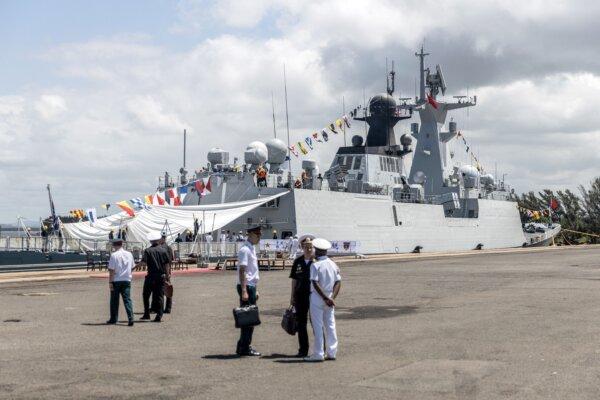
China’s military base in Djibouti, opened in 2017 as a logistics facility, evolved into a more capable security platform after the deployment of PLA navy marine corps special operations forces in 2020. China and Djibouti conducted joint counterterrorism exercises as recently as April 2025. According to U.S. Africa Command’s 2026 Posture Statement, a PLA-operated dual-use base on Africa’s west coast would significantly complicate U.S. security planning and pose a direct threat to the U.S. homeland.
Beijing’s Counterterrorism Investment Yields Few Results
Despite the CCP’s investment in counterterrorism diplomacy, the United States remains the counterterrorism partner of choice. Since 2025, the United States has deepened cooperation with Nigeria, including airstrikes in December 2025 that killed an estimated 150 to 200 Islamic State West Africa Province terrorist group militants and destroyed several ISIS terrorist group-linked camps in Sokoto State.On May 16, 2026, the two countries launched a joint operation against the Islamic State West Africa Province terrorist group and the Boko Haram terrorist group involving special forces raids and airstrikes. The United States later deployed 200 troops to train Nigerian forces in coordinating air and ground operations. China has signed counterterrorism agreements with Nigeria, but has conducted no comparable operations and deployed no equivalent forces.
Similarly, the United States and Kenya launched a $71 million upgrade of Manda Bay Airfield to support operations against the al-Shabaab terrorist group. Although Kenya cooperates with China, Beijing has no military bases in the country. In Somalia, U.S. Africa Command’s 2026 Posture Statement notes that U.S. fire support has kept leaders of the ISIS-Somalia terrorist group underground in Puntland, while operations against al-Shabaab continue with Kenya, Ethiopia, and Uganda. China has no comparable operational presence in the region.
African states generally see China as primarily an economic partner and only rarely as a security or counterterrorism partner. No African country has replaced the United States with China as its primary counterterrorism partner, formally designated China as its lead security guarantor, or agreed to host a Chinese military base for counterterrorism operations.