Chinese state media and the South China Morning Post have used isolated maintenance incidents, readiness reports, and selective data to build a misleading narrative that the United States cannot sustain a prolonged war with China.
On June 13, the South China Morning Post (SCMP), a Hong Kong-based pro-Beijing newspaper, published “Can America sustain a war with China? New reports raise questions.” Drawing on a U.S. Government Accountability Office (GAO) report on U.S. tanker readiness and a RAND assessment of Chinese satellite capabilities, the article argued that the United States could not sustain a prolonged conflict against China.
The piece was the culmination of a months-long Chinese Communist Party (CCP) state media campaign advancing the same narrative.
Global Times began on Feb. 25 and continued on March 18, using a plumbing malfunction and a laundry fire aboard the USS Gerald R. Ford as evidence of systemic American military decline. China Daily Brief reinforced the argument on June 6, explicitly describing it as a consequence of U.S. “industrial hollowing.”
Days later, the SCMP advanced the same conclusion, adding three specific claims: that the U.S. tanker fleet is too degraded to sustain Indo-Pacific air operations, that China has opened an unbridgeable gap in space-refueling capability, and that the United States has never demonstrated an ability to sustain combat operations against a peer adversary.
As with most effective propaganda, each claim is rooted in real data. Yet none demonstrates that the United States lacks the ability to sustain a prolonged war with China. Each is examined below.
The first claim originated with Chinese military expert Wang Yunfei, who told Global Times on Feb. 25 that a plumbing malfunction aboard the USS Gerald R. Ford—blocked toilets during its deployment toward Iran—demonstrated that “extended deployments beyond scheduled limits, combined with crew members’ failure to use the toilet system in accordance with operating procedures, have seriously undermined combat effectiveness.”
On March 18, after a laundry fire burned for 30 hours aboard the same vessel, Global Times again cited Wang, who claimed the incident “exposed the U.S. warship’s weaknesses in damage control, safety management, and the strain of prolonged high-intensity deployment.”
China Daily Brief incorporated both incidents into what it explicitly described as a strategic narrative of U.S. “industrial hollowing,” portraying the United States as a declining power whose “qualitative edge is being eroded by systemic maintenance backlogs and a lack of industrial depth.”
These criticisms amount to little more than cherry-picked operational mishaps. Minor equipment failures, maintenance issues, and onboard accidents are statistically normal across large military organizations conducting continuous global operations. None of the incidents cited rendered the USS Gerald R. Ford non-mission capable. The carrier remained deployed and combat-ready while the problems were being addressed.
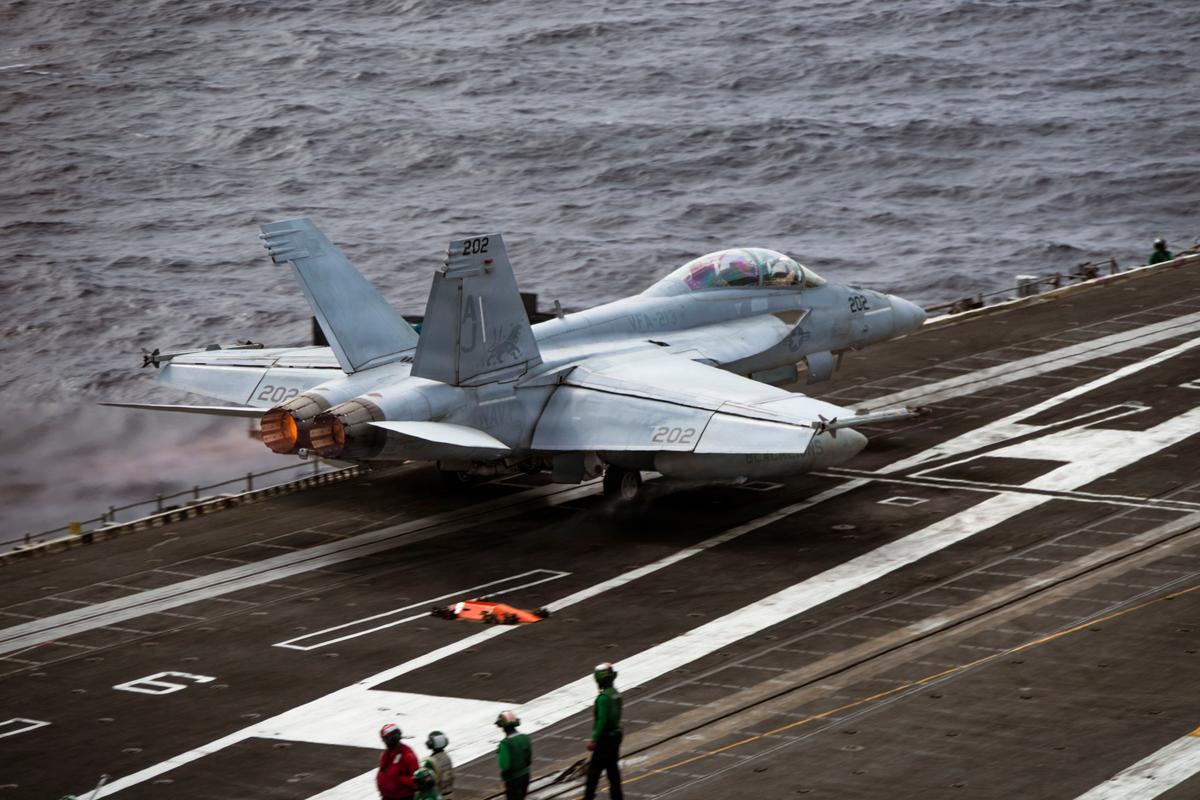
A vessel that sustains a 30-hour fire during the longest combat deployment in half a century and continues its mission is not evidence of military decline. It is evidence of effective damage control under sustained operational stress.
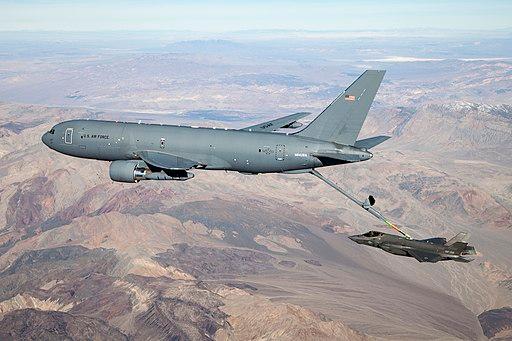
The SCMP argued on June 13 that the U.S. Air Force’s aerial refueling fleet is too degraded to sustain Indo-Pacific air operations, citing a GAO report published three days earlier that found the tanker fleet failed to meet availability and mission-capability standards from fiscal years 2019 through 2025. That finding is accurate, but it measures performance against internal readiness benchmarks rather than wartime capacity.
The same shortfalls existed when the Iran conflict began, yet no aerial refueling failures were recorded during 40 days of continuous combat operations. When KC-135s were lost at Prince Sultan Air Base, Air Force Chief Gen. Kenneth Wilsbach told Congress the impact was “very short-term” and operationally negligible. The Air Force replaced the lost aircraft by pulling additional tankers from the boneyard within weeks.
This response is consistent with longstanding U.S. wartime practice. President Harry Truman signed the Defense Production Act less than two and a half months after the Korean War began, granting the executive branch broad authority over industrial production and critical materials. The law remains in force today.
During World War II, the United States expanded industrial output on a scale unmatched by any other belligerent and emerged from the war economically stronger than when it entered. More recently, on May 12, the Air Force and Boeing announced a program to increase KC-46 readiness by more than 20 percent before 2030.
The SCMP cited a RAND report claiming China had “likely” completed autonomous in-space refueling of the Shijian-21 satellite in June 2025, implying a space logistics advantage the United States cannot match.
China’s demonstration was a genuine technical milestone, but the SCMP omitted that the United States has had operational GEO satellite servicing since 2020. Northrop Grumman’s Mission Extension Vehicle-1 successfully docked with a commercial GEO satellite that year, while MEV-2 remains docked to a second satellite. In January 2025, the Space Force awarded Northrop Grumman the Elixir contract to demonstrate military satellite refueling.
The gap described by the SCMP does not exist. Nor does it compare satellite refueling and aerial tanking. GEO satellites typically require refueling only once every three to five years, not as part of a continuous wartime logistics operation.
The SCMP claimed on June 13 that the United States has never proven it can sustain military operations against a peer adversary. In reality, the United States fought Germany and Japan simultaneously during World War II while supplying allied forces across multiple theaters. Since 1945, U.S. forces have remained in near-continuous combat, including Korea, Vietnam, the Gulf War, Afghanistan, Iraq, Syria, and Iran, while maintaining global deterrence and freedom-of-navigation operations.
The SCMP applied this standard exclusively to the United States while overlooking that the PLA’s last major combat experience was the 1979 Sino-Vietnamese War, where Vietnamese forces blunted Chinese offensives despite much of Vietnam’s military being deployed in Cambodia.