I’m driving down a winding road called Elm Pass that connects the small town of Center Point to my ranch. One of my kids is asleep in the backseat. The smell of freshly cooked food permeates the car, and I can hear the squeak of cases of water bottles rubbing against each other as I go around each curve. I’m still a little shell-shocked.
As the rain was falling, my friend Rob, who runs a search and rescue nonprofit born out of the trauma and bonds of the last flood, texted me.
“It’s happening again. The water is higher in Center Point than it was a year ago.”
How could that be? I thought. How could this be happening again?
This is just the second day of feeding people again, in the second once-in-a-thousand-year flood we have experienced in just over a year. The tattered Hill Country Strong signs and bows from the last flood are still hanging. People are still rebuilding. The trauma of what happened a year ago is still close enough to touch, and somehow we are here again.
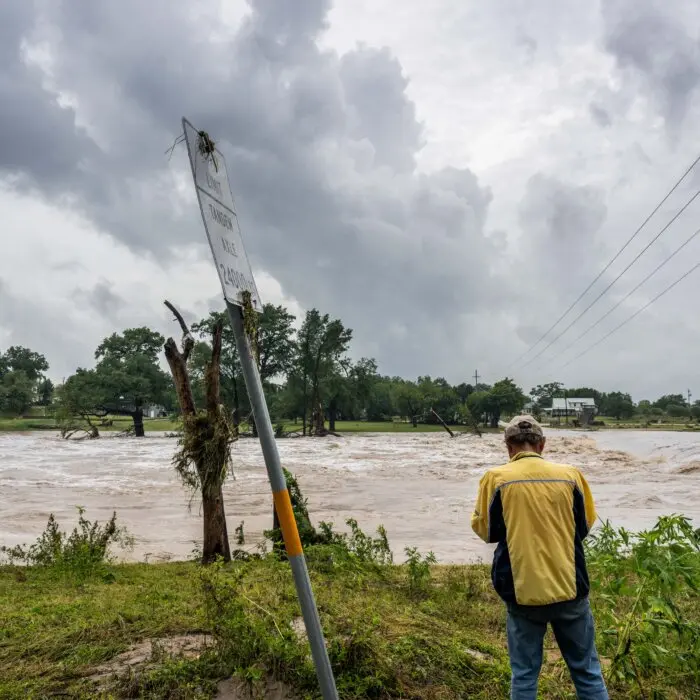
I talked to someone who lost everything a year ago and has now lost everything again. Homes that were halfway through being rebuilt have flooded again. Construction that represented months of work and the slow process of putting a life back together is underwater. Other people live in homes that were untouched by the last flood, so it never occurred to them that the water could reach them this time. And then suddenly they were surrounded.
A man who was rescued from the flooding, along with his son and his dog, needed somewhere to go, so we invited them up the dirt road to stay in one of our tiny houses until their home dries out enough for them to return. My phone keeps beeping and ringing. Calls and texts come in asking who needs what and where. Which community can be reached? Which road is open? Where can food get through? Where can water get through? Where can we be useful?
This morning, I went to meet some familiar faces from World Central Kitchen, the nonprofit organization that responds to disasters by helping get meals to people in affected communities. During last year’s flood, both Pint & Plow, a local Kerrville restaurant, and I worked closely with World Central Kitchen as part of the enormous community effort to feed people and support those responding to the disaster.
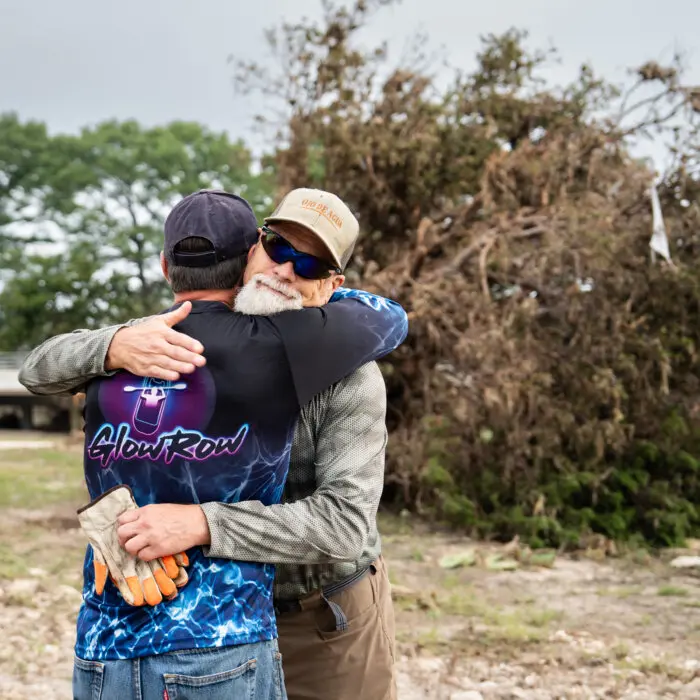
This morning, I pulled up to Pint & Plow with 100 burritos we had made. Chris, one of the World Central Kitchen chefs, was inside making sandwiches. The food was being gathered to take south, where communities had been even more severely affected by the flooding. When I walked in, Chris hugged me.
“I’m sorry we’re back here,” he said.
That statement really says it all.
I’m sorry we’re back here.
It feels surreal. It feels crazy to watch a community that is still carrying the trauma of one disaster be asked to endure another. I just wrote this week about remembering the Fourth of July flood and what that date now conjures up for so many of us. Thank God, so far, our county has not experienced the tremendous loss of life we witnessed last year. In some ways, that may be because so much of what was most vulnerable was already washed away, damaged, or moved back after the last flood. But this time the devastation has moved south.
There is standing water everywhere. There are communities cut off because people cannot get across flooded roads and crossings. There are families waiting for the water to recede so they can even begin to understand what they have lost.
And here we are again.
Cooking. Packing. Driving. Answering phones. Moving food and water from the people who have it to the people who need it. Opening tiny houses. Checking roads. Asking questions. Trying to support one another. Trying to help. Trying, once again, to fit ourselves into whatever spaces exist where we might be able to make a difference.
I wish we weren’t back here.
But we are.