A reader left a comment on one of my recent Epoch Times columns that sent me down an unexpected rabbit hole.
They wrote:
“Mollie’s story reminds me of Alexis de Tocqueville’s observation in Democracy in America. During his travels in 1831, he observed Americans self-organizing to address problems in their communities. This was unlike Europe, where people turned to their sovereign or government to resolve their issues.”
I had heard of Tocqueville but did not know much about him. So I did what I often do when a reader introduces me to an idea I don’t know enough about. I started reading.
What I found surprised me. Officially, Tocqueville came to the United States in 1831 to study our prison system. Instead, he became captivated by something much larger.

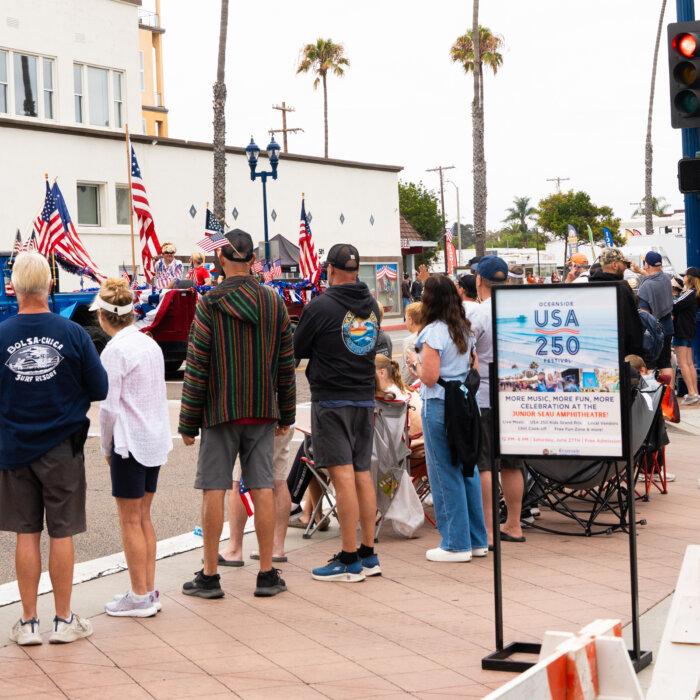
As he traveled through the young republic, he found himself fascinated by ordinary Americans and the way they organized themselves. Those observations became “Democracy in America,” one of the most influential books ever written about the American experiment.
What impressed him wasn’t our government as much as our habits. He famously wrote, “Americans of all ages, all stations in life, and all types of disposition are forever forming associations.”
He wasn’t marveling at Congress or even writing primarily about the Constitution. He was fascinated that Americans didn’t wait for permission to improve their communities. If they wanted a school, they organized one. If they needed a church, they built it. If a road needed repairing or a family needed help, neighbors gathered together and got to work.
The more I thought about that observation, the more I realized how much the meaning of the word association has changed.
For Tocqueville, association was one of the defining strengths of a free people.
Today, association is often treated as evidence against us. Speak at a conference, and people assume you endorse every opinion held by the organizers. Appear on a podcast, and someone concludes you agree with everything the host has ever said. Share a stage with another speaker and social media quickly decides what that says about your character.
Somewhere along the way, we stopped believing that people could work together around a shared purpose without agreeing on everything else.
My brother and I have both spent years working in regenerative agriculture. Along the way, organizations we had long supported, and in my brother’s case even helped found, eventually decided they could no longer publicly associate with us because of our politics.
What strikes me is that none of us stopped doing the work. They still care deeply about healthy soil. We still care deeply about healthy soil. They continue advocating for regenerative agriculture. We continue advocating for regenerative agriculture.
My brother and I still spend time working on policy because we believe the future of farming matters. The mission didn’t change. The relationships did.
That has left me wondering whether we’ve mistaken ideological conformity for strength. What if the movement is actually weaker because we’ve divided ourselves into political camps?
Any regenerative farmer knows that a monoculture is fragile. We spend our lives talking about biodiversity. Different grasses, different legumes, different fungi, different insects, different animals, different roots reaching different depths. Every species performs a different function, and together they create something far more resilient than any one of them could alone.
I can’t help wondering if the same principle applies to human communities. We’ve become very good at recognizing the diversity we can see, while becoming less comfortable with the diversity we can’t. People may look different, come from different backgrounds, or have different life experiences, yet think almost exactly alike. At the same time, two people who look remarkably similar may hold entirely different ideas about faith, education, food, family, or the role of government.
If nature teaches us anything, it’s that resilience rarely comes from sameness. It comes from different strengths working together. I don’t see why our communities would be any different. Healthy organizations don’t require everyone to think the same. They require people who remain committed to the same mission while bringing different experiences, talents, perspectives, and, yes, political convictions.
I’ve spoken at organizations that most people would describe as conservative. I’ve also spoken at organizations that most people would describe as progressive. Neither tells you everything about what I believe. It tells you that, on that day, we found enough common ground to have a conversation.
Association is not agreement. Conversation is not endorsement. Working beside someone does not mean surrendering your convictions. It means believing the mission is important enough to work with people who don’t think exactly as you do.
Today, that requires a surprising amount of courage. Not because disagreement is new, but because association almost guarantees you’ll be misunderstood by someone. You’ll be accused of endorsing ideas you don’t hold. You’ll be told that sharing a stage, attending a conference, or working beside someone means you’ve abandoned your principles.
I think the opposite is true. It takes confidence in your own convictions to sit beside someone you disagree with and remain committed to a common mission. There’s value in remembering what Tocqueville admired. He didn’t come to America because we agreed with one another. He admired that we built things together anyway.
I don’t think America’s greatest strength was that we all agreed. I think it was that we were brave enough to associate with each other anyway. If biodiversity makes our fields more resilient, I wonder if diversity of thought, held together by a shared mission, makes our communities more resilient as well.
In a culture that increasingly rewards sorting ourselves into tribes, one of the greatest acts of civic courage may simply be the willingness to keep building alongside people who don’t think exactly as we do.