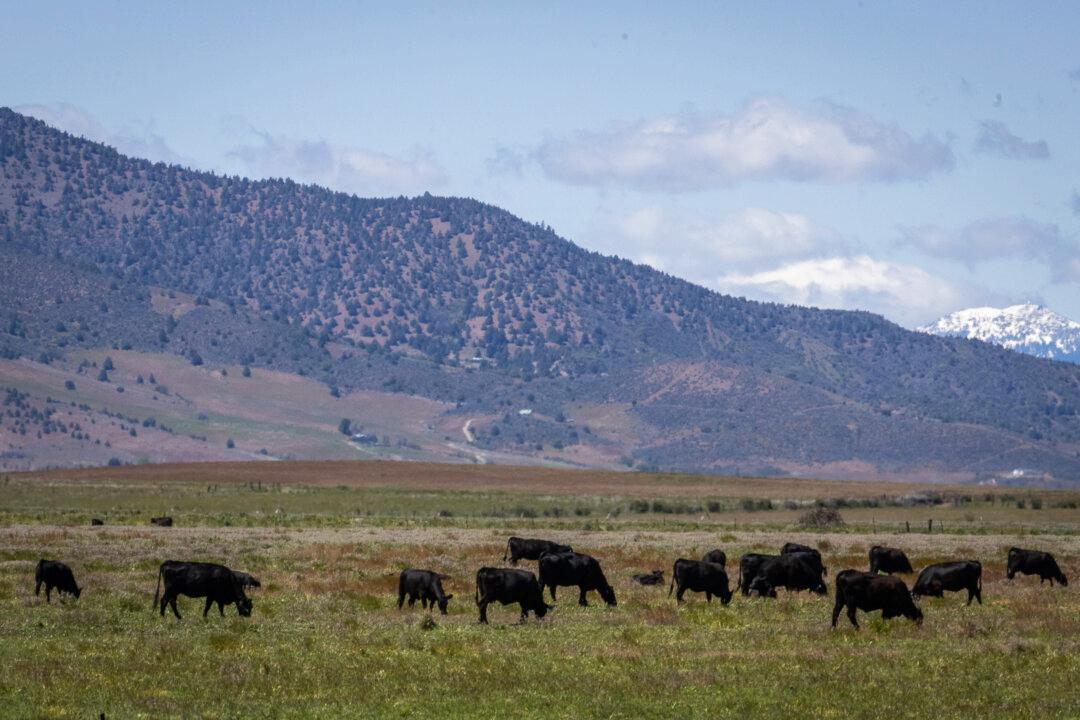
A few days ago, I had to drive about two miles off the ranch to meet an Amazon driver.
He had a package for me. My name was on the box. It was sitting right there in his van, but he couldn’t hand it to me. He explained that he wasn’t allowed to scan it until he reached the exact spot where the pin had dropped on his screen.
I told him he could look at my driver’s license. My name matched the package. I was standing on my own property. I was happy to prove who I was.
He apologized but said he couldn’t do it.
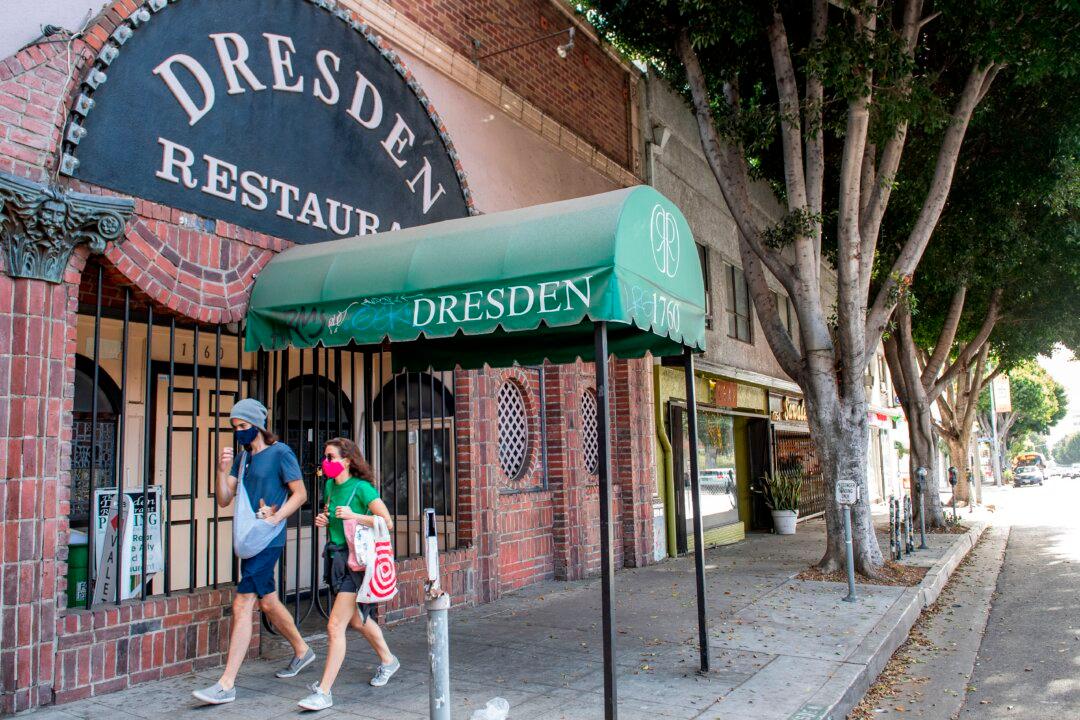
So we made a little caravan back onto the ranch, me leading and him following the blue dot. When we finally reached the location, the pin wasn’t even at my house. It had dropped at the restaurant. The package was addressed to my home, but the map had decided otherwise. We ended up on the phone with customer service, trying to explain where I actually live.

Five years ago, that same driver could have handed me the package at the end of my driveway and gone on with his day.
I don’t tell that story because I think the driver did anything wrong. He was doing exactly what the system required him to do. What struck me was that a dot on a screen had become more trustworthy than a woman standing in front of him, on her own land, holding identification with the same name printed on the box.
The technology that was supposed to help us find one another had become the thing keeping us apart.
A friend of mine in New York recently told me about a coworker who drove straight into a house. His defense was that the GPS hadn’t indicated a curve in the road and that there were no signs warning him about it.
I couldn’t stop thinking about that.
Since when did we stop expecting drivers to actually drive? To look through the windshield rather than assume the map had already seen everything for them?
We have our own version of that problem on the ranch. Our property has more than one entrance, but only one is open to the public. We’ve put up more than 15 signs from every direction. Arrows. Business names. “Farm Store Ahead.” “Restaurant Ahead.” “You’re Almost There.”
Still, almost every week, someone confidently drives to a locked gate on a neighboring ranch because their phone says they’ve arrived. They can see the gate is closed. They can see signs pointing in another direction. Yet they sit there waiting for the phone to change its mind.
We also have a completely different problem.
One of the mapping apps doesn’t send people to the wrong gate. It sends them to an entirely different house on an entirely different road, nearly four miles away.
The homeowner understandably gets frustrated. He’s called me furious. He’s called law enforcement. I’ve apologized more times than I can count. I’ve emailed the company, worked through customer service, and spent hours in online chats explaining that the map is wrong. But I don’t control the map. I can’t simply move the pin. I’m as beholden to the technology as everyone else.
I’ve seen this happen before in another part of my life.
When I transitioned my California restaurants from vegan to serving regenerative meat, local eggs, and dairy, coordinated online campaigns repeatedly marked my restaurants as “permanently closed” on Google and Yelp.
The restaurants weren’t closed. They were full of customers. Every time it happened, I would spend days correcting the listings. Eventually, they would restore them, but the damage was already done. If your phone tells you a restaurant is permanently closed, most people don’t drive over to see whether that’s true. They simply believe the screen.
The digital version of reality had become more powerful than reality itself.
I’m not saying any of this because I think technology is bad. I use GPS almost every day. On a large ranch with guests, contractors, delivery drivers, and visitors coming and going, it’s incredibly useful.
But I’ve started wondering what happens when a tool becomes something more than a tool.
I grew up before GPS. If you drove around Los Angeles in those days, chances are you had a Thomas Guide somewhere in your car. I certainly did. You learned the city one wrong turn, one landmark, and one page of that Thomas Guide at a time. Eventually, you didn’t need it very often because the map had moved from the book into your head.
My husband is 12 years younger than I am, and he learned to drive after I did. One day, I mentioned that, on most streets, the even numbers are on one side and the odd numbers are on the other, so if you know the address you’re looking for, you already know which side of the road to watch. He looked at me and admitted he had never thought about it. Then it occurred to me why. If you’ve always driven with GPS, why would you? The phone already knows, so there was never much reason to learn it yourself.
That’s the quiet cost of technology that works really well. Not that it fails us, but that it succeeds so completely that we stop developing the skills it quietly replaces.
We’re already seeing augmented reality glasses that promise to place digital information directly in front of our eyes. Navigation won’t just be on our dashboard or in our hands; it’ll be layered over the world itself.
I don’t know exactly where all of this is headed. Maybe some of these technologies will improve our lives. Maybe some won’t. But I do know this: We have to remain present and in control.
We still have to drive the car. We still have to read the signs. We still have to notice when something doesn’t make sense. We still have to look another human being in the eye and decide whether what we see in front of us is more trustworthy than what a screen tells us.
On a ranch, if you stop paying attention, things go wrong. A fence goes down. A calf gets sick. Water stops flowing. Stewardship begins with noticing what’s right in front of you. I don’t think that’s only true on a ranch.
Technology should help us navigate the world, not replace our responsibility to experience it.
The curve in the road is still there. The open restaurant is still there. The correct gate is still there.
And on my ranch, there are more than 15 signs pointing people exactly where they need to go.
We just have to remember to look up.