I have followed the Point Reyes ranching dispute for years, and, in the interest of full disclosure, I am on the ranchers’ side.
Not because I oppose conservation. Quite the opposite. I have dedicated much of my life to restoring soil, improving water cycles, planting trees, and producing food in ways that leave the land healthier than I found it.
I simply believe this story represents something much larger than a dispute over cattle. It is about whether California still believes agriculture belongs as a permanent part of its landscape.
For readers unfamiliar with the story, Point Reyes National Seashore was established by Congress in 1962. The federal government acquired ranches while allowing many existing ranching families to remain, as Congress envisioned agriculture as part of the park’s historic and cultural landscape.
Families who had been there for generations continued ranching under agreements that later evolved into National Park Service leases. In 2012, then-Interior Secretary Ken Salazar directed the National Park Service to pursue 20-year beef and dairy leases, reinforcing the expectation that ranching would continue alongside conservation.

Then everything changed.
Years of litigation brought by environmental organizations eventually ended in a settlement negotiated during the Biden administration. Eleven multigenerational dairies and ranches agreed to leave. By April of this year, those families had largely moved off the land, ending more than 160 years of continuous ranching at Point Reyes.
Several beef operations remain under the Park Service’s revised plan, but the historic organic dairy community that helped define Point Reyes is largely gone.
These were not industrial feedlots.
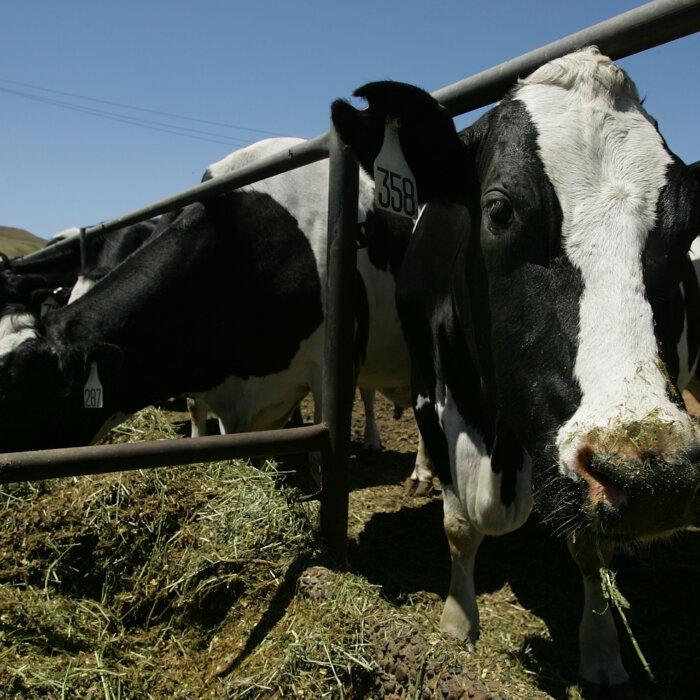
Most were organic dairies producing local food under some of the strictest environmental regulations in the country. They supplied milk to companies such as Straus Family Creamery and Clover Sonoma, meaning there is a good chance that if you buy organic dairy in California, you have supported these farms.
As a dairy farmer myself, I also want to be careful not to romanticize them. I move my dairy cows every day, but even on my ranch we feed harvested hay, silage, and milo during winter and drought. Dairy farming is never as simple as turning cows out to pasture year-round.
I am not arguing these ranches were perfect. I am arguing they were producing high-quality local food while operating under some of the highest environmental standards in the country. Many also invested in habitat restoration, riparian improvements, water quality projects, and other conservation work.
If dairies producing certified organic food under those standards are ultimately considered incompatible with ecological restoration, then perhaps the real debate is no longer about how livestock should be raised.
Perhaps the debate is whether livestock belong at all.
One reason I struggle with this outcome is that I believe government should keep its word.
This is not a partisan argument.
I criticized the Trump administration when previously awarded Department of Agriculture grants and contracts were frozen or canceled after farmers had already begun the work. Across the country, producers invested in processing facilities, farm-to-school programs, local food infrastructure, flour mills, distribution systems, and conservation projects because the federal government encouraged them to do so.
Many borrowed money, signed contracts, completed projects, and hired employees expecting reimbursement, only to discover the rules had changed after a new administration took office.
The same principle applies at Point Reyes. Farmers should not be punished because administrations change.
These ranching families had every reason to believe agriculture remained part of the park’s future. Their expectations were built over decades of federal policy, congressional intent, and repeated assurances that ranching and conservation could coexist. Their investments were measured not in months, but in generations.
The release of internal National Park Service emails through Freedom of Information Act requests only deepened that mistrust. Throughout the negotiations, the Park Service publicly described itself as a neutral participant. Yet internal correspondence released through public records requests appeared to celebrate the outcome, reinforcing the belief among many ranching families that the referee had quietly chosen a side.
Whether those emails prove institutional bias is for readers to decide. They do help explain why many families walked away believing the process had not been as impartial as they were led to expect.
Another irony received remarkably little attention.
California proudly presents itself as a champion of farmworker rights, affordable housing, and immigrant communities. Yet the Point Reyes transition displaced 26 households representing roughly 90 residents, including ranch workers, their families, and other longtime tenants living in ranch housing.
Many lost not only their jobs but also the homes tied to those jobs. Marin County ultimately had to establish temporary housing because the closures created an immediate housing crisis.
I do not say that to criticize helping those families. Of course, they should be helped. I say it because the human cost of environmental victories deserves to be acknowledged with the same seriousness as the environmental goals themselves.
There is another inconsistency I cannot ignore.
The National Park Service actively manages landscapes across the country. It conducts prescribed burns, mechanically removes vegetation, controls invasive species, and, when managers determine it is necessary, uses herbicides and other pesticides around roads, trails, campgrounds, visitor facilities, historic structures, and other developed areas.
The question is not whether humans manage our national parks. We do.
The question is why carefully managed livestock are increasingly viewed as incompatible with conservation while other forms of human intervention remain acceptable.
Perhaps what troubles me most about Point Reyes is that it feels less like an isolated decision and more like another chapter in California’s changing relationship with agriculture.
California celebrates farmers markets, organic food, artisan cheese, pasture-raised beef, regenerative agriculture, and farm-to-table restaurants. It encourages consumers to know their farmer, reduce food miles, and support local agriculture.
Yet it seems increasingly less interested in preserving the farmers themselves.
Point Reyes was home to some of California’s oldest family dairies. Congress originally envisioned those ranches as part of the park itself, not separate from it. Yet after decades of coexistence, the prevailing view became that conservation required agriculture to leave.
I believe that is a mistake.
Not because every acre should be grazed. Not because every environmental concern is without merit. But because agriculture and conservation are not inherently opposing forces.
We often talk about preserving local food systems. Point Reyes represented exactly those values. Yet one of California’s oldest local organic dairy communities has now disappeared.
If we cannot find room for multigenerational organic dairies in one of the most environmentally conscious states in the country, we should at least ask ourselves what we really mean by saying we support local agriculture.
If the answer is that no form of livestock agriculture is ultimately compatible with our environmental goals, we should be honest enough to say that.
Because if every form of livestock production is ultimately deemed incompatible with conservation, then we are not simply debating land management. We are moving toward a future where plant-based agriculture, and perhaps eventually even lab-based alternatives, are treated as the preferred food system.
That may be the future some people want, but it should be debated openly rather than arrived at one ranch, one regulation, and one lawsuit at a time.
Perhaps the saddest part is that we do not even know where many of these families went. After generations on the same land, they quietly disappeared from the landscape. The headlines focused on lawsuits rather than on what happens when a family that has milked cows in the same place for a century is forced to start over somewhere else.
Perhaps Point Reyes will become a healthier ecosystem. Time will tell.
But if conservation requires the disappearance of multigenerational farming families, the loss of local food production, the displacement of workers, and a growing distrust that government will honor its commitments, then we should at least be honest about the full cost of that victory.
California has not simply lost a few dairies.
It has lost its history, local food production, and another piece of the agricultural culture that helped make California one of the world’s great farming regions.