When I was 25, I knew everything.
I thought that I had the world solved. I thought that I could see every angle, understand every motive, judge every villain, and crown every hero. I felt morally superior in my worldview—not loudly, not obnoxiously, but internally, confidently. I was a good guy. I got it. I could explain it.
Today, at 47, almost 48, I sit here in the dark quiet of early morning, drinking coffee, and I realize: I know nothing.
And honestly? That might be the first real thing I’ve ever known.
I think about “Game of Thrones” when I try to describe this shift. There’s that moment when a wildling looks at Jon Snow and says, “You know nothing, Jon Snow.”
Not as an insult, not because he was dumb, but because he had never questioned the script handed to him by the world inside the wall, and the world beyond the wall didn’t follow the same rules at all. His training hadn’t prepared him for reality. His certainty had outpaced his experience.
That line hits me differently now than it would have 20 years ago.
Because I am Snow now.
I’ve been programmed since childhood by school, family, college, culture, and all the unspoken rules of “how the world works.” I absorbed beliefs the way we absorb accents: not by choosing them, but by being surrounded by them.
And most of those beliefs were rewarded long before they were examined.
But nature keeps interrupting the program.
A few nights ago, the moon rose exactly where the sun normally rises. It was nearly full, glowing, spilling light over everything, sending rays above the mountain. If I hadn’t known the time, I would have sworn that it was sunrise. I would have felt certain of what I was seeing. And I would have been totally wrong.
So now I don’t just ask, “What’s true?”
I ask, “How many things have I never actually tested at all?”
I used to admire people who walked through life acting like they knew everything. Certainty looks comfortable from the outside. Confidence looks like clarity. Being sure looks like peace.
But now I see that certainty is often just belief I never interrogated, delivered by a system I never chose, mistaken for my own mind because it spoke first.
And when I look back at my life, it feels like I’ve lived multiple lifetimes in one:
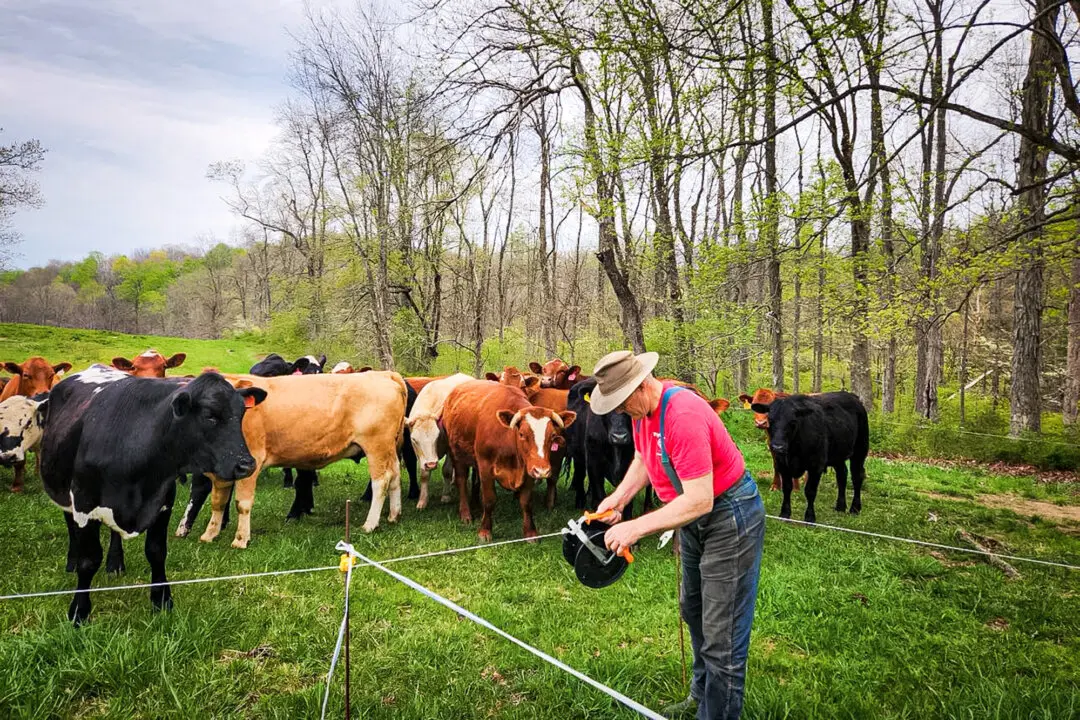
• Liberal Los Angeles vegan chef turned Texas cattle rancher
• Podium certainty traded for soil feedback
• Moral performance traded for actual outcomes
• Bitcoin maximalist phase, now replaced by an “I’m still thinking about it” phase
My views on culture, immigration, identity, race, motherhood, masculinity, community, and power: All of it has changed in the past six or so years. Some people evolve slowly. My worldview detonated and rebuilt itself from scratch.
Most people harden by 47.
They fix their beliefs like fences around property.
But I keep moving the fences.
Not because I’m indecisive, but because I don’t want to stop thinking.
Because here’s what I’ve learned: Possible explanations are not the truth.
I could list 20 plausible, grounded, historically cross-checked reasons for why the United States would invade Venezuela: distraction, humiliation, resource leverage, political timing, credibility on the world stage, embarrassment, industry interests, foreign rivals, domestic scandals, and more.
And all 20 could sound airtight.
And none of them might be the real one.
Geopolitics runs on layers. Incentives, grievances, alliances, economics, legacy, narrative, pressure, ego, money, power: a stack of motives that rarely fits in one headline or press briefing.
Certainty is often a social reward, not discovery.
Feeling sure is not a reliable compass.
Programming depends on emotional force.
Truth doesn’t demand loyalty; programming always does.
Not knowing keeps me alive.
And as I land on this final thought, I don’t know anything anymore.
But that’s OK. Because not knowing lets me have new ideas, new thoughts, and keeps me from stagnating in beliefs that were fed to me, never really my own.
The questions feel heavy.
But the alternative is mental stagnation.
A life spent defending conclusions I never earned.
So I’ll keep asking the questions.
I’ll keep telling my story.
I’ll keep leaning on the physical world to push back when narratives float too far from reality.
I’ll keep being led by God.
And I’ll keep letting nature be the referee when humans argue like rival kingdoms.
I may not know everything, but I know this: I’m not done learning. And I refuse to be done learning.
The questions keep me moving. And moving keeps me in the inquiry, and the inquiry reminds me that I know nothing.