Congressional investigations and independent research have found that U.S. universities trained Chinese government and defense personnel while American taxpayers helped fund programs that created national security risks.
Democrats and university administrators argue that Chinese students are a financial lifeline for American higher education, generating nearly $15 billion annually for the U.S. economy. They make this argument as universities face an enrollment cliff driven by post-2008 declines in the birth rate, with the college-age population projected to shrink by 15 percent between 2025 and 2029.
However, that argument overlooks the fact that much of this money comes from U.S. taxpayers. It also ignores the national security risks posed by many of these students, some of whom have direct ties to the Chinese Communist Party (CCP) or the People’s Liberation Army (PLA) and have been implicated in espionage.
The House Select Committee on the CCP found that Chinese students at major research universities are overwhelmingly concentrated at the Ph.D. level, where they contribute as little as 0.2 percent of tuition revenue while gaining access to federally funded laboratories.
At one surveyed institution, more than 25 percent were involved in taxpayer-funded research, while at another, half of all Chinese Ph.D. candidates received federal grants. These are not the full-tuition-paying undergraduates universities cite to justify the arrangement. Instead, they are graduate researchers in STEM fields, disproportionately drawn from PLA-linked institutions, and represent the population the FBI has identified as the primary vector for academic espionage.

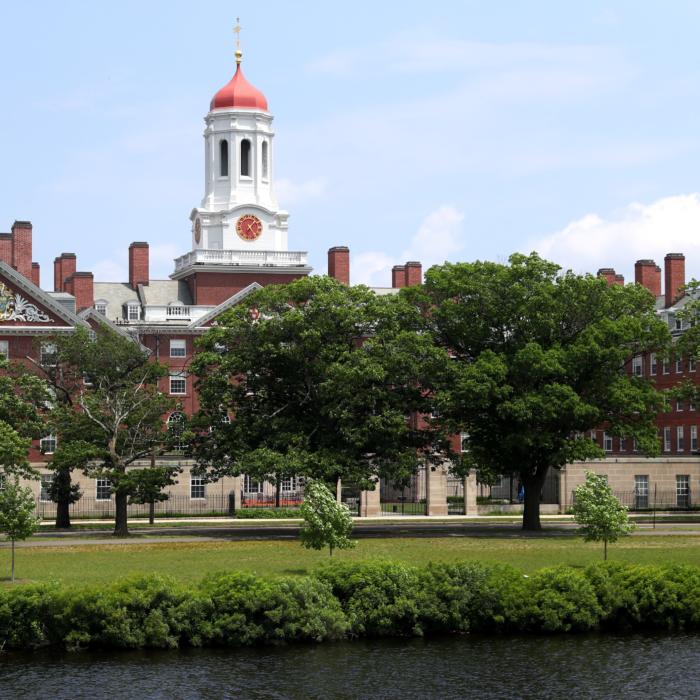
A report by Strategy Risks, a U.S. geopolitical risk firm, found that Missouri State University operated an MBA pipeline from 2001 to 2018 that trained more than 1,500 managers from Chinese state-owned enterprises and government agencies, many of whom later advanced to senior positions in China’s defense industry, strategic supply chains, and surveillance sector.
Chinese-language government documents described the arrangement as a “China-U.S. state-to-state cooperation project.” A parallel program launched simultaneously at Wright State University in Ohio, suggesting a broader CCP strategy rather than an isolated case.
Although Missouri State conferred the degrees, the CCP, not the university, selected the students. China’s State-owned Assets Supervision and Administration Commission and other Chinese state institutions controlled the admissions criteria and the composition of each cohort.
Recruiting documents from Sichuan and Shandong required political reliability, including formal CCP membership in early notices and a high level of ideological and political consciousness in a 2018 notice. Program applicants also received preferential admissions treatment, including waivers of English proficiency requirements.
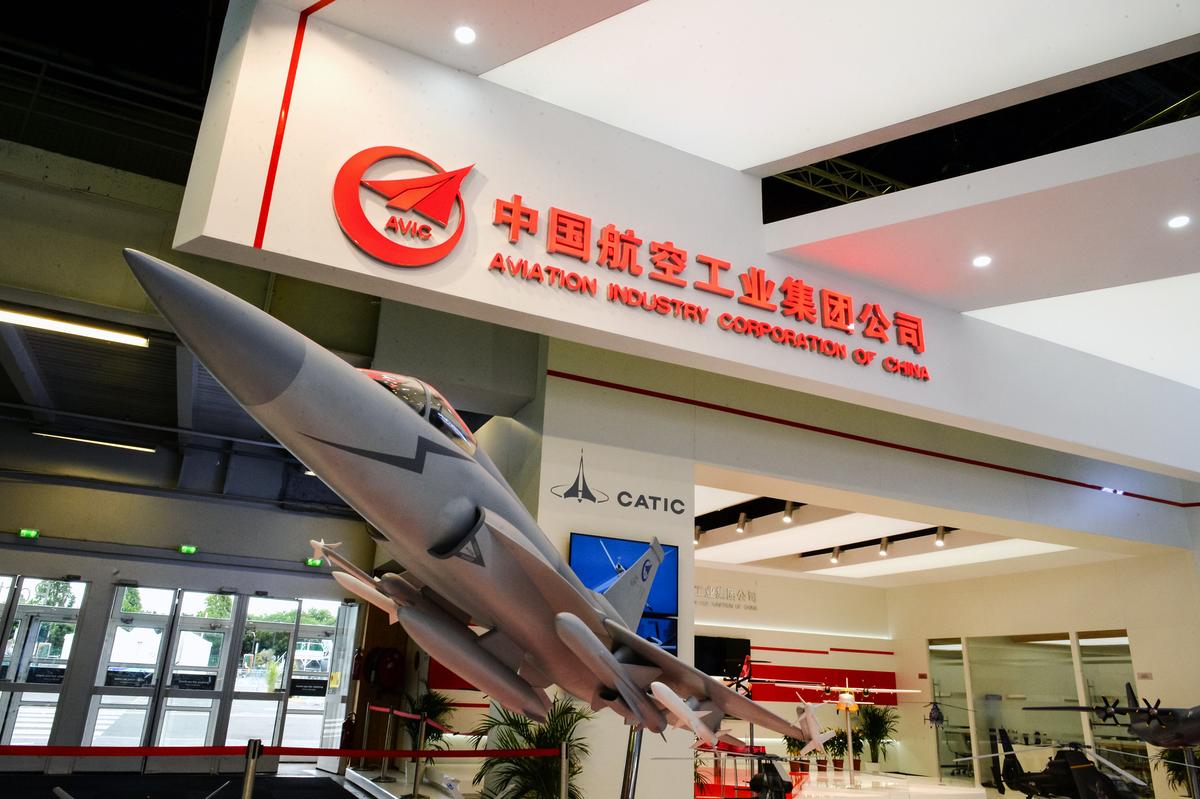
Among the program’s alumni are executives linked to the Aviation Industry Corporation of China, or AVIC, China’s largest state-owned aerospace and defense conglomerate. AVIC is designated under Executive Order 14032 and the Department of Defense Section 1260H list as a Chinese military company, making it subject to U.S. investment restrictions and procurement bans.
The report also identifies a vice president of iFlytek, an artificial intelligence firm the U.S. Commerce Department placed on the Entity List in October 2019 for supplying surveillance technology used against Uyghur minorities in Xinjiang.
The report identifies a gap in U.S. oversight. Congressional and executive branch attention has focused on STEM research theft, harassment of Chinese students, and military-affiliated doctoral candidates in defense-related programs. Less attention has been paid to degree-granting pipelines, participants from China’s defense industry, and the regional public universities that host these programs.
A House Select Committee report surveyed six major research universities and found that each enrolled Chinese nationals who had previously attended one of China’s “Seven Sons of National Defense” universities, institutions whose primary mission is research for the People’s Liberation Army (PLA).
The committee also found that the Biden administration failed to enforce Executive Order 10043, which barred Chinese nationals engaged in military-linked research from receiving U.S. visas. At the same time, American taxpayers helped fund this national security risk.
In the Missouri State case, Chinese recruiting materials described a three-way funding arrangement in which the Chinese government covered half of the $108,000 tuition, students paid roughly $27,000, and the remaining quarter came from U.S. government support.
At one university, federal grants or contracts paid for 402 of 1,139 Chinese graduate staff appointments, while state taxpayer and private programs funded another 113. In total, more than 36 percent of Chinese graduate appointments at that institution were funded by American taxpayers at the federal or state level.
At another, 1,115 of 2,580 Chinese graduate students, 43 percent, had assistantships as their primary funding source, with assistantships at public research universities drawn largely from federal grants and state appropriations.

Acts of espionage committed by CCP-linked students have been well documented since the first Trump administration. However, the fact that many of these researchers are funded by U.S. taxpayers makes the situation even more concerning.
Since October 2024, the Justice Department has charged at least 12 University of Michigan students, researchers, and recent graduates, all Chinese nationals, with national security offenses. The cases include five Shanghai Jiao Tong University exchange students who were caught filming military exercises at Camp Grayling.
In September 2025 Senate testimony, FBI Director Kash Patel confirmed that 59 foreign intelligence operatives had been arrested for spying or smuggling since January 2025 and that active Chinese counterintelligence investigations were underway in all 55 FBI field offices.
The House Homeland Security Committee has documented that 80 percent of U.S. economic espionage prosecutions allege conduct intended to benefit the Chinese regime.
Congress has identified the problem but has not yet closed the pipeline. The SAFE Research Act, authored by House Select Committee Chair Rep. John Moolenaar, would bar federal STEM funding to universities that collaborate with foreign adversary-controlled entities and require disclosure of Chinese military affiliations. The House passed it as an NDAA amendment in September 2025, but 210 institutions opposed it, and it was stripped from the final bill.
Sen. Eric Schmitt’s Protecting Higher Education from the CCP Act would bar CCP members and their families from student or exchange visitor visas.
The Defending Defense Research from CCP Espionage Act would prohibit universities conducting DoD-funded research from contracting with Chinese entities of concern beginning in 2027.
Each measure addresses only part of the problem, and none has passed, leaving the United States vulnerable to CCP espionage.