Elon Musk launched an artificial intelligence-generated online encyclopedia called Grokipedia on Oct. 27, 2025, to compete with the well-known information source Wikipedia. Musk’s decision to build a Wikipedia alternative grew out of many people’s dissatisfaction with the latter’s perceived left-wing bias. But now Grokipedia faces similar accusations of bias—a bias that just so happens to align with Musk’s personal views.
A lot of prescient issues intersect in this battle over information: contemporary culture wars, political polarization, the difficulty of ascertaining truth in the digital miasma of the internet, the persistent residue of human bias, and the way that even in this “age of information,” gatekeepers continue to influence and shape human thought.
As these digital megaliths—artificial intelligence (AI) and the hive-mind—clash in mutual accusations of inaccuracy, we’re left to wonder: What’s the future of truth in the digital age?
The question of who will become the “one encyclopedia to rule them all” isn’t a trivial one. For decades now, Wikipedia has been one of the most-visited websites in the world and the most-used source of generalized information on just about every topic imaginable. This means that Wikipedia (particularly because of its supposed neutrality) has formed and shaped people’s beliefs about the world more than just about any other single resource. That’s a lot of power. Whether Wikipedia is permitted to continue wielding it or whether another titan dethrones it will determine, to a large extent, the state of human knowledge and public opinion.
Neither potential information overlord appears very reliable, however. Let’s start with Wikipedia. The project’s cofounder, Larry Sanger, who left the project in 2002, reported that Wikipedia was overtaken by anonymous editors who use the platform to promote their own ideological views—with the support of the organization’s increasingly left-leaning leadership.

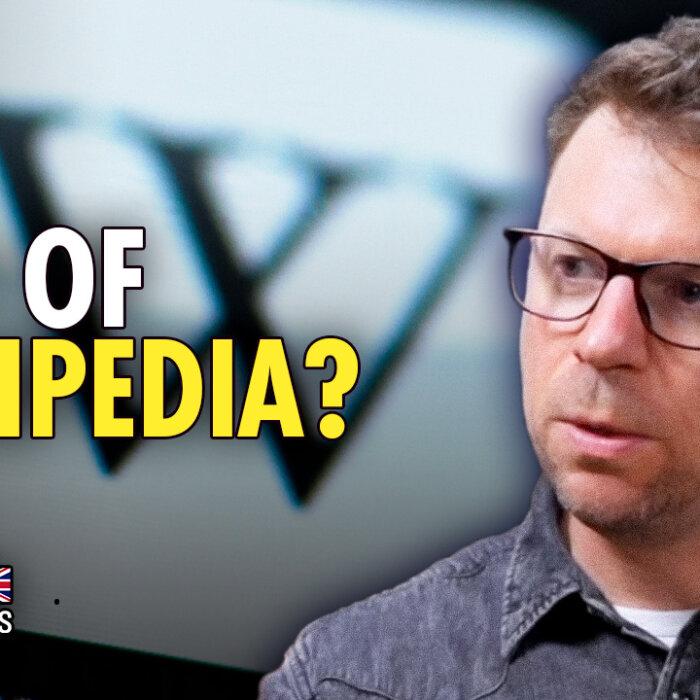
“We very early on got on the radar of powerful people who were trying to control the narrative,” he said. “Slowly ... the screws tightened, the range of views that were permitted in the platform became narrower and narrower.”
This censorship included the blacklisting of conservative media outlets, who were declared “off-limits” as reliable sources for articles, and whose own Wikipedia pages often included overt attacks on their credibility. According to Sanger, “their notion of neutrality now is really twisted into its opposite.”
Pearl and others accuse Grokipedia of promoting right-wing conspiracy theories. Some have also expressed concerns over the fact that Grokipedia is written by a large language model (LLM) AI, not human beings. Its AI origin saddles it with the usual LLM woes: errors, oddities, and hallucinations (inaccurate information dreamed up by the AI with no basis in reality).
What both Wikipedia and Grokipedia reveal, in the final analysis, is that under a facade of democratized and open-source information, there remain powerful gatekeepers who aim to shape public perception in one way or another. In the case of Wikipedia, a faceless bureaucracy and army of anonymous editor-activists relentlessly uphold a certain worldview; in the case of Grokipedia, an eccentric tech billionaire pulls the strings of artificial intelligence to create an “objective” information source that aligns suspiciously with his own beliefs. In neither case do we find much transparency or objectivity.
Of course, knowledge gatekeepers have always existed. In the Middle Ages, when the Catholic Church was the dominant force in Western culture, and even after, the Church maintained an index of forbidden books. Certain texts were considered false, pernicious, and dangerous, and the ecclesiastical authorities believed they had the right to ban them for the good of the faithful. What contemporary liberal democratic society considers a totalitarian oversight of information was, at that time, considered an act of charity. The difference with the Church’s acts of censorship is that the Church’s adoption of a right of censorship was rooted in a claim to divine authority, whereas Wikipedia or Grokipedia’s claims to objective truth are rooted in ... what exactly?