There is something almost magical about making vinegar.
Not magical in the modern sense, the sense in which everything must be branded, packaged, optimized, and sold back to us as a luxury wellness product. Magical in the older sense. The kind of magic our ancestors would have simply called knowledge.
For years we have been making vinegar at the ranch from persimmons, peaches, and other fruit that otherwise was not fit for sale. Fruit once viewed as waste suddenly becomes useful again. Rotting fruit transforms into cleaner, medicine, preservative, flavor, sanitation, and health tonic all at once.
The process itself feels grounding. You begin to understand that human beings once lived much closer to transformation than we do now. Waste was not always waste. Sometimes it was simply the beginning of something else.
For most of human history, people relied on remarkably simple tools to preserve life and maintain health: smoke, alcohol, fire, fermentation, herbs, salt, sunlight, and time. Entire civilizations survived using combinations of these things. Smoke preserved meat. Fire sanitized. Alcohol disinfected. Herbs flavored food while also serving medicinal purposes. Vinegar sat at the center of countless households as cleaner, preservative, tonic, and medicine.
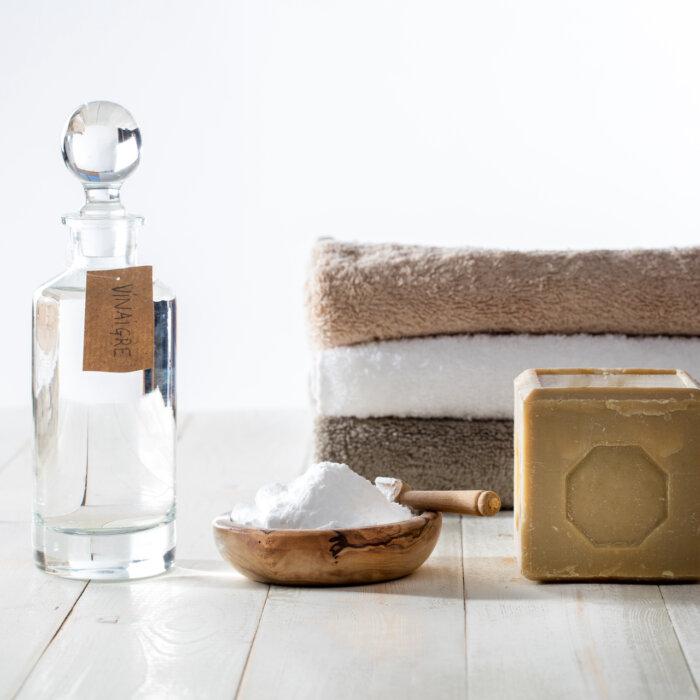

Today we often assume ancient people were unsophisticated because they lacked modern products, but in many ways, they understood transformation far more intimately than we do.
At the ranch, vinegar touches almost every part of life. On the commerce side, we use it in products we make and sell, including pickles, hot sauces, salad dressings, hair rinses, and athlete’s foot washes. On the household side, the list feels almost endless: foot baths, regular baths, digestive tonics, beverages, produce washing, household cleaning, deodorizing, coffee machine cleaning, removing the constant mineral scale from the limestone water filled with gypsum here in Central Texas, and even simple remedies for heartburn.
I recently asked an artificial intelligence chatbot to generate a full list of vinegar uses, and even I was surprised by how extensive it was. One simple substance can replace dozens of highly specialized products lining modern store shelves.
That realization says something important about the world we live in now.
Our economy depends on endless specialization and endless consumption. We buy separate products for every inconvenience and are taught that every problem requires a branded solution.
But vinegar quietly challenges that entire framework.
Not only because it is inexpensive and versatile, but also because many of the products it replaces come with hidden costs we rarely discuss. Thousands of household products contain endocrine-disrupting chemicals, synthetic fragrances, and compounds linked to hormone disruption and other long-term health concerns. We fill our homes with artificial scents and chemical cleaners without always considering the cumulative effect they may have on our bodies, our children, our waterways, and our environment.
Meanwhile, vinegar can often do many of the same jobs for less than a dollar without harming us in the process.
There is an interesting paradox in that.
We traded something simple, ancient, cheap, and remarkably effective for hundreds of specialized products that cost more money while potentially creating environmental and health consequences whose ripple effects we may never fully understand.
What fascinates me most is how often old wisdom disappears for a generation or two only to come back rebranded as innovation. Today, people take apple cider vinegar baths as a wellness trend. They drink vinegar tonics for gut health. They mix vinegar into lemon water and call it biohacking. Vinegar rinses for hair and skin are marketed as holistic beauty treatments.
But people have been doing these things forever.
Not because it was trendy.
Because it worked.
That does not mean modern medicine has no value. Modern life has brought extraordinary advancements that I am deeply grateful for. But somewhere along the way, we started assuming that anything old was primitive and anything modern was superior. Now, many people are rediscovering practices their great-grandparents would have considered completely ordinary.
There is something humbling about that.
Making vinegar reminds you how important sanitation once was. Before disposable abundance and endless commercial products, fermentation and preservation were survival skills. People understood how to transform what they had into something stable, useful, and nourishing.
Today, many of us have lost that relationship to the physical world. We throw things away without thinking much about where they came from or what else they could become. We have become disconnected not only from food production, but also from the deeper human knowledge that surrounded daily life for thousands of years.
And yet the knowledge is not gone completely. It lingers quietly beneath the surface, waiting to be remembered.
Maybe that is why these old practices resonate so deeply with people now. In a world dominated by complexity, chemicals, and endless consumption, there is something profoundly comforting about realizing that some of the most useful things in life are still simple.
Rotting fruit can become medicine.
A jar on a counter can become sanitation.
Something nearly free can replace countless expensive products.
And maybe vinegar itself is not really the point.
Maybe the point is remembering that human beings are far more capable, resourceful, and resilient than modern systems often encourage us to believe. Sometimes humanity forgets. Sometimes we complicate what was once simple. Sometimes we poison ourselves chasing convenience while overlooking what was sitting quietly in our grandparents’ kitchens the entire time.
And sometimes healing begins not with discovering something new, but with remembering something old.