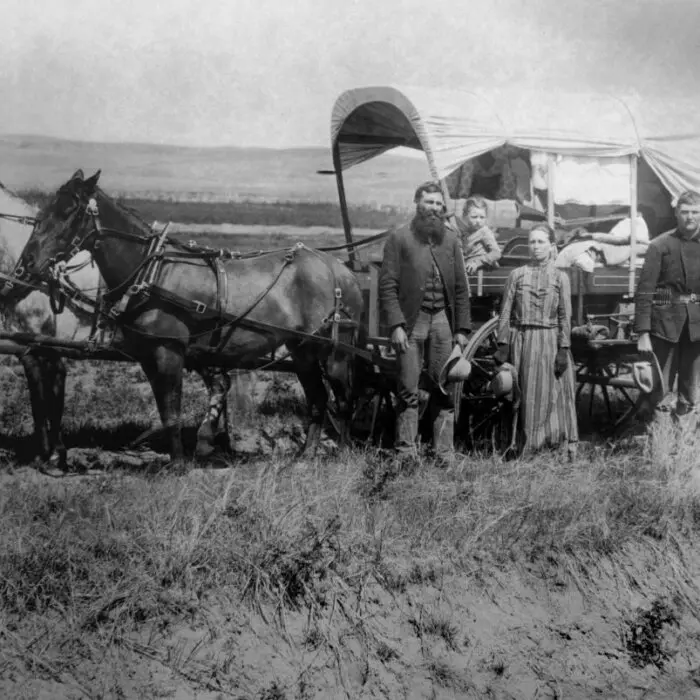
We were watching the new “Little House on the Prairie” on Netflix when the story turned to racism.
My nine and eleven year old became genuinely confused.
“Was that a real thing?” one of them asked.
They weren’t questioning whether it happened. They simply couldn’t understand why anyone would treat another person differently because of the color of their skin.
Then one of them said something I haven’t been able to stop thinking about.

“People come in all different colors. Why would somebody choose one color to like over another? That doesn’t make any sense.”
I felt something I wasn’t expecting.
Pride.
I know there are people who would say I’ve failed to prepare my children for the world. They would argue that because my children will inevitably be perceived a certain way by some people, I have a responsibility to teach them to see themselves through those same categories.
Maybe those conversations will come with time. History matters because we don’t want to repeat it. Knowing where we came from helps us navigate where we’re going. My children will learn about slavery, segregation, and the men and women who had the courage to challenge those ideas. They should.
But while they are still young, I am grateful that their first instinct is not to sort people into groups. It is simply to see another human being.
After I put the kids to bed, I called a friend and told her what had happened. I could hear in her response that she thought I was being irresponsible. In her mind, my children should already understand how the world would categorize them.
My children have what many people would call a mixed racial background, although I have come to question whether race itself is a meaningful way to understand people. I wrote about this in my book long before hearing it reflected back through the words of my children.
At some point I realized that race explained remarkably little about the people I actually knew.
Take my husband.
He was born in a small Zapotec village in Oaxaca. His ancestry is Indigenous to North America, and many aspects of that culture have survived into the present day. His father never owned a car. He rode a horse. Hunting, fishing, gathering food from the land, and living close to nature weren’t hobbies or nostalgia. They were simply life.
My husband is only 36 years old.
His experience is profoundly different from someone whose family has Mexican roots but who was born and raised in East Los Angeles. They may share ancestry, but they do not share the same story. One grew up in a modern American city. The other grew up in an Indigenous village where many traditions continued well into the 21 century. The world we grow up in matters more than the DNA we inherited.
The same is true everywhere. A fifth-generation rancher in Texas and an investment banker in Manhattan may both be described as white, yet they may share almost nothing culturally. Two people placed into the same racial category may have different languages, faiths, values, histories, and ways of understanding the world. The categories often tell us less than we imagine.
History itself is also more complicated than the stories we often tell. We tend to flatten entire civilizations into simple narratives. Indigenous cultures were never one culture. African history cannot be reduced to a single story. Europe, Asia, Africa, and the Americas all contain stories of conquest, cooperation, migration, slavery, freedom, extraordinary cruelty, and extraordinary courage. Human history is complicated because human beings are complicated.
Recently someone told me America was uniquely racist and that he wanted to move to Mexico. I couldn’t help but smile. Either he had not spent much time in Mexico, or from his own perspective had never noticed the social hierarchies that exist there as well. Every country has its own history. Every culture has its own blind spots. Human beings have always found ways to separate themselves from one another.
I don’t want my children to inherit guilt from one side of their family and victimhood from the other. Neither guilt nor victimhood produces strong, grateful, capable adults.
Instead, I want them to inherit something far richer.
I want them to know the stories of both sides of their family. I want them to know that their grandfather rode a horse because he never owned a car. I want them to understand why their father still knows how to hunt, fish, gather food, and live close to the land. I want them to spend enough time in creation that they come to know its Creator.
I want them to understand that their greatest inheritance is not the color of their skin. It is the people who came before them, the values they pass down, and the lives they choose to live.
Someday my children will learn all about racism. For now, I hope they hold onto one simple question just a little longer.
“People come in all different colors. Why would somebody choose one color to like over another?”
The older I get, the wiser that question seems.