To activists who recognize the dangers of pesticides and other industrial agriculture practices, the necessary policy seems quite obvious. These practices should be banned—the sooner the better. It is a clear moral decision.
From the perspective of the growers, however, such policies pose an existential threat by making an already-hard job impossible. Farmers and ranchers face crushing debt, irrational regulations, perverse incentives, rising input costs, and falling commodity prices. Some 140,000 farms have disappeared over the past five years, and many others survive only because their owners work second jobs. As the average age of the American farmer nears 58, too few of the next generation are entering the profession, which is beset by addiction, depression, suicide, and cancer. All is not well in farm country.
Understandably, regulators and Congress members from farm states are reluctant to consider any policy that would worsen farmers’ already dire conditions. However, in their zeal to protect the agricultural industry, they overlook the ironic truth that the very system they protect is destroying rural America.
That system includes pesticides, factory farms, Department of Agriculture (USDA) and state regulations, debt financing, subsidies, crop insurance, commodity markets, farm consolidation, consumer habits, and food processors, each of which has co-evolved with the rest into a barely functioning interdependency. It is impractical to change one of these elements without changing all of them. Immersed in that system, many farmers feel stuck, unable to change, even if they want to.
Consider the example of glyphosate. Conventional growers depend on it as an herbicide and desiccant. Holding everything else constant, a glyphosate ban would spell their ruin—and the ruin of the commodity supply chain. No wonder they don’t want to countenance the flagrant fact that this chemical is poisoning agricultural workers, the environment, and the public. Who can blame them? They aren’t just defending a chemical; they are defending their livelihood.
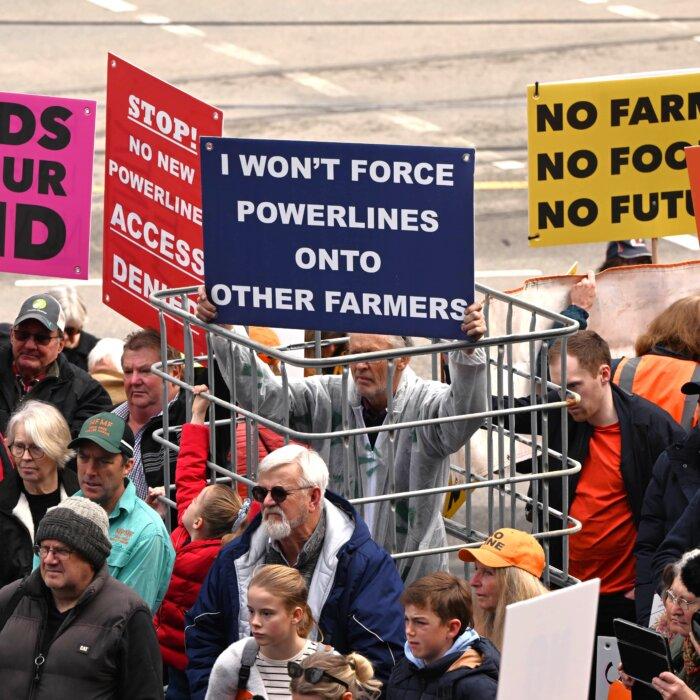
Alongside their allies in Congress, industry, and the USDA, these producers are the immovable object against which the otherwise unstoppable force of the Make America Healthy Again (MAHA) movement stumbles.
To resolve this impasse, MAHA activists concerned about pesticide residues, municipal sludge, animal antibiotics, genetically modified organisms, and the rest must accept a crucial principle: For agrarian reform to succeed, each step toward regenerative, less chemical-intensive practices must also double as a step toward farmers’ prosperity.
To those immersed in the assumptions of the current system, this sounds impossible. Again, holding everything else constant, conventional farmers who subtract glyphosate, animal antibiotics, or chemical fertilizers from their arsenal will suffer disaster. But regenerative agriculture is not conventional agriculture minus the chemicals. It is an entirely different suite of practices, relationships, and economics.
Today in the United States, a small but growing minority of farmers is proving that it is indeed possible to transition to low- or zero-chemical ways of farming that sacrifice neither yield nor prosperity. Led by innovators such as Rick Clark, Gabe Brown, Will Harris, Joel Salatin, and John Kempf, they have converted some 3 million acres to fully regenerative practices. They build soil, increase nutrient density, increase fertility, recharge aquifers, and eliminate costly and toxic herbicides, insecticides, and fertilizers. Their success is all the more impressive given a regulatory and subsidy regime that takes conventional practices for granted and makes innovation difficult.
These innovators provide a proof-of-concept. Skeptics object that many of them serve niche and specialty markets, often, though not always, relying on direct-to-consumer sales rather than selling bulk commodities. But these markets need not be niche. We can evolve the food system in the direction that these innovators have established: shorter supply chains, smaller scale, more diverse crops, and a closer relationship with consumers.
To do that will require both a long-term vision of a regenerative agricultural system and immediate win-win steps toward it. Here are some examples:
Restoration of and investment in farm-to-school and other local food programs, many of which were defunded under the current USDA. A lifeline to many family farms, these programs establish a new food infrastructure.
Regulatory exemptions for small producers. Regulations designed for large-scale industrial operators pose an excessive burden on small farmers who cannot afford compliance departments. Furthermore, government regulation is less necessary for small producers selling direct-to-consumer, for whom reputation is everything.
Technical and financial support for transition to regenerative practices through legislation such as the bipartisan Innovative Practices for Soil Health Act and EQIP Improvement Act and by restoring cuts to the USDA’s Natural Resource Conservation Service.
Finally, it is imperative that Congress stop doubling down on what is not working. For example, Sections 453 and 507 of the fiscal year 2026 Interior and Environment Appropriations bill, along with the deceptively named Food Security and Farm Protection Act, lock in some of the worst practices by shielding pesticide manufacturers from liability and preventing the regulation of PFAS in municipal sludge spread on cropland. Certainly, it may be impractical for farmers to end dangerous practices overnight, but these provisions codify a willful ignorance of what almost everyone now recognizes is a serious problem.
Farmers should not be punished for being locked into a dysfunctional system. They need an exit ramp: a practical transition pathway that grows their prosperity, unleashes their creativity, and enables them to grow healthy food they feel good about. When we realize that public health, soil health, and the economic health of farmers are inseparable, the regenerative agriculture movement will be unstoppable.