Many in the Republican Party, apparently including President Donald Trump himself, credit Make America Healthy Again—MAHA—for clinching Trump’s decisive victory in 2024.
The MAHA movement comprises mostly swing voters, the overwhelming majority of whom voted for Obama in 2008 and 2012 and identified as Democrats for most of their lives. However, in 2024, under the leadership of Robert F. Kennedy Jr., they temporarily joined the Republicans.
This support should not be taken for granted. While most of MAHA is grateful that Trump kept his promise to Kennedy, appointed him to HHS, and has continued to support his agenda there, the basic issues driving the movement extend far beyond vaccine safety and food additives. And on these other issues—such as pesticides, plastics, and toxic contamination of the environment—Democrat politicians appear to be more aligned with MAHA priorities than Republican politicians.
Consider the Interior and Environment Appropriations bill passed by the House of Representatives in August. Every Republican in the Interior Appropriations Subcommittee voted for a version that included two industry-sponsored sections, 453 and 507, that are anathema to MAHA supporters. The first creates a de facto liability shield for glyphosate and thousands of other chemicals; the second prohibits the Environmental Protection Agency (EPA) from moving forward on regulating sewage sludge PFAS and PFOS—the “forever chemicals” that were one of Kennedy’s major campaign issues.
Meanwhile, Sen. Cory Booker (D-N.J.) has sponsored a bill explicitly bypassing the liability shield via a federal right-of-action on pesticide harms. Major MAHA-aligned organizations have endorsed the bill, signaling their willingness to put their core agenda above party loyalty.
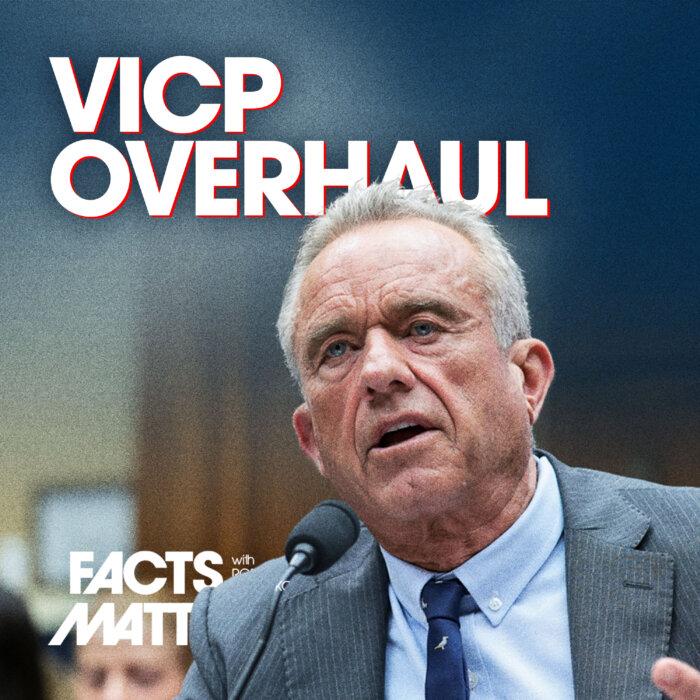

If they want to retain MAHA support through the 2026 midterms and beyond, Republicans in Congress, the EPA, and the Department of Agriculture should reconsider some of their traditional positions on agriculture and the environment. Here are some actions that would rekindle MAHA enthusiasm for the Republican Party:
1. Remove pesticide liability shield and PFAS protection from the appropriations bill, and keep such provisions out of the farm bill this fall.
3. Direct and fund the EPA to scrutinize glyphosate, atrazine, paraquat, and dicamba, and increase funding for toxicological studies of pesticides, including the thousands that have been permitted under emergency use authorization and never tested.
4. Shift farm subsidies away from harmful practices that would be uneconomic in the absence of those subsidies, and toward a transition pathway to regenerative agriculture that safeguards farmer prosperity.
5. Direct the EPA to reevaluate its standards for “safe levels” of contaminants in water, which are in many cases several times more lax than European standards.
Many of these issues are aligned with good old fashioned Republican values. No betrayal of principle is required for Republicans to adopt them as their own.
Pesticide liability shields, for example, violate a basic principle of free enterprise: Whoever makes the profit should bear the risk. Liability shields privatize profits and socialize risks—a violation of the free market.
The same might be said for farm subsidies that tilt the playing field against organic and regenerative farmers. Republicans should also defend states’ rights, which are being targeted by industrial lobbyists unhappy with state regulations on some of their worst practices. Conservation, too, was once a Republican cause. There is nothing “conservative” about destroying America’s soil, water, and wildlife.
These matters of principle are also matters of smart politics. MAHA is not a fringe movement. Comprising millions of motivated, politically active voters, it was born of a chronic disease epidemic that affects over half the population. No one wants pesticide residues in their food or PFAS in their drinking water or microplastics in their brains. Republicans are on the losing side of what have become populist issues, no longer limited to the environmentalist fringe.
The 2024 election demonstrated that the old political order in which the Democratic Party was the people’s party and the GOP the party of the country-club elites has ended. Will the Republicans retain the populist mantle they took up in 2024? Or will they watch as the movement that Kennedy activated into an electoral force fades into apathy as Republicans disappoint it on pesticides, PFAS, and environmental protection?
These questions could well decide the 2026 election and beyond. MAHA did not start in the Republican camp. It will not remain there if the party betrays it on its most important issues.