


The days are longer, the flowers are blooming, and the air is… thick with pollen. If you’re one of the millions of people who dread spring because of seasonal allergies, you know the feeling: itchy eyes, a runny nose, and the sneeze that just won’t quit — even indoors.
Here’s something many allergy sufferers don’t realize: the air inside your home can actually be more polluted than the air outside. Pollen drifts in through open windows, clings to your clothes, and settles into carpets and furniture. An air purifier with the right filtration system can trap those airborne particles before they reach your lungs — offering real, measurable relief during peak allergy season.
But with hundreds of models on the market, how do you choose the right one?
What to Look For in an Air Purifier for Allergies
- True HEPA filtration. A True HEPA filter captures 99.97% of airborne particles as small as 0.3 microns — that includes pollen, dust mites, pet dander, and mold spores. Don’t settle for “HEPA-type” or “HEPA-like” — these are marketing terms with no standardized performance requirement.
- CADR rating (Clean Air Delivery Rate). This tells you how quickly a unit can clean the air in a given room size. Match the CADR to the square footage of the room where you'll use it most.
- Activated carbon filter. If you’re also sensitive to odors or chemical fumes, look for a unit that pairs HEPA with an activated carbon layer.
- Quiet operation. You'll want it running while you sleep — check the decibel rating at its lowest fan speed.
- Smart features and filter indicators. A unit that tells you when to change the filter (and lets you control it from your phone) is a convenience worth paying for.
Top 5 Air Purifiers for Pollen Allergy
If pollen is your primary concern, these five models stood out for their filtration performance, room coverage, and value:
- LEVOIT Core 400S — Best Smart Pick for Large Rooms
- Shark NeverChange HP152 — Best for Low Maintenance
- Coway Airmega AP-1512HH — Best Trusted Classic
- AirDoctor AD3500 — Best for Deep Allergy Relief
- WINIX 5510 — Best Value Pick
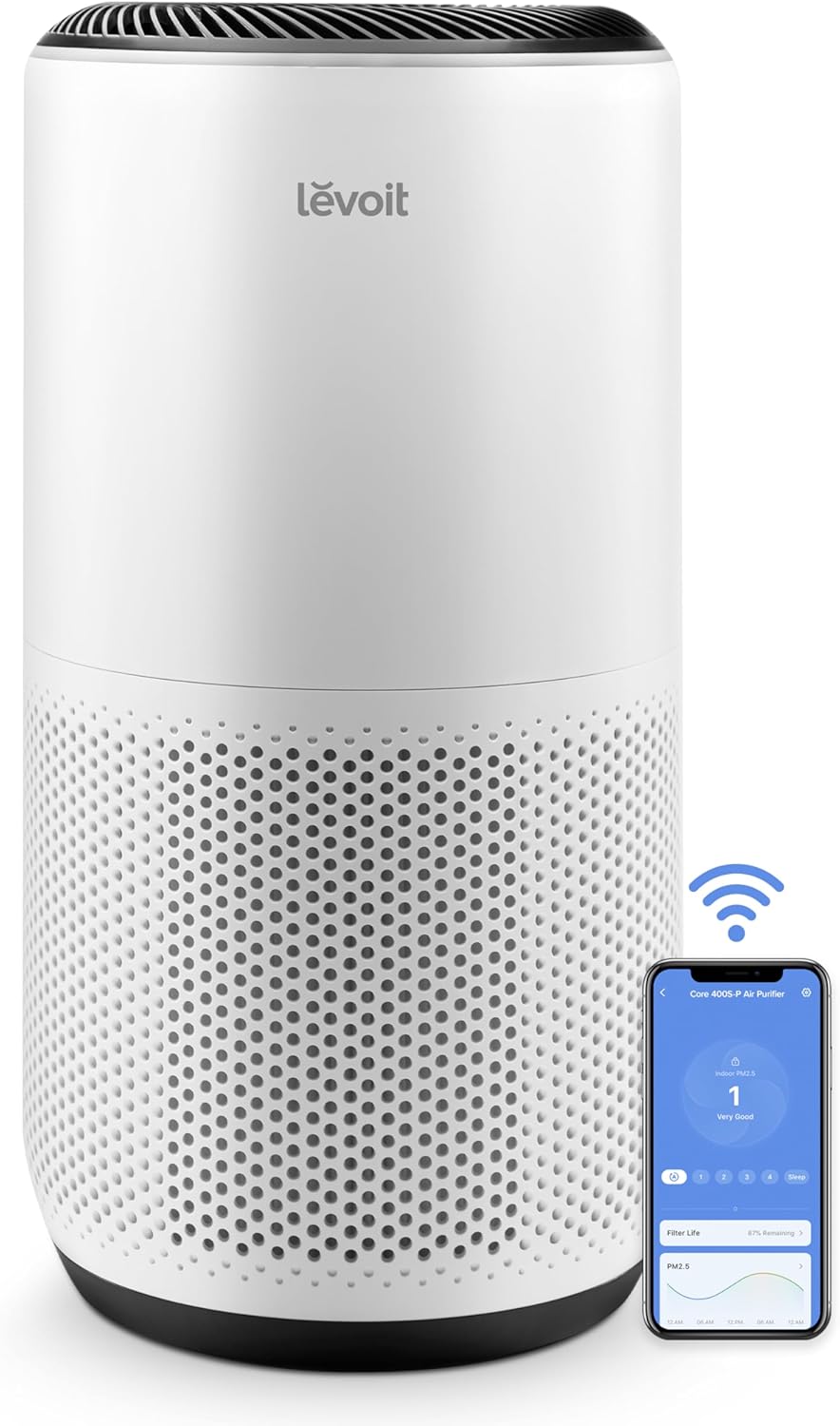
LEVOIT Core 400S-P
Pros
- AHAM-verified pollen CADR of 259 CFM — independently tested performance
- Covers up to 403 sq ft, cycling the air five times per hour
- Works with Amazon Alexa and Google Assistant via the VeSync app
- Sleep mode drops to a near-silent 24 dB — genuinely bedroom-friendly
Cons
- Tall footprint may feel bulky in smaller spaces
- Not ideal for very large open-plan areas — you may need two units
- Replacement filters are an ongoing cost to factor in
Shark NeverChange HP152

Pros
- Captures 99.98% of particles, including pollen, with no filter replacements needed for up to 5 years
- Odor Neutralizer Technology cartridge guards against odors while releasing a pleasant scent
- Covers up to 650 sq ft — great for bedrooms, home offices, and nurseries
Cons
- The 5-year filter claim may be more realistic at 1–2 years depending on your environment
- The air quality indicator has reliability issues, frequently getting stuck showing 100% even in dusty conditions
Shark NeverChange HP072-For small room

Pros
- AHAM-verified pollen CADR of 240, covering up to 361 sq ft at 4.8 air changes per hour
- Among the lowest energy consumption of any purifier tested — great for 24/7 use
- Eco mode automatically stops the fan after 30 minutes of no detected pollution, saving energy
- Replacement filters widely available from third parties at very affordable prices
Cons
- The design is starting to feel dated compared to newer models on the market
- No WiFi or app connectivity — controls are manual only
- At its highest speed, noise reaches close to 58 dB — noticeable in a quiet room

Pros
- High pollen CADR of 377 CFM — among the highest available in its class
- Whisper-jet fans are 30% quieter than traditional air purifiers, with 4 fan speed options
- UltraHEPA filter lasts up to 12 months — longer than most competitors’ 6-month filters
Cons
- No third-party filters available — you must buy AirDoctor’s proprietary replacements, which are pricey
- Design is functional but basic — it won’t win any style awards
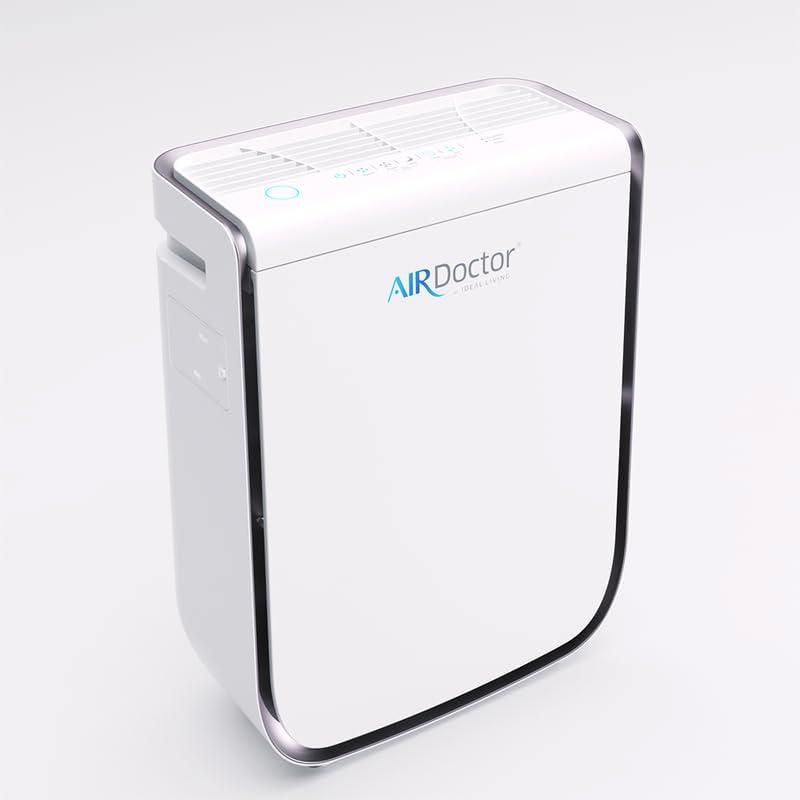
AIRDOCTOR AD2000-For small room

Pros
- Achieved 96% PM2.5 reduction in 60 minutes in independent testing
- Light-sensing sleep mode automatically activates when the room darkens — perfect for bedrooms
- Washable pre-filter reduces long-term filter costs; replacement filters widely available from third parties
Cons
- Auto mode sensor detects odors but not pollen — it won’t automatically ramp up during high pollen days
- Turbo mode reaches 67 dB — noticeable if you’re noise-sensitive
Top 10 Air Purifiers for General Air Quality
Looking for something that handles more than just pollen — think dust, smoke, VOCs, and pet dander? Here’s my wider roundup:
- Blueair Blue Pure 211i Max Best for Very Large Spaces
- LEVOIT Vital 200S Best for Pet Owners
- Dyson Purifier Big+Quiet Formaldehyde Best Premium Pick
- WINIX 5520 Best for Odor Control
- Rabbit Air A3 SPA-1000N Best for Customization
- Alen BreatheSmart 35i Best for Bedrooms & Small Offices
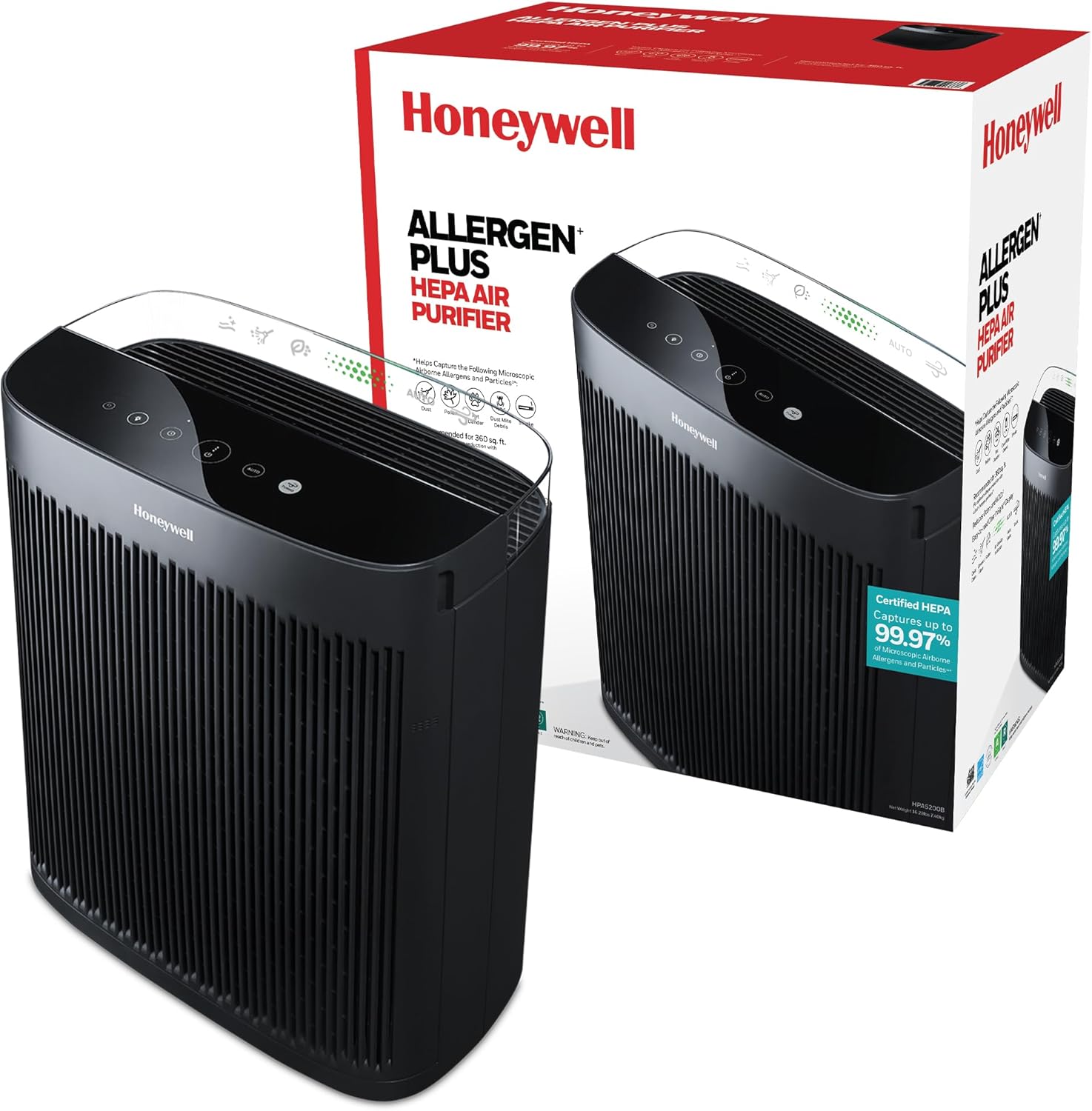
- Honeywell HPA5200B InSight Best Trusted Brand Pick
- Mila Air 3 — Big Sneeze Best Smart Features
- GermGuardian AC3200 AirSafe+ Best Budget-Friendly Pick
- Coway Airmega AP-1512HH Best All-Around Value
Blueair Blue Pure 211i Max - Best for Very Large Spaces

LEVOIT Vital 600S - Best for Pet Owners

The Vital 200S-P features a unique U-shaped air inlet that captures airborne pet fur before it clogs the filter, along with 3-stage filtration that refreshes up to 1,800 sq ft of air per hour. In independent testing it improved air quality by 96% in 60 minutes — a genuinely impressive result.

Dyson Purifier Big+Quiet Formaldehyde - Best Premium Pick

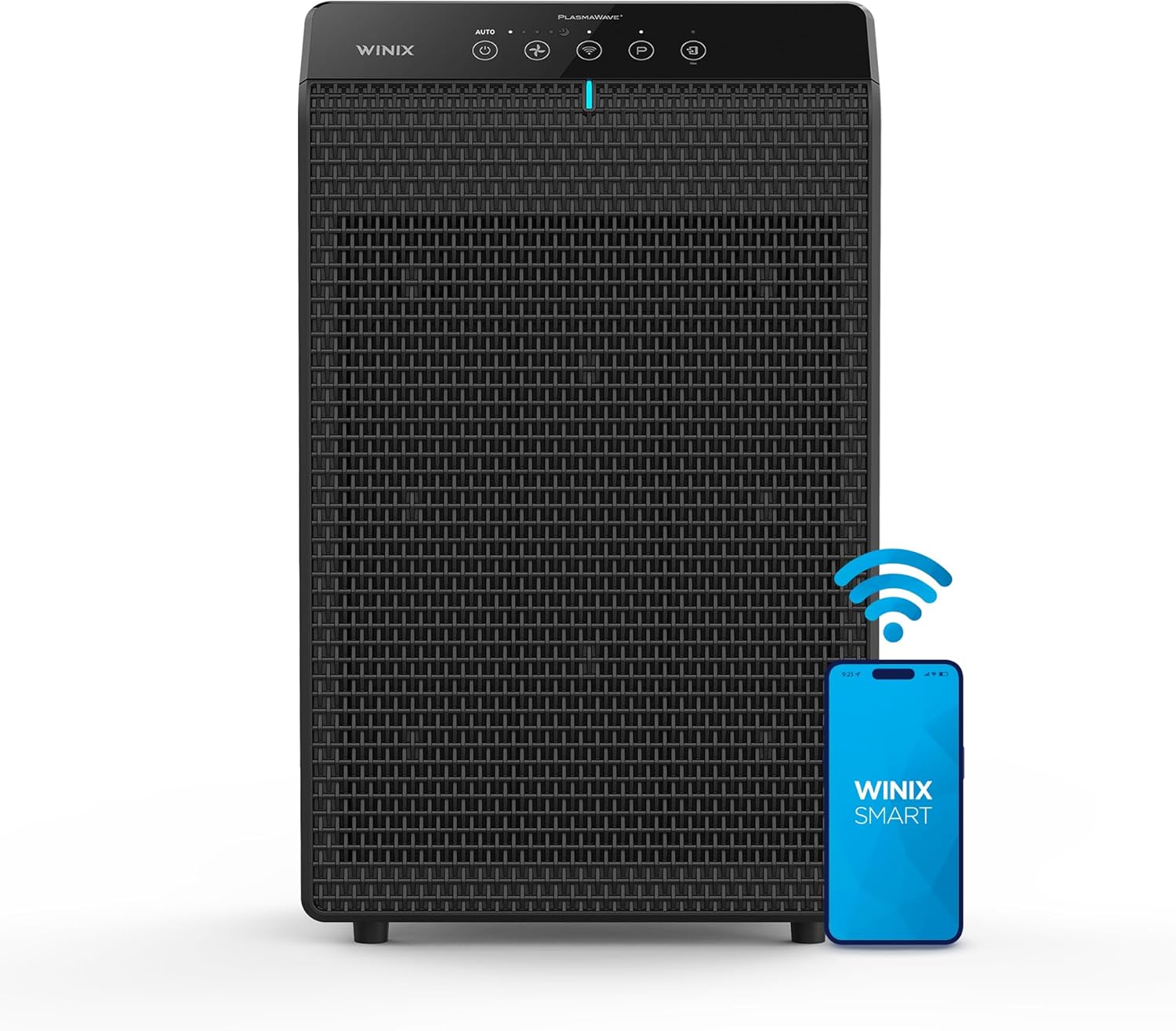
WINIX 5520 - Best for Odor Control
Rabbit Air A3 SPA-1000N - Best for Customization

Alen BreatheSmart 35i - Best for Bedrooms & Small Offices

Honeywell HPA5200B InSight - Best Trusted Brand Pick
Mila Air 3 — Big Sneeze - Best Smart Features

GermGuardian AC3200 AirSafe+ - Best Budget-Friendly Pick

Coway Airmega AP-1512HH - Best All-Around Value

The Bottom Line
An air purifier won’t cure your allergies — but it can meaningfully reduce your exposure to the triggers that make them miserable. Whether you’re shopping specifically for pollen season or looking for year-round air quality improvement, the models above represent the best the market has to offer right now.