Memorial events marking the 37th anniversary of the Tiananmen Square massacre were held across North America, Europe, Asia, and the Pacific this week, as Chinese dissidents, human rights groups, and victims’ families warned that the Chinese regime is still trying to erase the memory of June 4, 1989.
The events included street marches in New York, rallies outside Chinese diplomatic sites in Los Angeles and Washington, candlelight vigils in Toronto and Auckland, memorial events in Taipei and Tokyo, and online gatherings linking activists in multiple countries.
Inside China and Hong Kong, remembrance remained under pressure ahead of the anniversary.
Chinese dissidents in Beijing, Hunan, Guizhou, and other places were restricted by police, state-security officers, neighborhood officials, or local community workers, according to the Chinese edition of The Epoch Times. Some were told to leave their homes for “travel,” while others were placed under local watch.
The Tiananmen Mothers, a group formed by relatives of those killed in the 1989 crackdown, said members received notice from Beijing police that they would not be allowed to go to Beijing’s Wan’an Cemetery on June 4 to mourn their relatives.
A Mother Speaks From China
In a recorded statement released for the 37th anniversary, Zhang Xianling, 88, a member of the Tiananmen Mothers and the mother of victim Wang Nan, thanked overseas supporters for continuing to remember the victims of the violent suppression of peaceful protesters.
“Thank you for 37 years of not forgetting to condemn that bloody massacre,” Zhang said in the recorded remarks. “Thank you for not forgetting those kind people who shed blood in the streets while pleading for the people.”
Zhang said the 1989 student movement grew out of public anger over corruption, profiteering by connected officials, and rising prices in the early years of China’s economic opening.
Students “stood up resolutely,” using non-violent demonstrations to urge the authorities to fight corruption, Zhang said. Instead, officials deployed troops, armored vehicles, and live ammunition against peaceful students and civilians, she said.
“Who could have imagined that a government that claimed to ‘serve the people’ would order troops to open fire on the people?”
Zhang said victims’ families would continue demanding the truth, justice, accountability, apology, and compensation.
“As victims’ families, we must speak the truth, refuse to forget, seek justice, and call for conscience.”
New York Events Draw Marchers, Exhibits
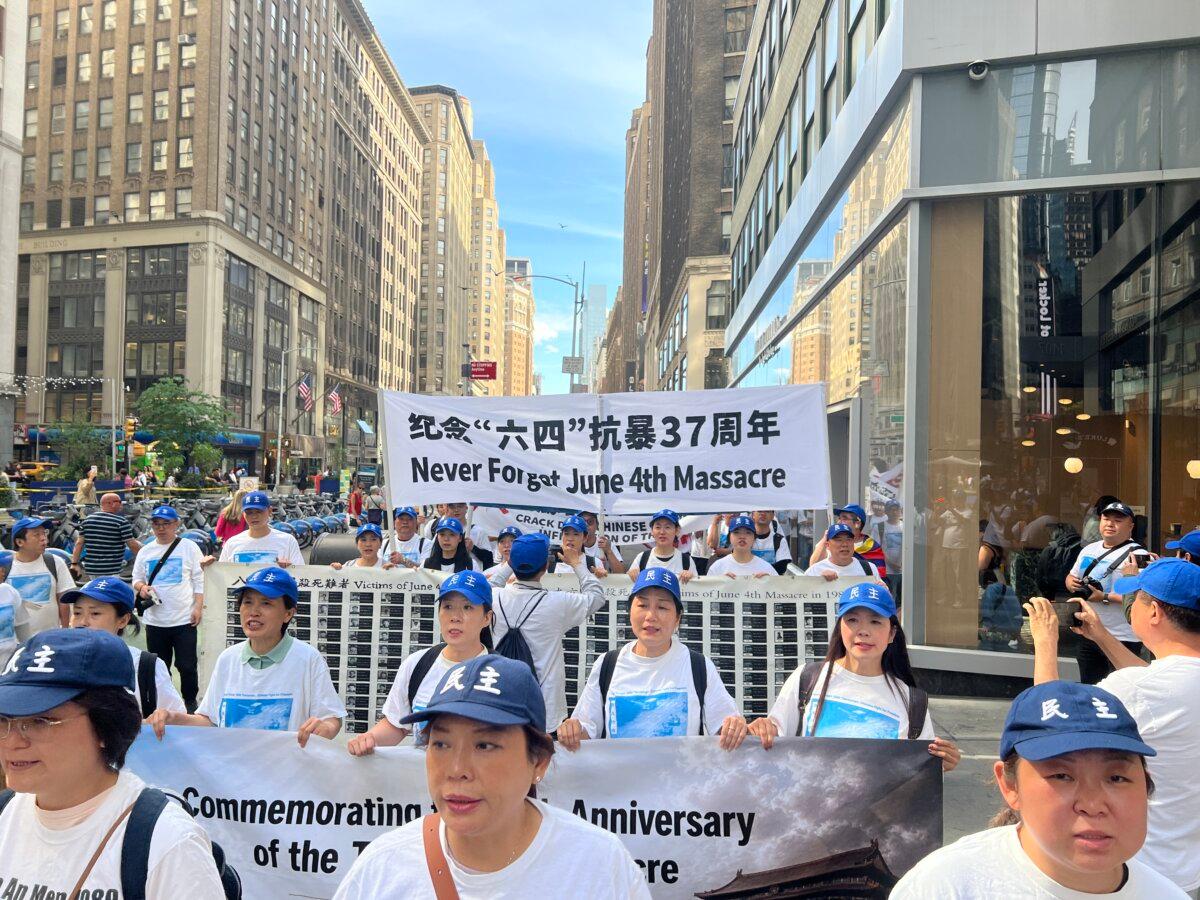
The New York branch of the China Democracy Party organized a June 2 march in Midtown Manhattan, with hundreds of participants calling for the massacre not to be forgotten.
Marchers shouted slogans including “Do not forget June 4” and “Down with the Chinese Communist Party.”
Several Chinese democracy groups in Queens also held a June 1 seminar in Flushing to mark the 37th anniversary of the Tiananmen massacre, the 60th anniversary of the Cultural Revolution, and current international affairs. Participants included democracy movement figures, witnesses to the 1989 crackdown, scholars, lawyers, veteran media workers, and political commentators.
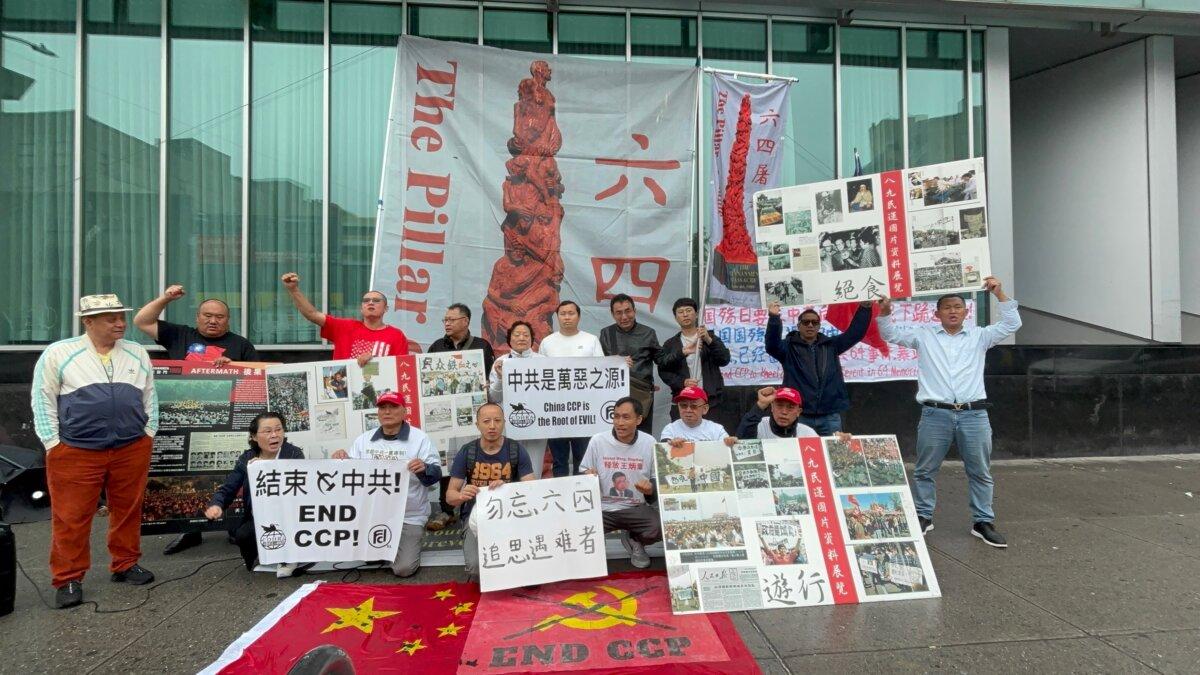
A separate photo exhibition organized by the Christian Coalition for Justice has been displayed near the Flushing Library on Sundays, from May 10 through June 7.
A large banner version of the “Pillar of Shame,” a sculpture created by Danish artist Jens Galschiøt to commemorate victims of the Tiananmen crackdown, was also displayed near the Flushing Library on May 24. The original sculpture was removed by Hong Kong authorities in 2021.
Rallies in Los Angeles and Washington
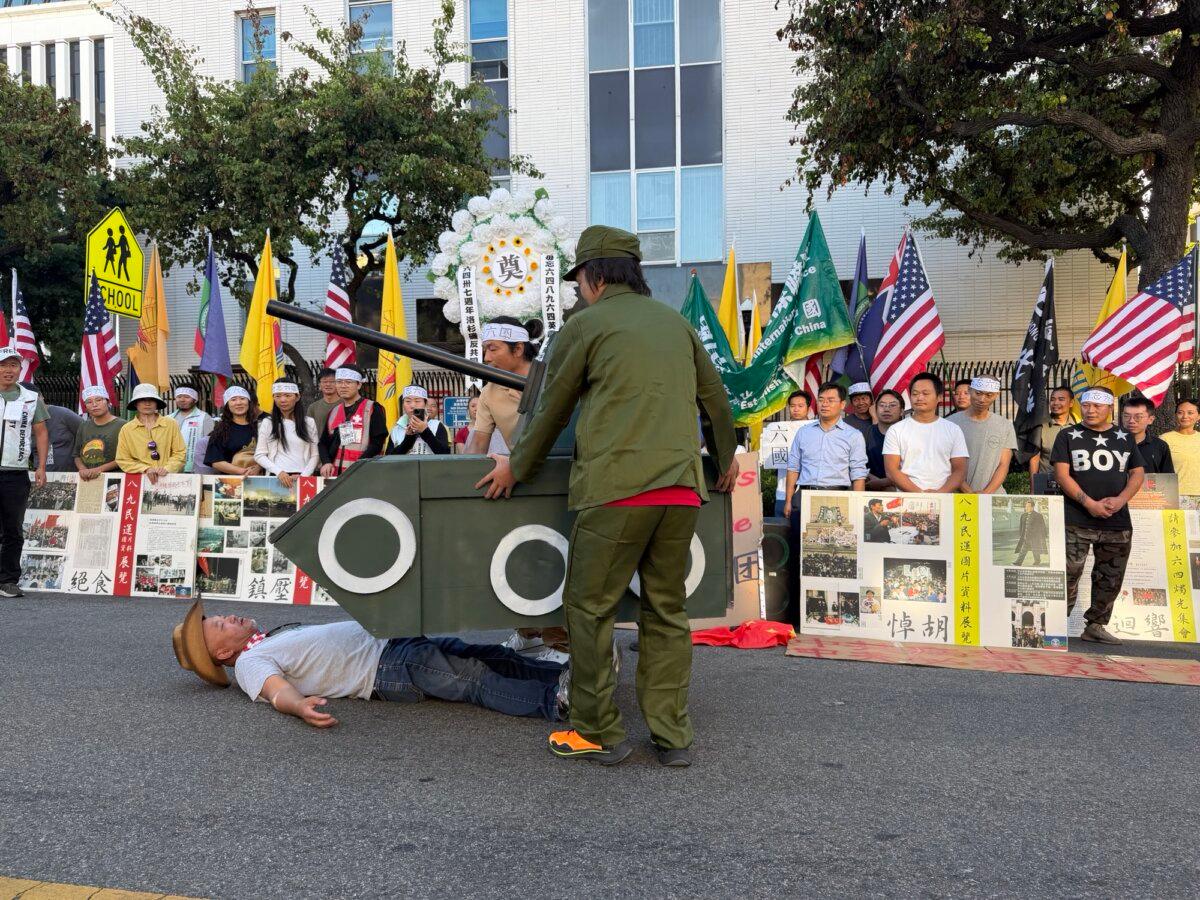
In Los Angeles, the China Democracy Party International Alliance organized a “democracy chariot” car parade in Chinese communities on May 31 and later held a rally in front of the Chinese Consulate.
The rally reenacted the Chinese regime’s use of tanks against civilians in 1989, using a cardboard tank model.
The Visual Artists Guild held a May 30 memorial event and annual awards ceremony in Los Angeles to recognize people who have continued to speak out under political pressure from the Chinese Communist Party.
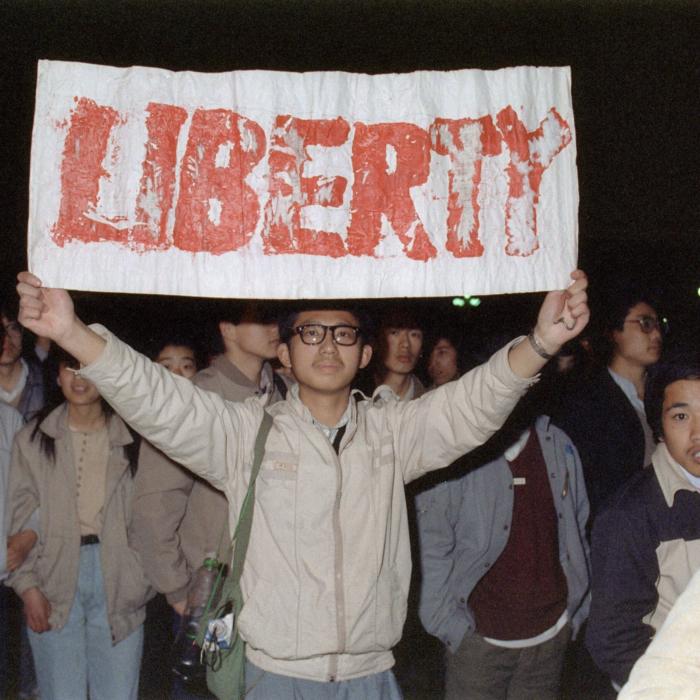
In Washington, the National Committee of the China Democracy Party, the Independent Federation of Chinese Students and Scholars, the Wei Jingsheng Foundation, and other groups held a rally and march outside the Chinese Embassy on May 30.
Participants shouted “Do not forget June 4” and “Down with the Chinese Communist Party,” according to the Chinese edition of The Epoch Times.

Vigils in Canada, New Zealand, Taiwan
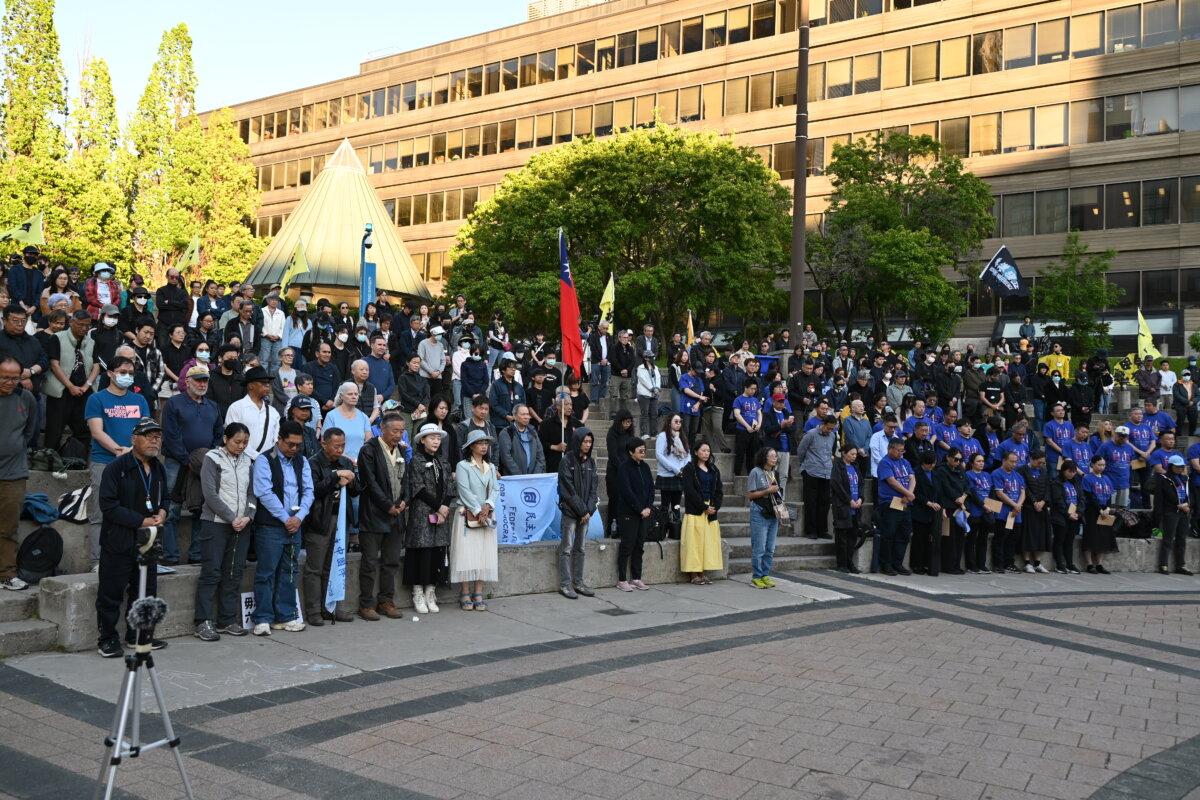
In Toronto, the Toronto Association for Democracy in China held a “Concert for Freedom and Candlelight Vigil” at Mel Lastman Square in North York on May 30, drawing hundreds of participants from multiple ethnic communities.
In Auckland, the New Zealand June 4 Memorial Committee held a photo exhibition at Aotea Square on June 1, followed by an afternoon seminar at the Ellen Melville Centre and an evening candlelight vigil at the June 4 memorial outside St. Andrews Presbyterian Church.
In Taipei, 31 Taiwanese and international civil society groups announced this year’s memorial series under the theme “Memory Without Borders, Resistance Without Borders.” The groups planned a June 4 candlelight vigil at Chiang Kai-shek Memorial Hall, along with a democracy market and human rights photography exhibitions.
Organizers said the events were meant to connect historical memory with action and to call attention to the Chinese regime’s transnational repression.
Hong Kong’s Vigil Space Narrows
Hong Kong’s Victoria Park once drew large crowds for annual June 4 candlelight vigils. That public memorial tradition has been shut down since 2020, first under pandemic restrictions and later under Hong Kong’s post-2019 political crackdown.
In recent years, Victoria Park has hosted a “hometown market” event around the anniversary, while police have blocked attempts by residents to mark June 4.
On June 3, performance artist Chen Shisen, known as Sanmu, was stopped by plainclothes police in Causeway Bay while holding a 6.4-meter red cord, according to Human Rights in China. Artist Chan Mei-tung was also stopped and searched after appearing outside the Sogo department store with a question-mark-shaped foil balloon.
Tang Ngok-kwan, a former standing committee member of the now-disbanded Hong Kong Alliance in Support of Patriotic Democratic Movements of China, went to the fenced area outside Victoria Park’s soccer fields on June 3 and read the names of 202 victims recorded by the Tiananmen Mothers.
Tokyo, Europe, and Other Cities
Memorial events were also held in Tokyo, where participants gathered at Waseda Hoshien on June 3 for a rally, candlelight vigil, and photo exhibition.
Wu’er Kaixi, a former Tiananmen student leader, said at the Tokyo event that Japan should move beyond a China policy centered mainly on economic interests and stand more clearly with freedom, democracy, and human rights.
Other events were held or scheduled in Vancouver, Britain, Australia, Germany, Taiwan, and several U.S. cities. Multiple Chinese democracy groups also held a global online conference on June 3, with a central venue in Brussels.
The Tiananmen Mothers published a 37th-anniversary memorial statement via Human Rights in China before June 4, repeating three long-standing demands: public disclosure of the truth, compensation for victims’ families, and accountability for those responsible.