Beijing does not need to convince the Taiwanese people to trust communist China if it can weaken their trust in one another and in the United States, according to Taiwanese officials, including a researcher studying Chinese Communist Party (CCP) influence operations.
Liu Yu-hsi, an associate professor at Shih Hsin University and a member of Taiwan’s presidential Whole-of-Society Defense Resilience Committee, said the CCP has added digital campaigns to influence networks cultivated through religious exchanges and subsidized trips to China.
“They try to erode Taiwanese trust in the United States,” she said.
“They try to influence your cognition,” Wang said. “Then, [they] can influence your behavior to vote.”

Wang is a lawmaker with Taiwan’s governing Democratic Progressive Party and serves on Taiwan’s Foreign Affairs and National Defense Committee.
Infiltrating Religion
Liu presented her findings at the Chinese Freedom & U.S.–Taiwan Security Forum, organized by U.S.-based nonprofits the Consilium Institute, a public policy think tank, and the civic organization Hello Taiwan.
Her research examined Beijing’s outreach to folk religion temples dedicated to Mazu, a sea goddess whose worship originated on Meizhou Island in China’s southeastern Fujian Province, her birthplace, and spread to Taiwan as migrants crossed the Taiwan Strait.
Mazu traditions remain prominent in Taiwan and coastal southeastern China. Shared religious and historical ties with temples in Fujian give Taiwanese temple leaders and worshipers recurring opportunities for cross-strait contact.
Liu’s research examined how Chinese authorities have used those existing cultural ties to cultivate political relationships rather than having to create networks from the ground up.
In their findings, Liu and her coauthors said Chinese authorities have organized large events at Mazu’s reputed birthplace and invited Taiwanese temples to bring followers. Chinese officials also included Taiwanese temple leaders in a campaign to place Mazu beliefs and customs on the UNESCO (United Nations Educational, Scientific, and Cultural Organization) cultural heritage list in 2009, using the designation to emphasize cultural connections across the Taiwan Strait.
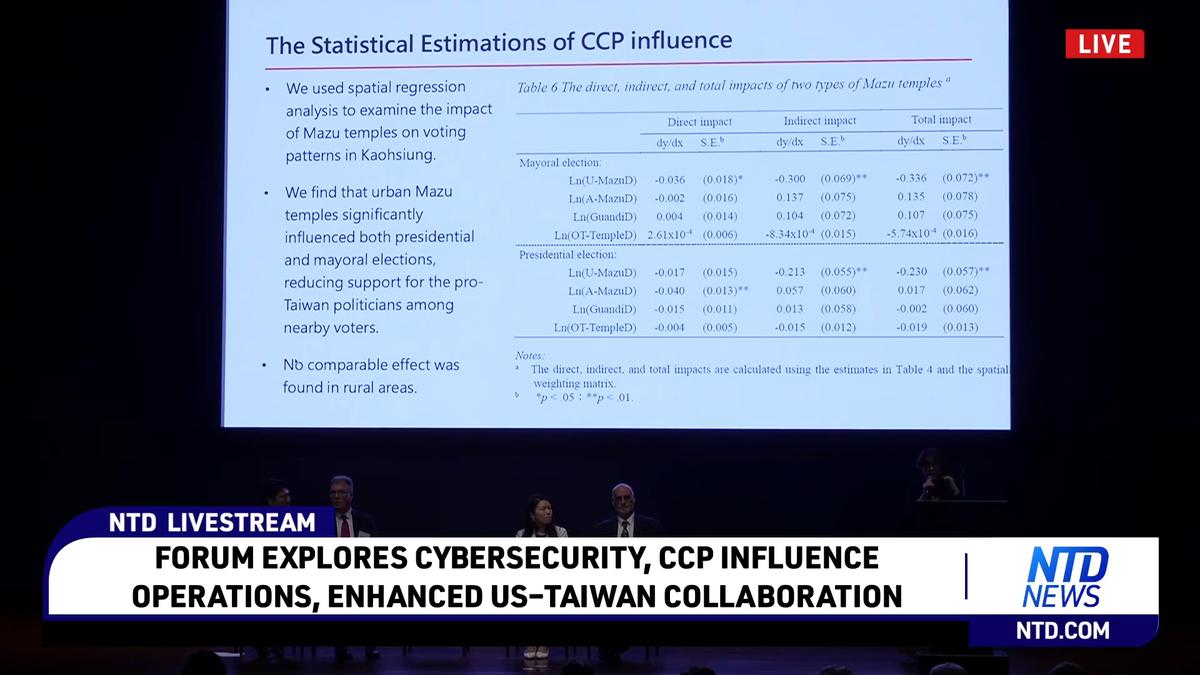
The researchers used Kaohsiung as a case study because the southern municipality contained both urban and village Mazu temples, allowing them to compare temples with different organizational structures and levels of cross-strait interaction. Kaohsiung was also politically significant: The traditionally Democratic Progressive Party-leaning city experienced a major electoral reversal when the Kuomintang won the 2018 mayoral election.
The Kuomintang supports closer relations and greater engagement with Beijing than the Democratic Progressive Party.
The paper said southern Taiwan’s temples had become a particular target of the CCP’s grassroots united-front outreach. Kaohsiung’s neighborhood-level election records and government temple registry allowed the researchers to test whether electoral shifts were concentrated around specific types of temples rather than across the city generally.
Liu and three coauthors examined the political effects of such outreach at 163 registered Mazu temples and across 888 neighborhoods in Kaohsiung. They compared changes in neighborhood-level voting in the 2018 mayoral and 2020 presidential elections with the location and type of nearby temples.
They found that neighborhoods near urban Mazu temples registered a greater shift toward opposition Kuomintang candidates during the elections analyzed.
However, the same statistically significant relationship was not found around village Mazu temples, the authors noted, explaining that village temples generally have longstanding congregations and reliable local financial support. Urban temples often compete more actively for followers and resources and therefore have greater incentive to participate in the CCP’s subsidized events and pilgrimages.
Liu said Chinese authorities have subsidized trips for temple leaders and worshipers from Taiwan.
“The CCP is bribing temples,” Liu said during her presentation. “They provide money or resources to those temples to invite their followers to China to build a link with CCP officials.”
The relationships continue after participants return to Taiwan, including through groups on the Line and WeChat messaging platforms, the authors explain.
Interview subjects told the researchers that groups normally used for social and entertainment material circulated substantial anti-Democratic Progressive Party content during the 2018 election campaign.
While opposition to the governing party and advocating for closer relations with Beijing are protected political activities in Taiwan, the researchers expressed concern over political outreach financed by a foreign government that has cultivated local intermediaries and uses those networks to interfere in Taiwan’s elections.
“They try to send political messages through those networks they built with the Taiwanese followers,” Liu said.
Online Influence
Liu said the CCP continues to cultivate personal relationships but has increasingly relied on lower-cost online influence operations.
Subsidized pilgrimages require travel funding, organizers, hospitality, and repeated personal contact. Digital distribution allows political content to reach wider audiences continually.
“AI technology actually reduces the cost of online information manipulation,” Liu said. “AI technology can start very large scale online misinformation operations at a very low cost.”
Her research team is currently examining the relationship between the use of China-based social media platforms and Taiwanese attitudes toward communist China and the United States.
Liu said the team’s preliminary findings indicate that more frequent users were more likely to distrust the United States and identify more closely with China.
Taiwan and China have been governed separately since 1949, when the CCP defeated the Nationalist government in the Chinese Civil War and the Nationalist government retreated to Taiwan. No peace treaty formally ended the conflict.
The United States transferred diplomatic recognition from Taipei to Beijing in 1979 but retained extensive unofficial relations with Taiwan. Under the Taiwan Relations Act, Washington provides Taiwan with defensive arms and treats any attempt to determine the island’s future by nonpeaceful means as a matter of grave concern.
Liu said that history makes trust in the United States central to Taiwan’s ability to resist pressure from Beijing. A campaign does not need to persuade Taiwanese audiences that the CCP is trustworthy if it can convince them that Washington is unreliable, self-interested, or likely to abandon Taiwan.
“Before you might think, OK, that’s the China–Taiwan issue only,” Liu said. “But no—now CCP is putting all the information warfare under a global context. So it’s U.S., Taiwan, China in their narrative framework.”
The current results did not find statistically significant differences among age groups. Middle-aged and older users were also susceptible to the content, Liu said.
The influence operation is not dependent on platform, video length, or production technology, the experts noted. Liu discussed TikTok and AI as current distribution and production tools, while Wang described a wider network extending across social media and traditional news outlets.
Wang said the CCP’s influence infrastructure does not end with social media. Beijing has also cultivated relationships within traditional media, allowing political messaging to reach audiences under the appearance of ordinary news coverage.
“Some media have the title of media, but it’s propaganda for some certain entity,” he said.
From Distrust to Political Conflict
Wang said military aircraft, warships, missiles, and drones are visible threats, but disinformation introduced into an open society, though less visible, can damage trust among citizens.
He said the CCP uses social media platforms to deepen partisan divisions and weaken confidence in government and democratic institutions.
“In the past, it was just that you support a different party. No big deal. We are friends. We are families. We are neighbors,” the Democratic Progressive Party lawmaker said.
Wang described a method long associated with the CCP’s class-struggle politics: identify existing differences, sharpen hostility between groups, and divide society into opposing camps. Applied inside a democracy, the method can exploit existing partisan, racial, and social divisions rather than creating every disagreement itself.
“Make differences become disputes. Make disputes become conflicts,” he said of the CCP’s playbook.
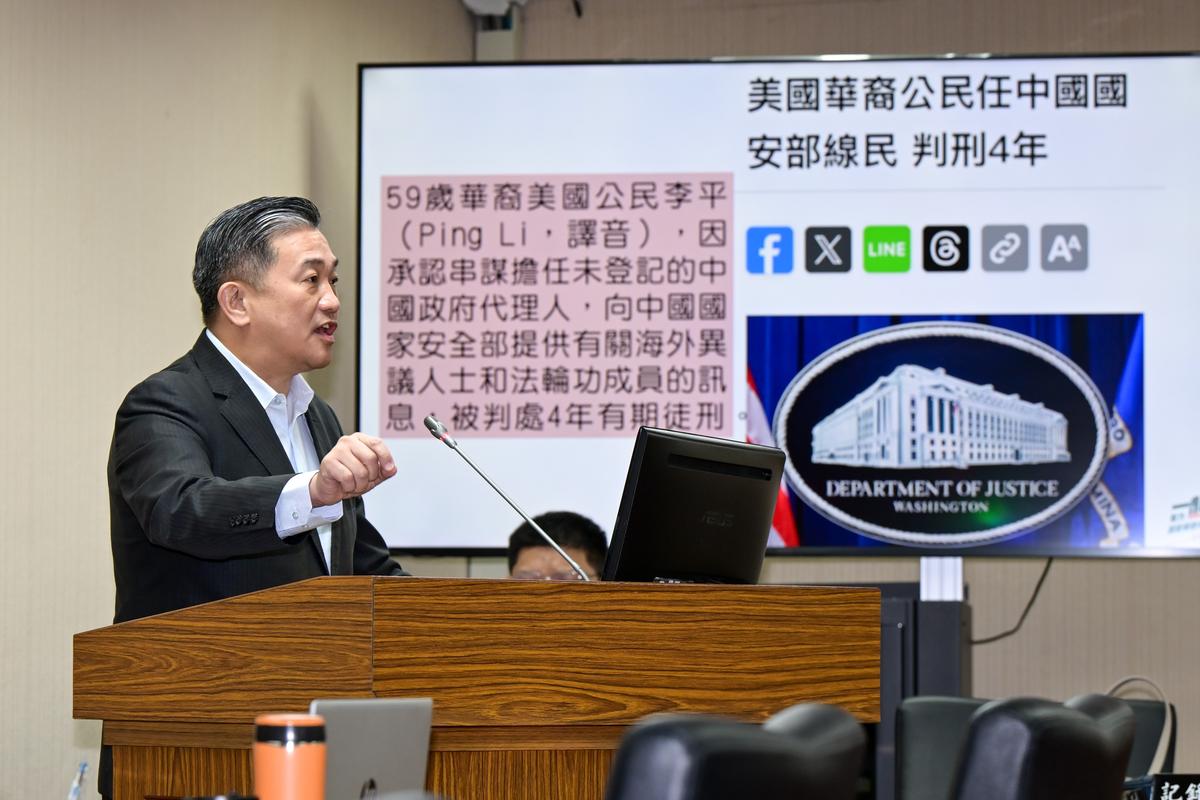
Wang said the same vulnerability exists in the United States, Canada, and other democracies because public perceptions affect elections and government policy.
Domestic political actors may also repeat false claims to damage their political opponents.
“When disinformation occurs—especially related to the government, related to political projects, or related to maybe ethnic races—sometimes this party can get an advantage from that kind of disinformation,” Wang said.
Political leaders then face a choice between exposing the falsehood or using it against their competitors, he said.
Responding Without Censorship
Wang said democratic governments must find ways to counter disinformation but not restrict legitimate political speech.
He cited a system used by Taiwan during the COVID-19 pandemic that required the relevant government agency to respond to harmful disinformation within 60 minutes.
The response was intended to provide accurate information in a form that people would share and then identify the origin of the false claim, he said.
Wang said officials first had to verify that the information was false, that it had been spread intentionally, and that it threatened the public interest.
“We don’t want to restrain people’s freedom of speech,” he said.
“I’m not talking about purifying the information,” Wang said. He called for educating citizens to examine the source and background of information, including materials distributed by hostile governments.