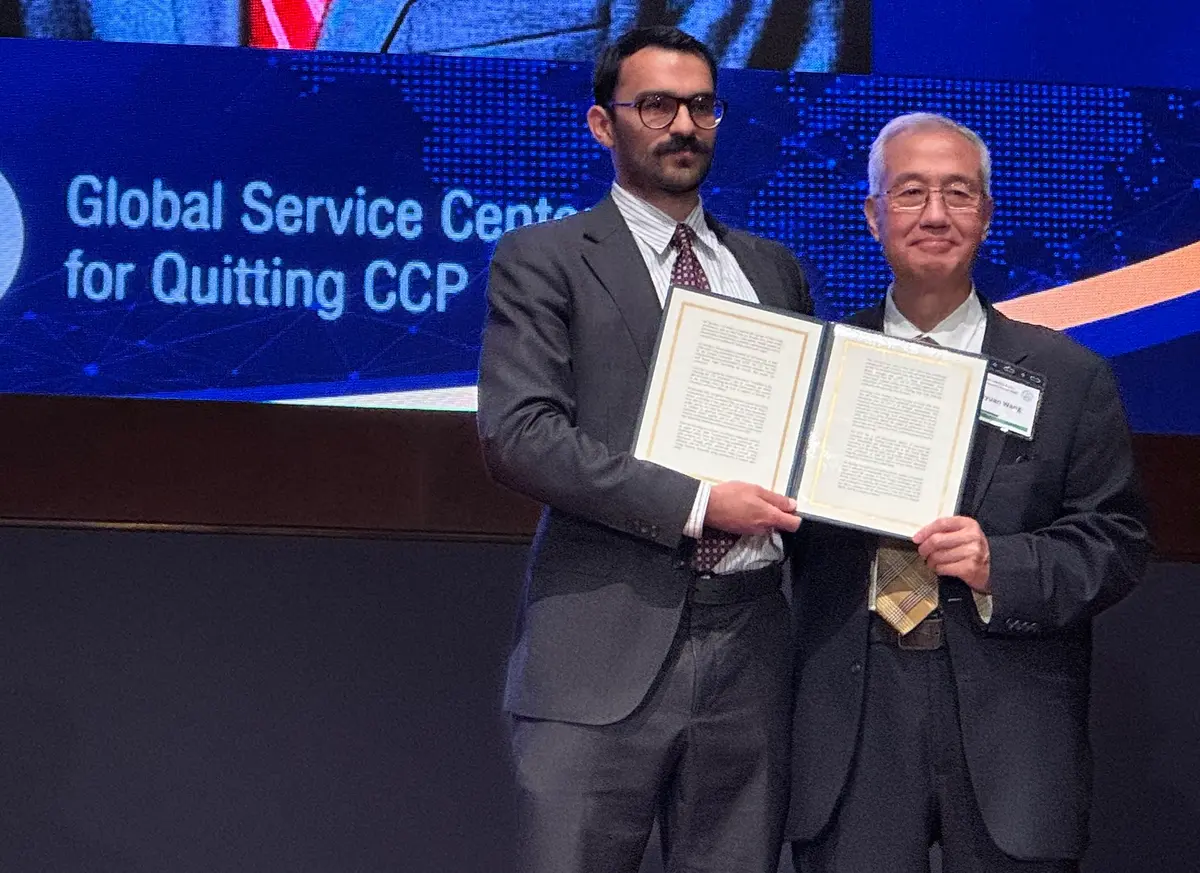
Rep. Andy Ogles (R-Tenn.) honored a movement encouraging Chinese people to renounce their affiliations with the Chinese Communist Party (CCP) and its youth organizations, calling the campaign a nonviolent rejection of totalitarianism.
Christopher A. McNair, a representative for Ogles, read the congressman’s statement during a July 21 ceremony at the Capitol Visitor Center and presented it to Zhiyuan Wang, president of the Global Service Center for Quitting the CCP.
Ogles described the movement as “nonviolent resistance to totalitarianism” and said it represented “an awakening of conscience grounded in a desire to reclaim China’s cultural and moral heritage.”
Thirty-one Chinese participants received certificates at the ceremony, documenting their declarations to leave the CCP, the Communist Youth League, or the Young Pioneers. The event was part of a daylong forum hosted by the Consilium Institute and Hello Taiwan, with the Global Service Center among the co-sponsors.
‘China Is Not the CCP’
Known as Tuidang—or the “three withdrawals”—the movement includes people who formally joined the CCP as well as those enrolled in its youth organizations as children or students.
The movement began after The Epoch Times published the editorial series Nine Commentaries on the Communist Party in late 2004.
The Global Service Center says more than 464 million withdrawal declarations have since been recorded, often under aliases chosen by people concerned about retaliation against themselves or relatives in China. The statements may be submitted online, by email, through telephone hotlines, or with the help of volunteers.
The declarations are not resignations processed by Chinese authorities. Participants describe them as acts of severing the political and moral commitments associated with the CCP and its affiliated organizations.
“China is not the Chinese Communist Party, and the Chinese people should not be represented by the Chinese Communist Party,” Wang said.
He said the distinction was particularly important for Chinese people living abroad, who can face suspicion because the regime presents itself as the sole representative of China and its people.
“Actively cutting ties with the CCP is the best protection for ourselves and for the next generation,” Wang said.
Why They Withdrew
The 31 participants in Washington included former members of different levels of the CCP’s organizational system.
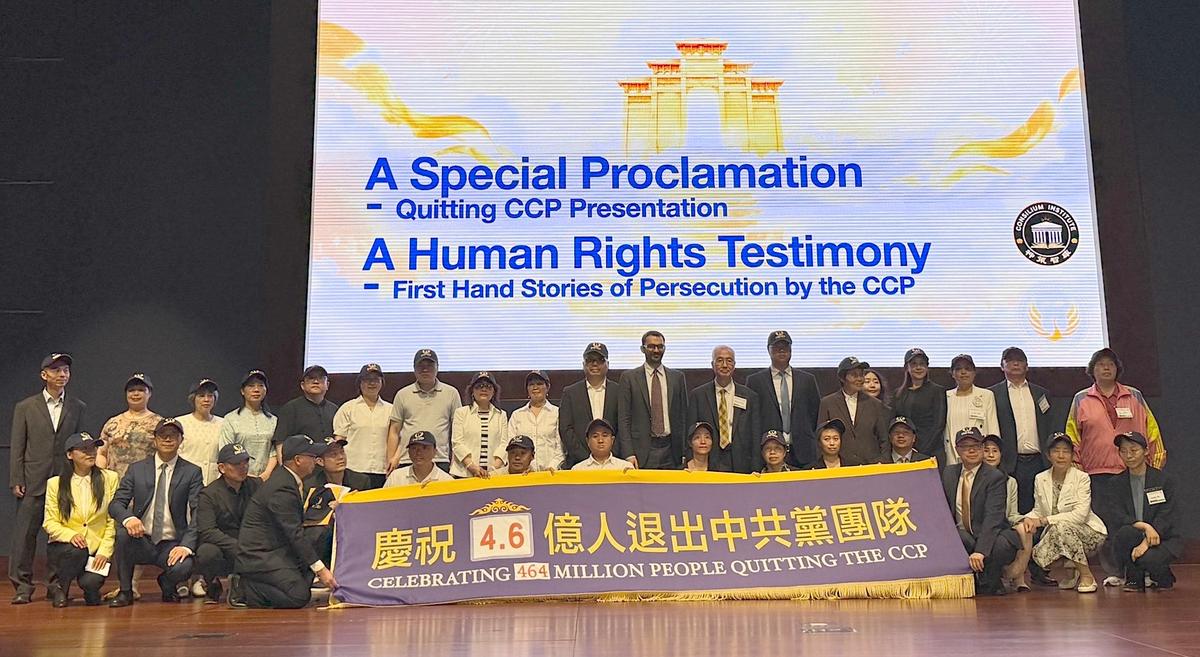
Li Zhuo said receiving his certificate at the U.S. Capitol represented recognition of the movement and of resistance to communism.
Wang Zongsheng said he withdrew because the CCP suppresses freedom and relies on propaganda to control public thought.
“The most frightening thing is that the Communist Party suppresses people’s freedom and uses lies to brainwash people,” he said.
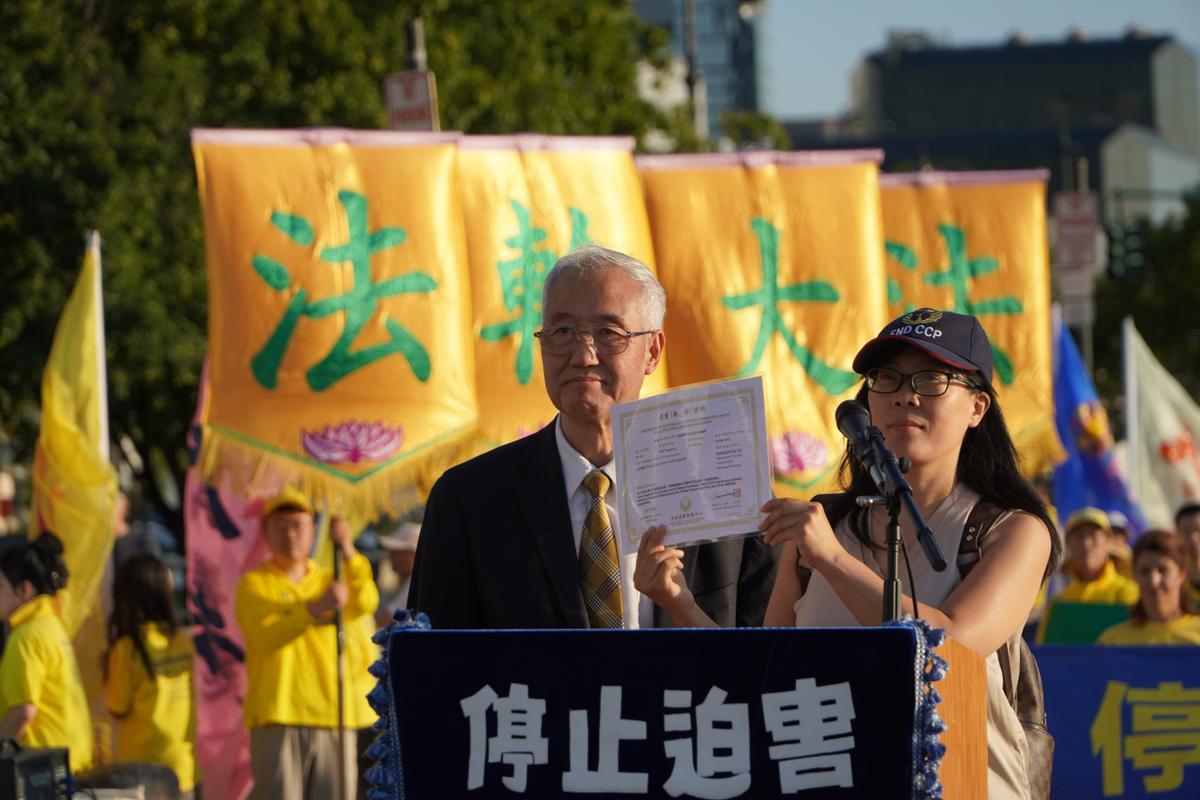
At a related event outside the Chinese Consulate in New York, Hao Fangfang, a former Communist Youth League member, publicly announced her withdrawal.
Hao said she had come to view the Young Pioneers, Youth League, and the CCP as parts of a system used to control thought and impose political indoctrination. She declared that she was leaving the Youth League and severing her ties with the CCP.
For some others, the decision began with a childhood memory.
Shen Qijia said he had believed he had never joined a CCP organization until a relative pointed out an old photograph showing him wearing the red scarf of the Young Pioneers.
“We could not distinguish right from wrong when we were children,” Shen wrote in his July 21 declaration.
Shen announced that he was withdrawing from the Young Pioneers. He also alleged that Chinese authorities had taken 4.87 million yuan (about $680,000) of his lawful property, ignored more than 300 petitions over 26 years, placed him on a court blacklist, closed several of his social media accounts, and sent police to his home to harass and threaten him.
“Such an evil organization must be resolutely rejected,” he wrote.
Reaching People Behind China’s Firewall
The movement relies heavily on volunteers because The Epoch Times and Tuidang websites are blocked in mainland China.
Some people reach the declaration platform through software designed to circumvent Beijing’s internet controls. Others convey their decisions through telephone hotlines, email, handwritten statements, or volunteers who record and submit declarations with their consent.
The Tuidang website lists telephone lines in the United States, Canada, Taiwan, Hong Kong, Japan, and South Korea, as well as email and Epoch Times offices as alternative submission channels. It also provides guidance for using aliases and submitting statements for others.
Ogles’s statement described overseas volunteers contacting people in China by phone, text message, and email to explain the movement and assist those wishing to withdraw.
Huang Yuyun, a volunteer in Taiwan, told the Global Service Center that she began calling people in China in 2007.
Huang said she generally spends six hours a day on the calling platform and helps 45 to 60 people a day submit declarations renouncing the CCP or its affiliated youth organizations.
The center estimated, based on her daily figures and years of work, that Huang had assisted approximately 180,000 people.
Another Taiwan volunteer, Lin Xuanting, has focused part of her telephone outreach on Chinese police officers and other personnel in the regime’s law-enforcement system.
The Global Service Center reported that Lin had helped more than 2,000 police officers make withdrawal declarations during 17 years of calling. Lin also said international teams of volunteer callers numbered in the thousands at the network’s peak.
“As long as the persecution continues, I will keep making these truth-clarification calls,” Lin said.
Volunteers Face Threats
Volunteers inside China have described distributing copies of the book “Nine Commentaries on the Communist Party,” printing leaflets, making telephone calls, and helping others reach overseas websites.
Ogles said the right to associate—or disassociate—with an organization is a fundamental human right.
“I honor the courage of Falun Gong practitioners and the volunteers of the Tuidang movement, and I commend the Global Service Center for Quitting the Chinese Communist Party for its work on behalf of freedom of conscience,” his statement said.
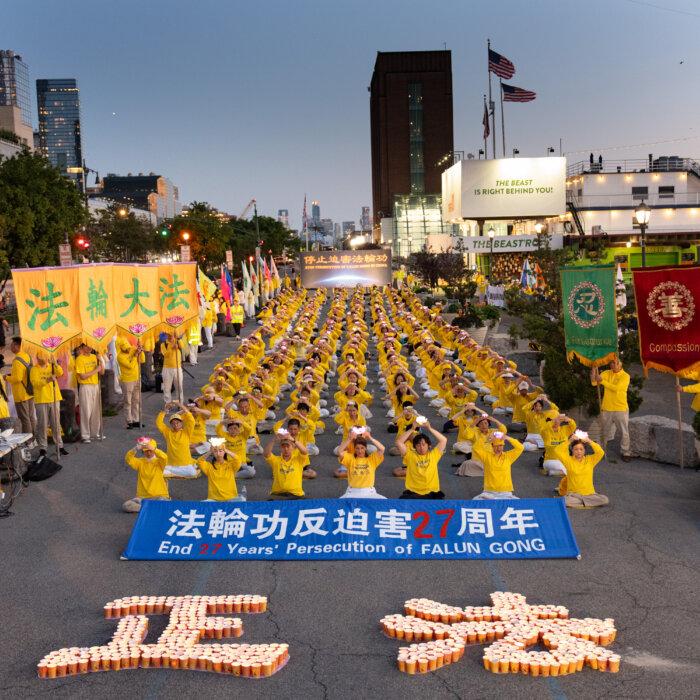
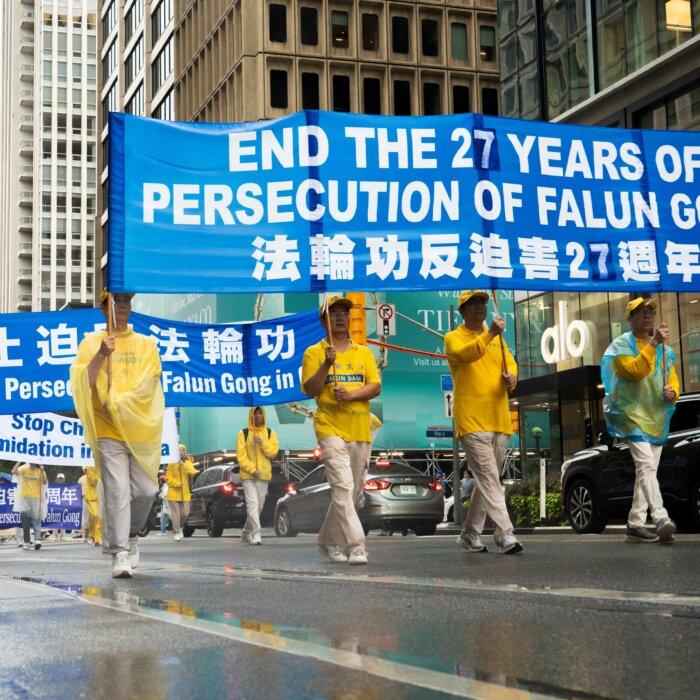
Falun Gong, also known as Falun Dafa, is a spiritual discipline and meditation practice based on the principles of truthfulness, compassion, and tolerance. The practice was first introduced to the public in 1992 and quickly grew in popularity to reach an estimated 70 million to 100 million practitioners by the decade’s end.
In July 1999, fearing that Falun Gong’s popularity threatened the regime’s power, the CCP’s top leadership launched a brutal persecution campaign aimed at eradicating the practice. Since then, untold numbers of practitioners have been subjected to arbitrary detention, forced labor, torture, and even forced organ harvesting.
Ogles’s statement also cited threats and vandalism reported by the center in New York.

“Transnational repression targeting advocates on American soil is a serious matter, and such conduct has no place in the United States,” Ogles said.
At the Washington ceremony, the 31 participants came forward one by one to receive certificates before gathering for a photograph.
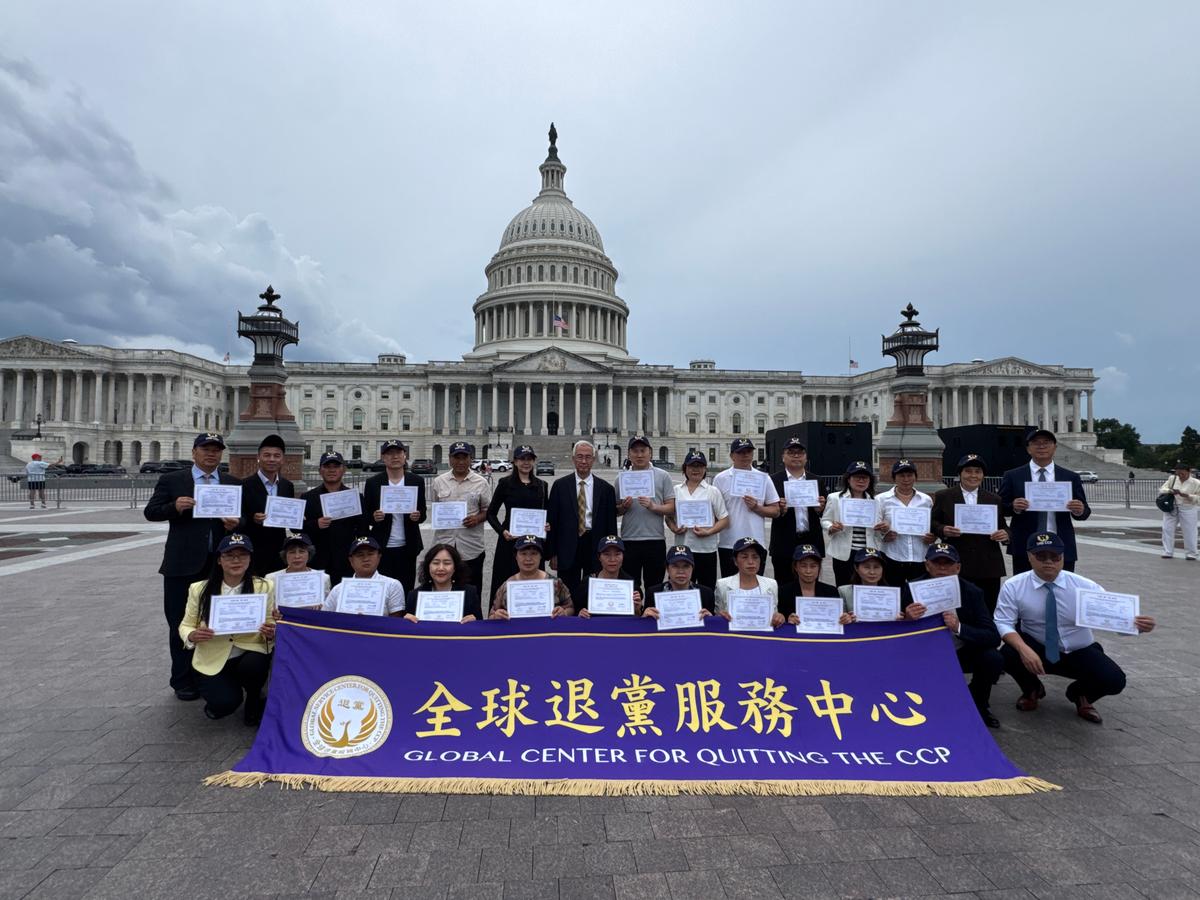
For Wang Zongsheng, the certificate recorded a choice he said followed from his rejection of the CCP’s suppression of freedom.
“Of course we must withdraw from the Communist Party organizations,” he said.